Journal · Sun Protection & Longevity
The Best Feeling Sunscreens: Why You Hate Yours and What to Try Instead
Why your sunscreen feels greasy, pills, or leaves a white cast, and the texture and filter swaps that may help you find an SPF you actually wear daily

Maria Otworowska, PhD, Co-founder of Skin Bliss
· 8 min read
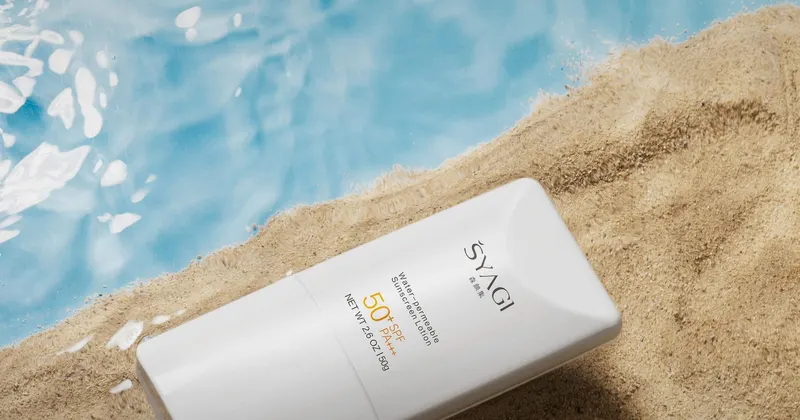
The best feeling sunscreen is one that disappears into your skin without leaving a white cast, a greasy film, or a pilling mess under makeup, so you actually wear it every day. Finding one is less about price or SPF number and more about matching texture, filter type, and base chemistry to your skin.
You have probably bought three sunscreens this year. You probably reach for one of them, reluctantly. The white cast, the shine, the sting near your eyes. None of that is in your head. Those cosmetic complaints are the top reason people skip daily SPF, even when they know the stakes 1.
Key Takeaways
Why Does My Sunscreen Feel Greasy or Sticky?
Greasiness comes down to how the formula spreads and sets. Many sunscreens use emollient oils and silicones to carry UV filters evenly across the skin, which is great for protection but heavy on the face. If your skin already produces oil, you end up shiny by noon.
The fix is texture, not SPF number. Gel-creams, aqueous fluids, and "dry touch" formulas swap heavy oils for silica, polymethylsilsesquioxane, or water-based emulsions that absorb excess sebum on contact 2. Japanese and Korean sunscreens built this entire category around cosmetic elegance, which is one reason they dominate reviews from oily-skin users.
If you have been using the same rich cream-style SPF since high school, try a lightweight fluid next. The filters can be identical. The feel on skin is not.
What Is the Best Lightweight Sunscreen Texture for My Skin?
There is no single "best lightweight sunscreen." The best one depends on your skin type, your makeup routine, and your tolerance for finish. Here is how the main formats compare:
| Texture | Feel | Best For | Watch For |
|---|---|---|---|
| Gel-cream | Matte, weightless | Oily, combination skin | Can feel dry on very dehydrated skin |
| Fluid / aqueous | Invisible, second-skin | Most skin types, under makeup | Usually needs shaking before use |
| Cream | Rich, hydrating | Dry, mature skin | Too heavy for oily skin |
| Stick | Waxy, portable | Reapplication, eye area | Harder to get an even, full dose |
The Skin Bliss Product Comparison tool lets you filter sunscreens by finish, filter system, and skin-type fit, so you can narrow the field before spending money on a full-size tube. Buy travel sizes first when you can, and give each product at least three days before deciding.
How Do I Find a Sunscreen with No White Cast?
Mineral filters like zinc oxide and titanium dioxide are the usual culprits. They sit mostly on the surface of skin and scatter and absorb UV, which is why they leave a pale, chalky finish, especially on deeper skin tones 34.
You have three realistic options. First, switch to a chemical or hybrid filter system, which absorbs UV in clear form and leaves no visible residue. Second, choose a tinted mineral sunscreen: the iron oxides that create the tint also cover the white cast and add protection against visible light, which standard zinc and titanium formulas do not block well 5. Third, look for micronized or nano zinc oxide, which appears less chalky than larger particles but still skews white on richer skin tones.
Tinted formulas tend to be the most satisfying fix if you want mineral-only protection. They work like a sheer base and a sunscreen at the same time.
Are Asian and European Sunscreens Better Than American Ones?
Often, yes, at least cosmetically. European and Asian regulators approve UV filters that the US FDA has not yet cleared, including Tinosorb S, Tinosorb M, and Uvinul A Plus. These newer filters are more photostable, meaning they hold up longer in UV without breaking down, and they tend to be less likely to cause stinging or irritation than older options like avobenzone and octinoxate 6.
Photostability matters for real-world protection. Unstable filters degrade on skin, which is part of why the 2-hour reapplication rule exists 7. Sunscreens formulated with a stable filter blend keep their SPF longer under the same conditions, though no sunscreen offers 100% protection and reapplication every 2 hours during sun exposure is still the rule.
Cosmetic elegance is the other reason Asian SPFs have a cult following. Japanese and Korean brands treat finish and wearability as design goals, not afterthoughts, and consumer research confirms that elegance is the single most cited driver of sunscreen satisfaction 1.
Why Does My Sunscreen Pill Under Makeup?
Pilling is a base-mismatch problem. When a silicone-heavy product layers over a water-based one (or vice versa), the two films cannot bind. Instead of absorbing, they roll into tiny friction balls the moment you rub. Niacinamide serums under certain SPFs are a classic offender, as are rich moisturizers topped with a dry-touch fluid.
Check the first five ingredients of both products. If your moisturizer lists water and aloe near the top and your SPF leads with dimethicone or cyclopentasiloxane, you have a base clash. Pick one chemistry and stick with it across moisturizer and sunscreen. Wait 2 to 3 minutes between layers so each one sets before you add the next. Press, do not rub.
Simpler routines pill less. Fewer layers means fewer potential mismatches, and it is easier to hit a full sunscreen dose when you are not wrestling with five other products first.
How Much Sunscreen Should I Actually Use, and How Often?
Lab SPF values assume 2 milligrams per square centimeter of skin, which for the face works out to roughly two finger-lengths of product 8. Most people apply around a quarter of that, which is why real-world SPF is often closer to half of what the label promises 9. Underapplication is the hidden reason your "SPF 50" feels like it failed you.
Reapply every 2 hours during direct sun exposure, and sooner if you sweat heavily or towel off. No sunscreen is 100% protective, and all SPF degrades with time, movement, and contact. Broad-spectrum is non-negotiable: you want UVA and UVB coverage, not just the burn-preventing UVB. Skin Bliss Weather-Driven Tips pull your local UV index and humidity into the recommendation, so you know when to apply, reapply, or add a hat.
Frequently Asked Questions
Is SPF 30 enough for daily wear?
Yes, for most people on most days. SPF 30 blocks about 97% of UVB; SPF 50 blocks about 98%. The real-world difference is tiny compared to the gap caused by under-applying. A cosmetically pleasant SPF 30 you apply fully every day out-protects an SPF 50 you skip.
Can I use sunscreen that stings my eyes?
Yes, but you should reformulate your approach. Chemical filters like avobenzone can migrate with sweat and sting. Try a stick SPF or a mineral formula around the eye area, and use a fragrance-free version on the rest of the face. Stick formats stay put better than fluids.
Does makeup with SPF count as sun protection?
Only partially. Foundation or powder with SPF only delivers its labeled protection if you apply the full sunscreen dose, which no one does with makeup. Treat SPF in cosmetics as a bonus layer over a dedicated sunscreen, not a replacement.
How do I test a new sunscreen without wasting money?
Buy a travel size or sample first. Apply for three consecutive days, since skin adapts to new textures. Test it under makeup and alone, and check how it feels at hour 4, not just on initial application. Pay attention to comfort by evening, when most issues show up.
Are expensive sunscreens more effective?
Not usually. Independent testing often ranks pharmacy brands like La Roche-Posay, Eucerin, and Cancer Council above prestige options. Price correlates with packaging and marketing more than protection. A cheaper large-format tube also means you apply a full dose without rationing.
How to Find Yours
The best feeling sunscreen for your face is the one you will apply generously, every morning, without dread. That usually means matching texture to skin type, matching base chemistry to the rest of your routine, and picking a filter system that works with your tone and sensitivity. Start with a sample. Give it three days. Judge it at hour 4.
This is part 1 of our Sunscreen series. Next up: why your SPF pills under makeup, and the fix that actually sticks. Save this one for your next pharmacy run.

In your browser
Free Skin Quiz: Understand your skin profile in under 5 minutes
Oily or dry is only the start. Find out what your skin actually needs across six skin dimensions, with a plain note on what each one means for your routine. Results appear in your browser, and you can keep them in the app.

Maria combines her background in AI research with a passion for evidence-based skincare. She built Skin Bliss to help people make informed decisions about their skin, backed by science rather than marketing.
Sources (9)
- Xu S, Kwa M, Agarwal A, Rademaker A, Kundu RV (2016). "Sunscreen Product Performance and Other Determinants of Consumer Preferences." *JAMA Dermatology*.
- Kullavanijaya P, Lim HW (2005). "Photoprotection." *Journal of the American Academy of Dermatology*.
- Smijs TG, Pavel S (2011). "Titanium dioxide and zinc oxide nanoparticles in sunscreens: focus on their safety and effectiveness." *Nanotechnology, Science and Applications*.
- Cole C, Shyr T, Ou-Yang H (2016). "Metal oxide sunscreens protect skin by absorption, not by reflection or scattering." *Photodermatology, Photoimmunology and Photomedicine*.
- Lyons AB, Trullas C, Kohli I, Hamzavi IH, Lim HW (2021). "Photoprotection beyond ultraviolet radiation: A review of tinted sunscreens." *Journal of the American Academy of Dermatology*.
- Kockler J, Oelgemoller M, Robertson S, Glass BD (2012). "Photostability of sunscreens." *Journal of Photochemistry and Photobiology C*.
- Diffey BL (2001). "When should sunscreen be reapplied?" *Journal of the American Academy of Dermatology*.
- Petersen B, Wulf HC (2014). "Application of sunscreen: theory and reality." *Photodermatology, Photoimmunology and Photomedicine*.
- Bimczok R et al. (2007). "Influence of applied quantity of sunscreen products on the sun protection factor." *Skin Pharmacology and Physiology*.