Journal · Routines & Protocols
Combination Skin: One Routine for a Face That Behaves Like Two
How to build one balanced skincare routine for combination skin — targeting an oily T-zone and drier cheeks without over-treating either zone.

Maria Otworowska, PhD, Co-founder of Skin Bliss
· 7 min read
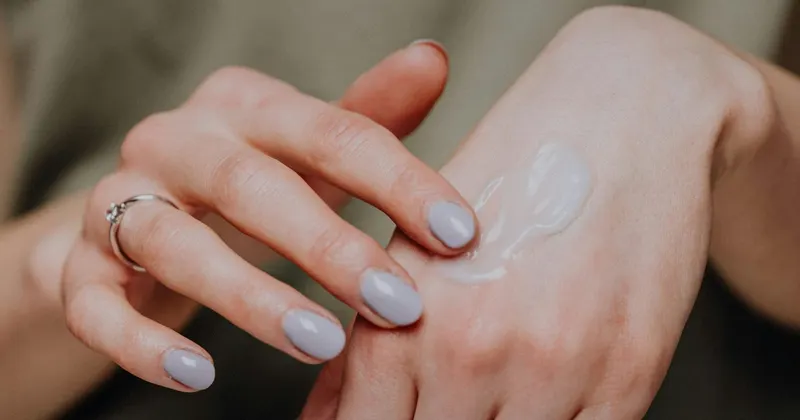
Combination skin means your T-zone (forehead, nose, chin) runs oily while your cheeks stay drier. Treating your entire face the same way tends to make at least one zone worse. Research confirms these are two measurably distinct skin environments, with measurable differences in sebum output and hydration. One balanced routine, applied zone-by-zone, can keep both in check. 1
Why Does Your Face Have Two Different Skin Types?
Your skin does not produce oil evenly. Sebaceous glands are more densely concentrated along the T-zone, and studies measuring sebum levels at multiple facial sites have confirmed that forehead, nose, and chin output is consistently higher than on the cheeks. 1
The zones also respond differently to the seasons. In summer, sebum production across the face rises, but T-zone output can spike more sharply, widening the gap between zones. One study tracking participants across all four seasons found that 71.7% showed a combination-skin profile in summer, compared with fewer than 35% in winter. 1
What keeps cheeks drier is a thinner sebum film, which gives moisture less protection against evaporation. When that barrier is compromised, transepidermal water loss (TEWL, the rate at which water escapes through the skin) increases on the cheeks while the T-zone stays well-oiled. Measuring TEWL across facial zones shows that cheek skin and forehead skin behave as distinct microenvironments. 3
The Mistake Most Routines Make
The default approach is to pick one product for the whole face. Oily-skin cleansers strip moisture from cheeks. Heavy cream moisturizers feed congestion on the nose. Mattifying toners leave cheeks feeling tight.
Research on skin type classification shows that combination skin is the most frequently self-reported type. One large study of acne patients confirmed that sebum levels for combination skin fall between oily and normal, meaning it does not respond predictably to products designed for either extreme. 2
The result: you over-treat the T-zone and under-treat the cheeks, or the reverse. Neither zone gets what it actually needs.
Which Products Actually Work for Both Zones
The goal is a core routine of shared steps, with zone-specific adjustments for the steps that matter most.
Cleanser: A gentle, low-pH foaming or gel cleanser works across the whole face without stripping. Avoid sulfate-heavy formulas on the cheeks and harsh clay washes that mattify the T-zone at the cost of drying everything else.
Toner / hydrating layer: A lightweight watery toner or essence applies to the full face. This step supports cheek hydration without adding emollience to the T-zone.
Moisturizer: This is where zone-targeting pays off. A gel-cream or fluid texture works on the T-zone; the same product in a richer version (or layered with a balm or facial oil) goes on the cheeks only. Using two textures side by side takes about five seconds more than using one.
Actives (optional): Niacinamide at 5% or above may help regulate sebum on the T-zone and supports barrier function on the cheeks. BHA (salicylic acid, typically at 0.5-2%) is best used as a spot or T-zone application rather than all-over, to avoid over-exfoliating drier areas.
SPF: Apply a broad-spectrum SPF 30+ to the entire face, every morning. Patch test any new active. Reapply every 2 hours in direct sun.
Zone-by-Zone Routine at a Glance
| Step | T-Zone (forehead, nose, chin) | Cheeks |
|---|---|---|
| Cleanser | Gentle gel or foaming, full face | Same |
| Toner/essence | Lightweight hydrating toner | Same |
| Active (optional) | Niacinamide 5%, BHA spot-use | Skip or niacinamide only |
| Moisturizer | Gel-cream or fluid texture | Richer cream, or layer a balm |
| SPF | SPF 30+ full face | Same |
What About Multi-Masking?
Multi-masking is the weekly version of zone-targeting: applying a clay or charcoal mask to the T-zone and a hydrating or soothing mask to the cheeks at the same time. This is a practical technique, not a gimmick. It lets you address two needs without running two separate mask sessions.
Use clay or kaolin masks on the T-zone for up to 10-15 minutes. Extended contact can over-dry even oily skin, so do not leave them on longer. On the cheeks, sheet masks, sleeping masks, or thicker leave-on moisturizing masks work well. Rinse or remove both together.
Patch test any new mask on your inner arm before applying it to your face.
How to Know When Your Routine Is Working
Well-managed combination skin looks balanced: no greasy shine on the nose, no tightness on the cheeks, pores that feel clear, and cheeks that feel comfortable throughout the day.
Skin adapts slowly. Expect to see a meaningful shift in texture and comfort after 4-6 weeks of consistent application. If your cheeks feel tight after every cleanse, the cleanser is too stripping. If the T-zone stays congested despite minimal product, your moisturizer may be too occlusive for that zone.
The seasonal shift is worth planning for: combination skin often becomes more balanced in winter and more pronounced in summer. 1 Adjusting your moisturizer weight (lighter gel formulas in summer, richer creams for cheeks in winter) handles this without changing your full routine.
Use This in Your Routine
Building a routine for combination skin is easier when you can see exactly which products are going to which zone and whether the ingredients in each layer are compatible. The Routine Builder in Skin Bliss lets you map out a full AM and PM routine, check for ingredient conflicts across products, and flag where an oily-skin formula might be too stripping for cheeks.
Try it at skinbliss.app. Build your zone-balanced routine and see which steps you can share across the whole face and which are worth splitting.
FAQ
Is combination skin the most common skin type?
Yes. Combination skin is the most frequently reported skin type in both clinical surveys and self-assessment questionnaires. In one study of over 700 acne patients, combination skin was the most common subjective type, with sebum levels falling between oily and normal skin. 2
Can I use one moisturizer for my whole face?
You can, but a single texture rarely serves both zones equally. A gel-cream that keeps the T-zone comfortable may leave cheeks under-moisturized, especially in winter. The simplest fix is to apply a slightly thicker layer or a richer product on the cheeks only. No need for two completely different products.
Does combination skin change with age?
Sebum production tends to decrease over time, so combination skin often becomes closer to normal or dry with age. Seasonal variation also plays a role: the combination pattern is more pronounced in summer (when sebum output is highest) and flattens in winter. 1
Should I use a toner if I have combination skin?
A lightweight, hydrating toner can help. It adds a water layer that benefits cheeks without clogging the T-zone. Avoid high-alcohol astringent toners, which strip oil from the nose but leave cheeks dehydrated.
Can combination skin get dehydrated?
Yes. Oily does not mean hydrated. The T-zone can produce plenty of sebum and still lack water-based hydration. If your skin feels tight and shiny at the same time, that is often dehydrated combination skin. It responds well to lightweight, humectant-rich products (glycerin, sodium hyaluronate) applied across the whole face.

In your browser
Free Skin Quiz: Understand your skin profile in under 5 minutes
Oily or dry is only the start. Find out what your skin actually needs across six skin dimensions, with a plain note on what each one means for your routine. Results appear in your browser, and you can keep them in the app.

Maria combines her background in AI research with a passion for evidence-based skincare. She built Skin Bliss to help people make informed decisions about their skin, backed by science rather than marketing.
Sources (3)
- Youn SW, Na JI, Choi SY, Huh CH, Park KC. "Regional and seasonal variations in facial sebum secretions: a proposal for the definition of combination skin type."
- Choi CW, Choi JW, Youn SW. "Subjective facial skin type, based on the sebum related symptoms, can reflect the objective casual sebum level in acne patients."
- Kikuchi K, Murakami Y, Sato H, et al. "Atopic Dermatitis Accelerates Skin Physiological Functional Decline and Visible Aging, Suppressed by Skincare Habits."