Journal · Skin Concerns
PIE vs PIH: Why Your Dark Marks Aren't Fading (and What Actually Works)
PIE vs PIH explained: how to tell red post-acne marks from brown ones, plus the actives and treatments that may actually help each type fade

Maria Otworowska, PhD, Co-founder of Skin Bliss
· 12 min read
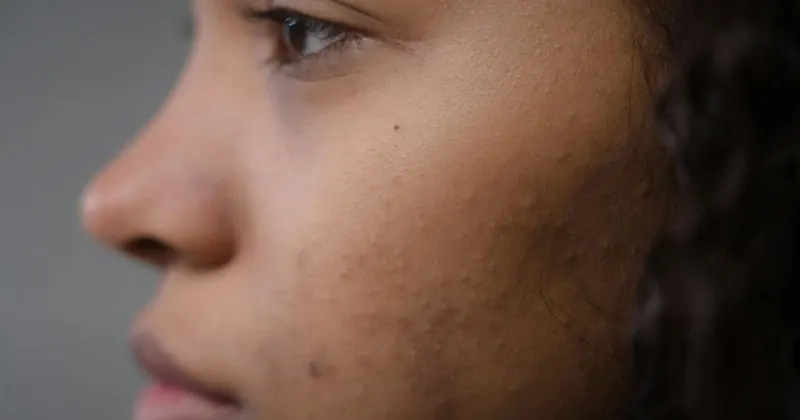
PIE vs PIH is the distinction between two very different kinds of marks that acne leaves behind: post-inflammatory erythema (PIE), which is red, pink, or purple from dilated blood vessels, and post-inflammatory hyperpigmentation (PIH), which is brown or gray from excess melanin. They look similar, but they need completely different treatments 1.
Here is the uncomfortable part. Most of the "dark spot" products on your shelf were built for PIH. If the mark is actually PIE, you could use them for a year and see almost nothing change. Worse, you might assume your skin is broken when really you are just aiming at the wrong target.
Key Takeaways
What Is the Difference Between PIE and PIH?
Acne does two things to your skin at once. It inflames blood vessels, and it tells nearby melanocytes to pump out pigment. When the pimple heals, whichever process was louder becomes the mark you see in the mirror.
PIE is a vascular story. The capillaries that dilated during the breakout never fully retracted, so the spot stays pink, red, or faintly purple. Under a microscope, researchers see angiogenesis and inflammatory infiltrate in the area 1. PIH is a pigment story. Acne inflammation stimulates melanogenesis and abnormal melanin deposition, and that melanin sits in the upper skin layers long after the pimple is gone 3.
Worth knowing: the two can coexist. One recent model showed that the "brown" stage of PIH often contains hidden redness and vessel changes underneath, and the inflammatory and pigmentary phases actually overlap rather than happen in sequence 1. That is why some marks look red in the morning and brownish by evening.
How Do I Know If I Have PIE or PIH?
The fastest test is free. Press a clean glass slide or the flat side of a clear phone case gently against the mark and look through it. If the color blanches and the mark temporarily disappears, you are dealing with PIE. Blood vessels empty under pressure; melanin does not. If the color stays put, it is PIH.
Skin tone also gives you a clue. PIH is far more common and more persistent in medium to deep skin tones, while PIE shows up more readily on lighter skin. This is not absolute, but it is a useful prior 13. Darker tones can absolutely get PIE too, it just tends to read as a deeper plum rather than bright pink.
If you are still unsure, the Skin Bliss Face Scanner can help you track the color and size of each mark over time, which is often clearer than relying on what your bathroom mirror tells you on any given morning. Photos in consistent light beat memory every time.
PIE vs PIH: A Side-by-Side Comparison
| Factor | PIE (Post-Inflammatory Erythema) | PIH (Post-Inflammatory Hyperpigmentation) |
|---|---|---|
| Color | Red, pink, or purple | Tan, brown, or gray |
| Cause | Damaged or dilated capillaries | Excess melanin in the epidermis and dermis |
| Glass-press test | Blanches (disappears under pressure) | Stays the same |
| More common in | Lighter skin tones | Medium to deep skin tones |
| Key ingredients | Azelaic acid, niacinamide, broad-spectrum SPF | Vitamin C, azelaic acid, tranexamic acid, retinoids, niacinamide |
| Professional options | Pulsed dye laser, IPL | Chemical peels, IPL, microneedling |
| Typical timeline | 3 to 12 months | 6 to 18 months, longer on deeper skin |
| Worst enemy | Continued inflammation, UV | UV, visible light, friction |
What Treats Post-Inflammatory Erythema?
Mostly, time. PIE is essentially an early scar with an erythematous component, and most cases fade on their own within 3 to 12 months as the damaged capillaries reorganize 4. Your job is to avoid making things worse while the skin heals itself.
Topically, the evidence points to a short list. Azelaic acid at 15 to 20 percent calms inflammation and has a favorable safety profile across multiple indications, which matters for skin that is already reactive 2. Niacinamide reduces redness and supports barrier recovery, which helps keep new inflammatory spikes from extending the timeline 6. Broad-spectrum SPF matters because UV slows vascular remodeling and deepens any visible redness 7.
For faster results, professional options exist. The 595-nm pulsed dye laser is the most studied device for post-acne erythema, with one pilot study reporting clinical improvement in around 90 percent of treated patients, often with minimal discomfort 5. Intense pulsed light is a lower-cost alternative that also shows benefit in retrospective data 4. These are dermatologist procedures, not at-home gadgets.
What Ingredients Fade Post-Inflammatory Hyperpigmentation?
PIH responds to ingredients that interrupt melanin production, speed cell turnover, or block pigment transfer between cells. Each one is playing a different position, which is why combinations tend to outperform any single hero product.
Vitamin C (L-ascorbic acid, 10 to 20 percent). Ascorbic acid directly inhibits tyrosinase, the enzyme that makes melanin. It works through several pathways, including intracellular acidification inside melanocytes and suppression of tyrosinase gene expression 8. It also layers well under a morning sunscreen, which is where you want it anyway.
Azelaic acid (10 to 20 percent). In a 24-week trial in skin phototypes IV to VI, 20 percent azelaic acid cream produced significantly greater decreases in pigment intensity than vehicle, with clinically meaningful global improvement at week 24 2. It is one of the few actives considered safe during pregnancy.
Tranexamic acid (topical 3 to 5 percent). A randomized trial comparing 5 percent topical tranexamic acid to 20 percent azelaic acid cream for acne-related PIH found both treatments comparably effective, with tranexamic acid showing a better early safety profile 2. It works by inhibiting plasmin and reducing inflammatory signals that drive melanogenesis.
Niacinamide (4 to 5 percent). Niacinamide blocks melanosome transfer from melanocytes to keratinocytes rather than interfering with melanin synthesis itself. In a double-blind trial against 4 percent hydroquinone for melasma, 44 percent of niacinamide users had good to excellent improvement versus 55 percent on hydroquinone, and with fewer side effects 6.
Retinoids. Topical retinoids increase cell turnover and also have direct effects on pigment pathways. Reviews in skin of color show they reduce both active acne and the PIH it leaves behind 3.
Does Sunscreen Really Matter for Dark Marks?
Yes, and if you skip this section you are wasting every other product in your routine. UV radiation is the single most reliable way to restimulate melanocytes, and visible light, the kind that streams through windows and comes off screens, can also drive pigment changes in darker skin tones 7.
For PIH specifically, broad-spectrum sunscreen with visible-light protection produced better outcomes than UV-only sunscreen in treatment studies of melasma and hyperpigmentation 7. Tinted sunscreens containing iron oxides are the most practical way to get visible-light coverage, and dermatology consensus documents now recommend them for anyone with a tendency toward pigmentary disorders 7.
The rules are not glamorous. Use a broad-spectrum SPF 30 or higher every morning, reapply every two hours when outside, and use more than you think, around a quarter teaspoon for the face. No sunscreen is 100 percent. Shade and a hat do real work.
How Long Until PIE or PIH Actually Fades?
Set your expectations in months, not weeks. PIE typically fades over 3 to 12 months with consistent care 4. PIH typically takes 6 to 18 months, and deeper skin tones usually sit at the longer end of that range because more melanin has to be cleared 3.
Professional treatments can shorten the timeline. Pulsed dye laser for PIE often shows improvement after 2 to 3 sessions spaced 4 weeks apart 5. Chemical peels, IPL, and microneedling with or without topical actives can accelerate PIH clearance, though studies show the biggest gains when treatments are paired with daily SPF and a hedged-active routine 37.
One truth the "two-week miracle" posts avoid. Tracking is what separates real progress from wishful thinking. The Skin Bliss AI Photo Comparison is built for exactly this, because the changes happen so slowly that your eyes adjust to them. Weekly photos in the same light beat checking the mirror every morning.
Can I Treat PIE and PIH at the Same Time?
Often yes, because in real life most post-acne marks are mixed. Studies of acne sequelae show that the "darker" appearance of PIH frequently contains hidden erythema and vessel changes, so a combined approach tends to outperform a single-lane strategy 1.
A practical stack looks like this. Vitamin C in the morning for pigment and antioxidant protection, niacinamide layered in for both redness and melanosome transfer, a tinted broad-spectrum SPF on top. In the evening, azelaic acid works on both mechanisms at once, and a retinoid 2 to 3 nights a week adds the turnover piece. Tranexamic acid serum fits in either routine if your PIH is stubborn 26.
Layering actives is where people trip. If you are using a retinoid and an acid and a vitamin C, you can irritate your skin into more inflammation, which creates more PIE and PIH. The Skin Bliss Ingredient Compatibility Checker flags clashes and over-active routines before they happen. That is the whole point. Less is usually more here.
Frequently Asked Questions
Can I just exfoliate PIH away?
No. Aggressive exfoliation creates more inflammation, which makes PIH worse, especially in medium to deep skin tones. Gentle AHA use (glycolic or lactic, 5 to 10 percent) 2 to 3 times a week is the ceiling for most people, and it should be paired with daily SPF.
Why does my PIH look worse after the beach?
Because UV and visible light restimulate the same melanocytes that were already overactive. One afternoon unprotected can set your fade timeline back weeks. This is why dermatologists repeat the sunscreen line on every PIH post.
Does hydroquinone work better than azelaic acid or tranexamic acid?
Hydroquinone is effective and well studied, but it carries risks with long-term use, including ochronosis in rare cases. For most people with mild to moderate PIH, azelaic acid and tranexamic acid offer comparable improvement with a cleaner long-term safety profile 26.
Can I treat PIE with a vitamin C serum?
You can use it, but do not expect it to do much. Vitamin C targets melanin. PIE is a blood vessel issue. Azelaic acid, niacinamide, and broad-spectrum SPF are a better fit, and a pulsed dye laser is the fastest route if time matters 45.
Will retinoids help red marks too?
Indirectly. Retinoids reduce new acne and speed cell turnover, which can shorten the inflammatory phase that feeds both PIE and PIH. They are not a primary redness treatment, but they are rarely a wasted step in an acne-prone routine 3.
A quick note on actives and SPF. Vitamin C, retinoids, azelaic acid, and tranexamic acid are well tolerated by most people, but patch test any new active on your inner arm before putting it on your face, especially if your skin is already reactive. Expect a short adjustment period with retinoids, sometimes called purging. SPF is non-negotiable any day you use these ingredients. Reapply every 2 hours outdoors. No sunscreen is 100 percent protective, so shade and clothing still matter.
Want to see whether your marks are actually fading or just looking better in today's light? Save this post and run a baseline photo scan in the Skin Bliss app today. Six weeks from now you will have real data instead of a guess.

In your browser
Free Skin Quiz: Understand your skin profile in under 5 minutes
Oily or dry is only the start. Find out what your skin actually needs across six skin dimensions, with a plain note on what each one means for your routine. Results appear in your browser, and you can keep them in the app.
Go deeper on Learn: Hyperpigmentation →

Maria combines her background in AI research with a passion for evidence-based skincare. She built Skin Bliss to help people make informed decisions about their skin, backed by science rather than marketing.
Sources (8)
- Isedeh P et al. (2022). "An in vivo model of postinflammatory hyperpigmentation and erythema: clinical, colorimetric and molecular characteristics." *Experimental Dermatology*.
- Bagatin E et al. (2023). "A comparative study of 20% azelaic acid cream versus 5% tranexamic acid solution for the treatment of postinflammatory hyperpigmentation in patients with acne vulgaris: A single-blinded randomized clinical trial." *Journal of Cosmetic Dermatology*.
- Silpa-Archa N et al. (2017). "Postinflammatory Hyperpigmentation: Epidemiology, Clinical Presentation, Pathogenesis and Treatment." *American Journal of Clinical Dermatology*.
- Bae-Harboe YS, Graber EM (2022). "Post-acne erythema treatment: A systematic review of the literature." *Journal of Cosmetic Dermatology*.
- Alam M et al. (2008). "Acne erythema improvement by long-pulsed 595-nm pulsed-dye laser treatment: a pilot study." *Archives of Dermatology*.
- Hakozaki T et al. (2002). "The effect of niacinamide on reducing cutaneous pigmentation and suppression of melanosome transfer." *British Journal of Dermatology*.
- Lyons AB et al. (2020). "The Role of Sunscreen in Melasma and Postinflammatory Hyperpigmentation." *Indian Journal of Dermatology*.
- Panich U et al. (2019). "Intramelanocytic Acidification Plays a Role in the Antimelanogenic and Antioxidative Properties of Vitamin C and Its Derivatives." *Oxidative Medicine and Cellular Longevity*.