Journal · Skin Concerns
Pore Size Truth: What's Normal, What Helps, and What's a Lie
The truth about pore size: what shapes it, what cannot shrink it, and which actives like salicylic acid, retinoids, and niacinamide may help them look smaller

Maria Otworowska, PhD, Co-founder of Skin Bliss
· 9 min read
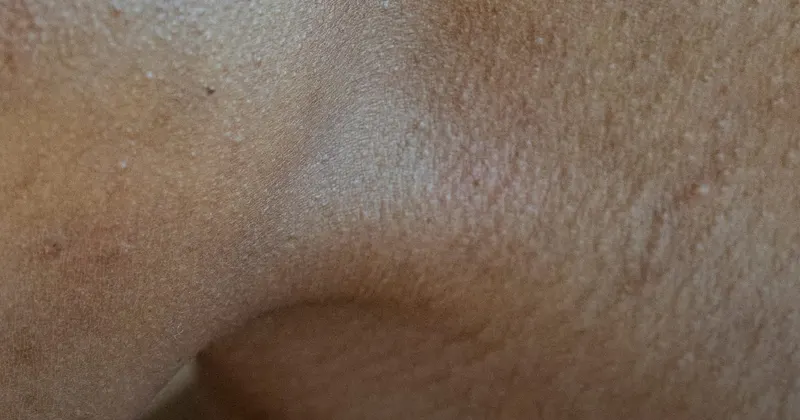
Pore size is the visible diameter of the opening at the top of a hair follicle, and it is shaped mostly by genetics, sebum output, age, and sun damage rather than by any product you put on your face 12. You can't permanently shrink pores, but you can make them look significantly smaller by controlling oil, clearing congestion, and protecting the collagen around them.
If you have been scrubbing, steaming, and slathering on "pore minimizing" toners without results, blame the advice you were given. Most of it was wrong. Here at Skin Bliss we care about what actually moves the needle, so this guide leans on clinical research instead of marketing copy.
Key Takeaways
Can You Actually Shrink Pores?
No, not permanently. Pore size is determined by the volume of your sebaceous glands and hair follicles, and both are set by genetics and hormones long before any serum enters the picture 13. Twin studies on sebum excretion found that identical twins have nearly identical sebum output rates, which means the oil level driving pore visibility is baked in 1.
What you can change is how pores look on a given day. Pores appear larger when they are stretched by oxidized sebum, dead skin, and lost structural support around them. Clear the plug, reduce the oil, and firm up the surrounding skin, and the same pore will read smaller to the eye. That is visible improvement, and it is the realistic goal. Anyone promising permanent shrinkage is either confused or selling something.
What Causes Large Pores on the Face?
Three factors explain most of the variance. First, sebum output: a 2006 study in Skin Research and Technology found that sebum level was the leading correlate of pore size on the cheeks, especially in men 2. Second, skin elasticity: when the collagen ring around each follicle slackens with age, the opening stretches and reads as larger 3. Third, follicle volume itself, which is partly genetic and partly hormone driven.
Layer in UV damage, and you get compounding loss. Ultraviolet radiation activates enzymes called matrix metalloproteinases that chew through existing collagen while blocking new collagen synthesis 7. Less collagen means weaker pore walls. This is why the same pores look worse at 40 than at 25, and worse on sun-exposed cheeks than on protected ones. Face oiliness, genetics, age, sun: those are the real variables, in roughly that order.
Do Pores Really Open and Close?
Pores do not open and close. They are passive openings at the top of follicles, with no muscles, no valves, and no mechanism for dilating or constricting on command. The "steam opens pores, cold water closes them" script has been recycled since the 1950s, and it is wrong.
What warm water and steam actually do is soften the sebum and keratin plug inside the pore so it is easier to dislodge during cleansing. That part is useful. Cold water constricts superficial blood vessels, which can briefly reduce redness and puffiness, but it has no effect on pore diameter. If your pores look different in the morning versus evening, it is usually because sebum has accumulated through the day, not because anything opened. The fix is consistent cleansing and oil control, not temperature theater.
What Ingredients Actually Minimize Pores?
Four ingredients have real clinical support for pore appearance. Salicylic acid (BHA) is oil-soluble, which lets it slide into sebum-filled pores and break down the plug. Controlled studies found that 2 percent salicylic acid reduced non-inflammatory comedone counts and improved pore appearance when used consistently 4. Retinoids increase cell turnover and reduce the keratin plugging that stretches pores, while also stimulating collagen around them over months of use 5.
Niacinamide helps from a different angle. A 2006 study reported that topical niacinamide reduced sebum excretion over 2 to 4 weeks, and subsequent trials have shown improvements in pore appearance at 2 to 5 percent concentrations 6. Daily broad-spectrum SPF is the quiet hero, because it preserves the collagen around each pore and prevents further photoaging loss 7. If you want to know whether your existing products stack without irritation, the Skin Bliss Ingredient Compatibility Checker will flag overlaps before you start.
Ingredient Comparison
| Ingredient | How It Works | Best For | Timeline |
|---|---|---|---|
| Salicylic acid 2% | Oil-soluble, dissolves sebum plugs inside pores | Clogged, congested, oily skin | 4 to 8 weeks |
| Retinoid | Increases cell turnover, rebuilds collagen | Aging pores, texture, congestion | 8 to 12 weeks |
| Niacinamide 2 to 5% | Regulates sebum output, strengthens barrier | Oily skin, redness, sensitivity | 4 to 12 weeks |
| Daily SPF 30+ | Prevents collagen breakdown around pores | Everyone, every day | Ongoing prevention |
What Actually Doesn't Work?
Pore strips pull out the top of sebaceous filaments (the gray dots on your nose are not blackheads, by the way), but the oil refills within days, and repeated yanking can irritate the surrounding skin. "Pore minimizing" toners with alcohol or witch hazel create a temporary tightening sensation that wears off in an hour. DIY baking soda or lemon juice scrubs are pH aggressive enough to damage your barrier, which backfires: a compromised barrier triggers more oil and more visible pores 3.
Steam facials and cold rinses do nothing structural. Clay masks can absorb surface oil and give a short-lived smoothing effect, which is fine, but it is not a treatment. And no, drinking more water does not change pore size. Hydration supports skin function broadly, which is worth doing, but pore diameter is set by the mechanics underneath, not by your glass count.
How Long Until You See Results?
Most people notice cleaner, less congested pores within 4 to 8 weeks of a consistent routine built around salicylic acid, a retinoid, and daily SPF. Full collagen remodeling from retinoids takes longer, often 3 to 6 months, which is when the skin around each pore starts to look firmer and more supported 5. Niacinamide's sebum effects typically show up between weeks 2 and 4 6.
Realistic wins look like this: fewer visible sebaceous filaments on your nose, a smoother read under makeup, and pores that no longer stretch when your skin is tired or stressed. They will not vanish. They are not supposed to. Your goal is healthy, well-supported, un-clogged pores, not invisible ones. Track progress with photos under consistent lighting so you can see what the mirror hides day to day, ideally with the Skin Bliss Face Scanner so changes are measured rather than guessed.
Frequently Asked Questions
Are the gray dots on my nose blackheads?
Usually no, they are sebaceous filaments, which are a normal part of pore function. Sebaceous filaments are thin, pale gray, and refill within days. True blackheads are darker, raised, and clog the pore fully. BHAs can reduce the appearance of both, but sebaceous filaments will always return because they are how your skin delivers oil to the surface.
Can I use salicylic acid and a retinoid together?
Yes, with care. Many people stagger them, using salicylic acid in the morning and a retinoid at night, or alternating nights. Both can be drying, so start low and add a ceramide moisturizer in between. Patch test new products on your inner forearm for 3 days before putting them on your face, and expect an adjustment period with retinoids that can include purging and temporary irritation.
Does sunscreen really affect pore size?
Yes, over time. UV radiation breaks down the collagen ring that supports each pore, so unprotected skin loses the structural firmness that keeps pores tight 7. Daily broad-spectrum SPF 30 or higher is one of the only interventions that prevents pores from looking worse as you age. Reapply every 2 hours outdoors. No sunscreen blocks 100 percent of UV.
Do professional treatments work better than topicals?
For some people, yes. Chemical peels, microneedling, and fractional lasers can produce faster visible improvement in pore appearance because they work at a deeper level of the skin. They are also more expensive, carry downtime, and require an experienced provider. Topicals remain the foundation, and most people get meaningful results without ever stepping into a clinic.
The Takeaway
Work with your pores, not against them. Save this post for the next time someone tries to sell you a product that claims to shrink pores in a week, and build your actual routine around the four ingredients the research supports. What's the one pore myth you want to stop believing today?
Disclaimer: This post covers actives including retinoids and BHAs. Patch test new products on your inner forearm for 3 days before applying to your face, expect a short adjustment period, and wear daily SPF 30 or higher when using these ingredients. If you have a diagnosed skin condition, check with your dermatologist before starting.

In your browser
Free Skin Quiz: Understand your skin profile in under 5 minutes
Oily or dry is only the start. Find out what your skin actually needs across six skin dimensions, with a plain note on what each one means for your routine. Results appear in your browser, and you can keep them in the app.

Maria combines her background in AI research with a passion for evidence-based skincare. She built Skin Bliss to help people make informed decisions about their skin, backed by science rather than marketing.
Sources (7)
- Walton S, Wyatt EH, Cunliffe WJ (1988). "Genetic control of sebum excretion and acne: a twin study." *British Journal of Dermatology*.
- Roh M, Han M, Kim D, Chung K (2006). "Sebum output as a factor contributing to the size of facial pores." *British Journal of Dermatology*.
- Kim SJ et al. (2019). "Skin sebum and skin elasticity: major influencing factors for facial pores." *Journal of Cosmetic Dermatology*.
- Zander E, Weisman S (1992). "Treatment of acne vulgaris with salicylic acid pads." *Clinical Therapeutics*.
- Weiss JS et al. (1988). "Topical tretinoin improves photoaged skin: a double-blind vehicle-controlled study." *JAMA*.
- Draelos ZD et al. (2006). "The effect of 2% niacinamide on facial sebum production." *Journal of Cosmetic and Laser Therapy*.
- Quan T et al. (2004). "Solar ultraviolet irradiation reduces collagen in photoaged human skin by blocking transforming growth factor-beta type II receptor/Smad signaling." *American Journal of Pathology*.