Journal · Skin Barrier & Recovery
How to Repair a Damaged Skin Barrier: The 3-Product, 6-Week Protocol
A simple three-product, six-week barrier repair protocol that pauses actives and may help calm stinging, tightness, and reactive, damaged skin

Maria Otworowska, PhD, Co-founder of Skin Bliss
· 7 min read
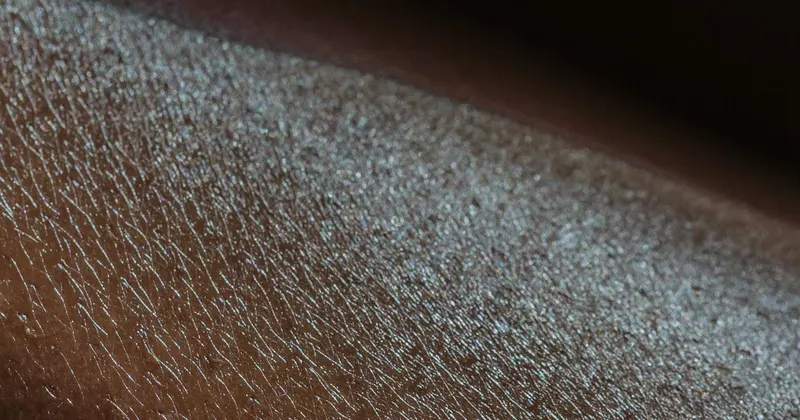
Your skin barrier is the outermost lipid-rich layer of your skin (called the stratum corneum), and when it's damaged, everything goes wrong at once: moisture escapes, irritants get in, and inflammation spirals. The good news is that a simplified 3-product routine with zero actives can restore it in about 6 weeks.
Key Takeaways
The repair protocol is three products only: gentle cleanser, restorative moisturizer, and mineral SPF. No actives.Key barrier-rebuilding ingredients include ceramides, fatty acids, squalane, niacinamide, and centella asiaticaStinging typically fades within 1-2 weeks; full baseline recovery takes 4-6 weeksReintroduce actives one at a time, lowest strength first, only after your skin no longer stings from basic moisturizerSlugging can support repair, but never over active ingredients. Occlusion increases penetration and can cause burns on weakened skin
What Is the 3-Product Barrier Repair Routine?
Repairing a damaged barrier means shifting from "treating" to "protecting." Step one is non-negotiable: stop all actives. Pause retinoids, AHAs, BHAs, and vitamin C until your skin has recovered.
Your entire routine should be three products:
1. Gentle cleanser. Non-foaming, creamy formulas that don't leave your skin feeling "squeaky clean." That squeaky feeling means stripped lipids. Go for low-pH, fragrance-free options. High-pH foaming cleansers dissolve protective oils and push your skin's pH toward alkaline, which encourages bacterial growth 1.
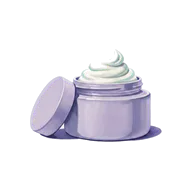
2. Restorative moisturizer. This is the workhorse of your recovery. It supplies the lipids your barrier needs to rebuild its structure. Look for the ingredients listed in the next section.
3. Mineral SPF. UV exposure slows barrier recovery, so sun protection is part of the healing process, not optional. Reapply every 2 hours when outdoors. No sunscreen provides 100% protection, so pair it with shade and protective clothing when you can.
A note on double cleansing: Only double-cleanse in the evening if you wore heavy makeup or water-resistant sunscreen. If your skin is extremely sensitized, a single gentle wash is enough. Let your skin's comfort level guide this decision rather than following a rigid rule.
Which Ingredients Actually Rebuild the Skin Barrier?
Your routine should be boring. Your product formulas should not. These biological building blocks directly support your barrier's lipid matrix:
| Ingredient | What it does | Why it matters for repair |
|---|---|---|
| Ceramides | Essential lipids that "glue" skin cells together | Directly replenishes the damaged mortar between your cells 1 |
| Fatty acids and squalane | Mimic your skin's natural sebum | Restores oil balance and fills gaps in the lipid matrix |
| Niacinamide (vitamin B3) | Boosts your skin's own ceramide production | Supports long-term barrier strength, not just a topical patch 2 |
| Centella asiatica | Anti-inflammatory that supports cellular repair | May speed healing without irritating compromised skin |
| Panthenol (pro-vitamin B5) | Anti-inflammatory humectant | Draws in moisture while calming irritation |
Here's why the ceramide-niacinamide combination matters. Ceramides are a direct replacement: you're applying the exact lipids your barrier has lost. Niacinamide works differently by stimulating your skin to produce more of its own ceramides 2. Both approaches support repair, and products combining them may offer complementary benefits.
Does Slugging Help with Barrier Repair?
Sealing in moisture with an occlusive layer (like squalane oil or Aquaphor over moisturizer) can support barrier repair by reducing transepidermal water loss while the lipid matrix rebuilds 3.
Important warning: Never slug over active ingredients like retinol or acids. The occlusion increases penetration and can cause chemical burns on weakened skin. Since the repair protocol eliminates all actives, this shouldn't be a concern during your recovery period. But it becomes critical when you eventually reintroduce them. Save slugging for your "boring" recovery nights only.
What Does Barrier Recovery Actually Look Like Week by Week?
Skin turnover can't be rushed. Here's what to expect when you commit to the protocol:
Weeks 1-2: Less stinging. The burning sensation fades as microscopic cracks in your barrier start to close. Products that previously stung may become tolerable. This is your first measurable sign that repair is working.
Weeks 2-3: Hydration returns. Transepidermal water loss slows down. Your skin feels less tight and starts holding onto its own moisture instead of losing it through a compromised barrier. You may notice you need less moisturizer to feel comfortable.
Weeks 3-4: Breakouts slow. As pH normalizes and inflammation drops, reactive breakouts start clearing. If your breakouts were barrier-related (inflamed bumps rather than clogged pores), this is when you should see meaningful improvement.
Weeks 4-6: Back to baseline. Your skin can tolerate products again. Only now is it safe to reintroduce one active at a time, starting at the lowest strength. Don't reintroduce more than one active per week. If a reaction occurs, you need to know which product caused it.
The minimum commitment is 2-4 weeks. Reaching a true baseline usually takes the full 6. Consistency beats novelty here.
How Do You Reintroduce Actives After Barrier Repair?
Patience during this phase prevents undoing weeks of recovery.
- One active at a time. Start with the one your skin tolerated best before the damage occurred
- Lowest strength available. If you were using 1% retinol before, restart with 0.3% or 0.25%
- Reduced frequency. Begin with 2-3 times per week rather than daily
- Watch for stinging. If products start burning again, your barrier isn't ready. Pause the active and continue the repair protocol for another 1-2 weeks
- Always patch test. Apply to a small area on your inner arm first, then a small section of your face, before full application
The Skin Bliss Routine Builder can help you sequence your reintroduction plan with ingredient-smart scheduling, spacing actives appropriately and flagging combinations that may overwhelm a recently recovered barrier.
If you're not sure whether your symptoms point to barrier damage in the first place, see our guide to 5 signs your skin barrier is damaged. And if you suspect over-exfoliation triggered the damage, our breakdown of the over-exfoliation breakout cycle explains why more actives make it worse.
FAQ
How long does it take to repair a damaged skin barrier?
Most people notice reduced stinging within 1-2 weeks. Hydration improves by weeks 2-3, breakouts slow by weeks 3-4, and full baseline recovery (where your skin can tolerate actives again) typically takes 4-6 weeks. The timeline depends on the severity of damage and how consistently you follow the simplified protocol.
Can I use vitamin C while repairing my barrier?
Vitamin C is an active that can irritate compromised skin, so it should be paused during the repair phase along with retinoids, AHAs, and BHAs. Reintroduce it only after your skin no longer stings from basic moisturizer, starting with a lower concentration than you previously used. Patch test before full application.
What moisturizer is best for barrier repair?
Look for formulas containing ceramides, fatty acids, niacinamide, and centella asiatica or panthenol. You want a combination of direct lipid replacement (ceramides, fatty acids) and ingredients that support your skin's own repair mechanisms (niacinamide). Fragrance-free formulas with a rich, non-greasy texture tend to work well for most skin types.
Is barrier damage permanent?
No. Your skin barrier is a self-repairing structure. With consistent care (simplified routine, zero actives, lipid-rich moisturizer, and sun protection) most barrier damage resolves within 4-6 weeks. The barrier continuously regenerates as part of normal skin turnover.

In your browser
Free Skin Quiz: Understand your skin profile in under 5 minutes
Oily or dry is only the start. Find out what your skin actually needs across six skin dimensions, with a plain note on what each one means for your routine. Results appear in your browser, and you can keep them in the app.

Maria combines her background in AI research with a passion for evidence-based skincare. She built Skin Bliss to help people make informed decisions about their skin, backed by science rather than marketing.
Sources (3)
- Elias, P.M. (2005). "Stratum corneum defensive functions: an integrated view." *Journal of Investigative Dermatology*.
- Tanno, O. et al. (2000). "Nicotinamide increases biosynthesis of ceramides as well as other stratum corneum lipids to improve the epidermal permeability barrier." *British Journal of Dermatology*.
- Rawlings, A.V. & Harding, C.R. (2004). "Moisturization and skin barrier function." *Dermatologic Therapy*.