
Retinoids vs. Exosomes vs. Polynucleotides: What Actually Rebuilds Skin-and What's Just Hype?
Discover the science behind skin rejuvenation with retinoids, exosomes, and polynucleotides: explore their mechanisms, clinical evidence, and how to integrate them into your skincare routine.

Maria Otworowska, PhD, Co-founder of Skin Bliss
· 7 min read
The skincare world is buzzing with breakthrough ingredients promising to turn back time, but how do you separate science-backed solutions from marketing magic? Three powerhouse categories are dominating the conversation: retinoids (the proven veterans), exosomes (the cellular messengers), and polynucleotides (the DNA rebuilders). Let's dive deep into the mechanisms, clinical evidence, and real-world application of these skin-rebuilding ingredients to help you make informed decisions for your skincare routine.
The Cellular Symphony: How These Ingredients Actually Work
Retinoids: The Nuclear Powerhouse
Retinoids are the gold standard for a reason. These vitamin A derivatives work by binding directly to nuclear receptors in your skin cells-specifically retinoic acid receptors (RAR) and retinoid X receptors (RXR). Once bound, they essentially reprogram your skin cells to:[^1][^2][^3][^4]
- Boost collagen synthesis by 20-30% through enhanced fibroblast activity[^5]
- Inhibit matrix metalloproteinases (MMPs) that break down existing collagen[^3][^1]
- Accelerate keratinocyte turnover, revealing fresher skin underneath[^4]
- Regulate melanogenesis to fade hyperpigmentation[^4]
The mechanism is well-established: retinoids penetrate the skin, convert to their active form (tretinoin), and directly influence gene expression to rebuild your skin's structure from within.[^2][^3]
Exosomes: The Cellular Communication Network
Exosomes represent a fascinating leap in skincare science-these 30-150 nanometer vesicles act as biological messengers between cells. Derived from stem cells (often mesenchymal stem cells), exosomes carry a sophisticated cargo of:[^6][^7]
- MicroRNAs and mRNAs that can reprogram cellular behavior[^8][^6]
- Growth factors like VEGF and TGF-β that stimulate repair[^9][^6]
- Proteins and lipids that modulate inflammation and healing[^7][^9]
Unlike topical ingredients that work on the skin's surface, exosomes facilitate intercellular communication, essentially telling your skin cells to repair, regenerate, and restore themselves. They can reduce inflammation, stimulate collagen production, and enhance the skin's natural healing mechanisms.[^10][^11][^7][^9]
Polynucleotides: The DNA Repair System
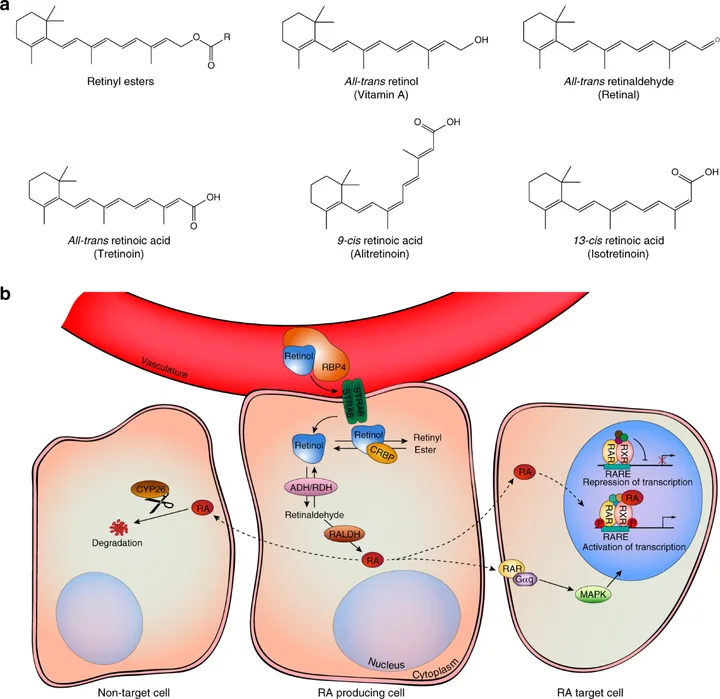
Molecular structures of retinoids and their cellular mechanism of action involving vitamin A receptor binding and gene transcription regulation via: Nature
Polynucleotides, typically derived from salmon DNA due to its 95% similarity to human DNA, work through multiple pathways:[^12][^13]
- Activate adenosine A2A receptors to reduce inflammation[^14][^12]
- Stimulate fibroblast proliferation and enhance collagen synthesis[^15][^12]
- Promote angiogenesis through enhanced VEGF expression[^13][^12]
- Inhibit tyrosinase activity to reduce melanin production[^16][^12]
The biocompatibility of salmon-derived polynucleotides allows them to integrate seamlessly with skin repair processes, acting as scaffolding for tissue regeneration.[^17][^15]
Clinical Evidence: Separating Facts from Marketing Claims
Clinical Evidence Pyramid: From Proven to Promising in Skin Regeneration
Retinoids: The Evidence Heavyweight
The clinical evidence for retinoids is unparalleled. Tretinoin, the most potent retinoid, has been proven to:[^2]
- Reduce fine lines by 40-60% in clinical trials[^5][^18]
- Improve skin texture by 30-50% over 12-24 weeks[^18][^2]
- Stimulate collagen production with measurable histological changes[^1][^2]
FDA approval status: Tretinoin, adapalene, and tazarotene are all FDA-approved for treating photoaging and acne. Over-the-counter retinol formulations have shown comparable effects in some studies, though with reduced potency.[^19][^20][^21][^2][^18]
Exosomes: Promising but Preliminary
Exosome research is rapidly expanding but still in clinical infancy. Current evidence includes:[^10][^22]
- 12 clinical studies showing improvements in skin regeneration and wound healing[^23][^10]
- 30-50% improvement in healing rates in diabetic models[^24][^23]
- High patient satisfaction rates (80-98%) in aesthetic applications[^22][^10]
Regulatory status: No FDA-approved exosome products exist. The FDA explicitly states that exosomes for therapeutic use are regulated as drugs and biologics, requiring premarket approval. Currently, only topical cosmetic use is permitted.[^25][^26][^27]
Polynucleotides: Limited but Growing
Polynucleotide research shows 9 clinical studies with promising results:[^28][^13]
- Significant improvements in wrinkle reduction and skin texture[^29][^28]
- Well-tolerated with minimal side effects (mainly minor swelling)[^13][^30][^28]
- Enhanced skin elasticity and hydration in multiple study populations[^14][^13]
Regulatory status: Not FDA regulated as cosmetic ingredients. Safety profiles appear favorable, but long-term studies are limited.[^30][^14]
Delivery Systems: Getting Active Ingredients Where They Need to Go
The effectiveness of any skincare ingredient depends heavily on its delivery system. Here's how each category addresses the challenge of skin penetration:
Retinoids: Advanced Delivery Evolution
Modern retinoid formulations have evolved beyond basic creams:[^31][^32]
- Microsponge technology provides controlled release and reduced irritation[^33][^32]
- Encapsulated retinol in glycospheres offers sustained activity[^34][^31]
- Nanoformulations improve stability and penetration while minimizing side effects[^2][^32]
Exosomes: Size Advantage
Exosomes have a natural delivery advantage due to their nanoscale size (30-150nm), allowing enhanced penetration through skin barriers. They can be delivered through:[^7][^35]
- Topical serums for daily application[^35][^7]
- Microneedling treatments for deeper penetration[^11][^26]
- Professional procedures combined with other modalities[^10]
Polynucleotides: Versatile Application
Polynucleotides offer flexibility in delivery methods:[^13][^14]
- Injectable treatments for direct dermal delivery (professional only)
- Topical formulations for at-home use
- Hydrogel systems for sustained release[^14][^13]
Safety Profiles: What You Need to Know
Retinoids: Well-Documented Risks and Benefits
Retinoid safety is extensively studied:[^1][^2]
Common side effects:
- Retinoid dermatitis (irritation, redness, peeling)
- Increased photosensitivity
- Initial "purging" period
Pregnancy considerations: Not recommended during pregnancy due to potential teratogenic effects[^2][^19]
Management strategies: Start with lower concentrations, gradually increase frequency, always use SPF[^18][^2]
Exosomes: Generally Well-Tolerated
Current safety data suggests minimal adverse effects:[^10][^22]
- Mild redness occasionally reported
- No significant systemic effects documented
- Limited long-term safety data available
Key concerns: Quality control and sourcing vary significantly between manufacturers[^22][^25]
Polynucleotides: Favorable Safety Profile
Clinical studies show good tolerability:[^28][^30]
- Minor injection site reactions (swelling, bruising)
- No significant systemic adverse events
- Biocompatible due to salmon DNA similarity to human DNA[^12][^36]
Cost-Effectiveness Analysis
| Ingredient | Initial Cost | Maintenance | Professional Required | Results Timeline |
|---|---|---|---|---|
| Retinoids | $20-200 | Low | No (OTC options) | 3-6 months |
| Exosomes | $100-800 | Moderate | Sometimes | 4-8 weeks |
| Polynucleotides | $300-1500+ | High | Yes (injectable) | 2-4 months |
Two Science-Based Minimalist Routines
Routine 1: Anti-Aging Powerhouse (Wrinkle-Focused)
Morning:
- Gentle cleanser: Remove overnight buildup without stripping
- Exosome serum: Apply to clean, damp skin for enhanced cellular communication
- SPF 30+ broad-spectrum: Wait 5 minutes after serum, reapply every 2 hours
Evening:
- Same gentle cleanser
- Retinol 0.25-0.5%: Start 2x/week, build to nightly as tolerated
- Optional moisturizer: If experiencing dryness
Why this works: Combines proven retinoid efficacy with cutting-edge exosome communication for maximum collagen stimulation and cellular repair.
Routine 2: Sensitive Skin Regeneration (Redness-Prone)
Morning:
- Cream cleanser: Ultra-gentle, maintains barrier function
- Polynucleotide serum: Focus on areas of sensitivity and inflammation
- Mineral SPF 30+: Zinc oxide preferred for less irritation
Evening:
- Same cream cleanser
- Retinaldehyde 0.05%: Use every other night initially, gentler retinoid alternative
- Barrier repair moisturizer: Support skin recovery overnight
Why this works: Leverages polynucleotide anti-inflammatory properties while introducing retinoid benefits through the gentler retinaldehyde pathway.
The Bottom Line: Evidence-Based Recommendations
For proven results: Retinoids remain the gold standard with decades of clinical evidence and FDA approval. Start with retinol or adapalene for gentler introduction to retinoid benefits.[^2][^18]
For cutting-edge enhancement: Exosomes show remarkable promise for cellular communication and repair, but ensure you're purchasing from reputable sources with proper quality control.[^10][^25]
For sensitive skin breakthroughs: Polynucleotides offer unique anti-inflammatory benefits with good tolerability, particularly for those who can't tolerate traditional retinoids.[^28][^14]
The reality check: While newer ingredients like exosomes and polynucleotides are exciting, they lack the robust clinical evidence of retinoids. Consider them as complementary rather than replacement therapies.
Your skin deserves ingredients backed by science, not just social media hype. Start with proven foundations (retinoids + sunscreen), then explore innovative additions (exosomes, polynucleotides) as your skin tolerates and your budget allows.

In your browser
Free Skin Quiz: Understand your skin profile in under 5 minutes
Oily or dry is only the start. Find out what your skin actually needs across six skin dimensions, with a plain note on what each one means for your routine. Results appear in your browser, and you can keep them in the app.

Maria combines her background in AI research with a passion for evidence-based skincare. She built Skin Bliss to help people make informed decisions about their skin, backed by science rather than marketing.
Sources (37)
- Retinoids in the treatment of skin aging: an overview of clinical efficacy and safety
- Use of Retinoids in Topical Antiaging Treatments
- Retinoids - A unique ingredient for skin rejuvenation employing nanocarrier systems: A brief review
- Retinoids: active molecules influencing skin structure formation in cosmetic and dermatological treatments
- Retinoids in Anti-Aging Skincare with Dr. Face Technologies - Sciety
- Umbilical cord‐derived mesenchymal stem cell secretome promotes skin regeneration and rejuvenation: From mechanism to therapeutics
- Everything You Need to Know About Exosomes in Skincare - Medik8
- Extracellular Vesicles Derived from Mesenchymal Stem Cells Promote Wound Healing and Skin Regeneration by Modulating Multiple Cellular Changes: A Brief Review
- Exosomes in skin photoaging: biological functions and therapeutic applications
- Effectiveness of Extracellular Vesicle Application in Skin Aging: A Systematic Review
- What is the Mechanism of Exosomes? - Vivana MD
- The Science Behind PDRN | How Salmon DNA Works - Sparrow MD
- Polynucleotides in Aesthetic Medicine: A Review of Current Applications and Evidence
- Polynucleotides and polydeoxyribonucleotides in dermatology - JCAS
- Polynucleotides in Skin Rejuvenation: The Latest Research
- The Magic of PDRN: Unlocking Skin Regeneration - Centellian24
- The Science and Applications of Polynucleotides - Deborah Winter
- Do retinoids really reduce wrinkles? - Harvard Health
- FDA approves first OTC retinoid for acne - The Pharmaceutical Journal
- Galderma Receives FDA Approval for AKLIEF® (trifarotene) Cream
- Evidence for the Efficacy of Over-the-counter Vitamin A Cosmetic Products in the Treatment of Facial Skin Aging: A Systematic Review
- Are exosomes effective in cosmetics - Cell Guidance Systems
- Exosomes As A Revolutionary Tool In Wound Healing And Skin Regeneration: Current Evidence And Therapeutic Potential
- Exosomes: A Promising Strategy for Repair, Regeneration and Treatment of Skin Photoaging
- What to look for in new exosome products - The PMFA Journal
- Why exosomes are an exciting breakthrough in skincare | ASPS
- Public Safety Notification on Exosome Products - FDA
- The Effectiveness of Polynucleotides in Esthetic Medicine - PubMed
- The Effectiveness of Polynucleotides in Esthetic Medicine: A Systematic Review
- Long-term safety of polynucleotides - BTX London
- RetinSphere® Technology - Cantabria Labs
- How delivery systems change skincare effectiveness - PCA Skin
- HBS - Retinoids & Microsponge® | Minerals Technologies Inc.
- RetinSphere® Technology - Cantabria Labs
- exosomes-exosomas · Neftis Laboratorios | Build your Brand
- What Is PDRN (Salmon Sperm)? The Skin-Rejuvenating Power of Nature
- Platelet-Rich Plasma in Dermatology: New Insights on the Cellular Mechanism of Skin Repair and Regeneration