Journal · Skin Barrier & Recovery
What Is the Skin Microbiome and Why Does It Matter for Your Skin?
Your skin hosts trillions of microbes that help defend your barrier and regulate inflammation. Learn what the skin microbiome is and why balance matters

Maria Otworowska, PhD, Co-founder of Skin Bliss
· 9 min read
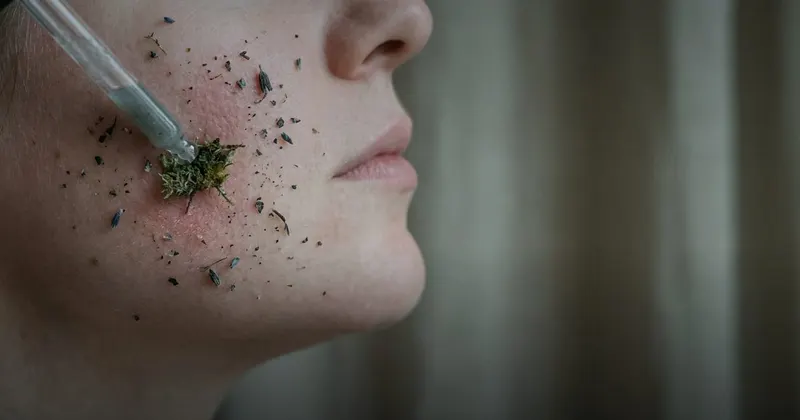
The skin microbiome is the collective community of trillions of bacteria, fungi, viruses, and other microorganisms that live on your skin's surface, forming a protective ecosystem that helps regulate immune responses, defend against pathogens, maintain barrier integrity, and influence how your skin looks and feels every day.
That number is worth sitting with. Your skin hosts more microbial cells than there are people on Earth, and most of them are doing useful work. They produce antimicrobial compounds, train your immune system, and even help manufacture ceramides that keep moisture locked in. When this ecosystem is balanced, your skin tends to behave. When it is not, problems show up fast.

Key Takeaways
What exactly lives on your skin?
Your skin is colonized by hundreds of bacterial species, with the composition varying dramatically depending on the body site. Oily areas like your forehead and nose tend to favor Cutibacterium acnes and Staphylococcus species. Moist zones like your armpits host different communities than the dry skin on your shins 1. This site-specific variation is normal and healthy.
The major players include Staphylococcus epidermidis, one of the most abundant skin colonizers, which actively defends against harmful microbes and supports barrier function 2. Cutibacterium acnes often gets blamed for breakouts, but in balanced amounts it helps maintain skin pH and produces short-chain fatty acids that nourish skin cells 3. Malassezia yeasts, Corynebacterium, and even viruses and mites round out the community. Think of your skin as a city. Each neighborhood -- oily, moist, dry -- has its own residents adapted to that environment. Diversity across these neighborhoods is a sign of a healthy city.
Why does microbial diversity matter for skin health?
Diversity is the single most reliable indicator of a healthy skin microbiome. When researchers compare the microbial communities of people with healthy skin versus those with conditions like acne or eczema, the pattern is consistent: healthy skin has more diverse bacterial populations 4. Atopic dermatitis flares, for example, coincide with a sharp drop in diversity and an overgrowth of Staphylococcus aureus -- a pathogenic species that thrives when beneficial microbes lose their foothold 4.
This is not just a correlation. When pathogenic bacteria dominate, they trigger inflammatory cascades that damage the skin barrier, increase water loss, and make skin more reactive to products and environmental stressors. Reduced diversity also means fewer antimicrobial peptides being produced by commensal bacteria, which weakens your skin's front-line defense against infection 5. The practical takeaway: anything that kills bacteria indiscriminately -- harsh cleansers, overuse of antibiotics, aggressive exfoliation -- can reduce the diversity your skin depends on.
How does the microbiome protect your skin barrier?
Your skin barrier is a structure of dead skin cells held together by a lipid matrix of ceramides, cholesterol, and fatty acids. The microbiome does not just sit on top of this barrier. It is actively involved in building and maintaining it.
Staphylococcus epidermidis produces a sphingomyelinase enzyme that helps your skin generate ceramides -- the lipids that make up roughly 50% of your barrier's structure 6. In animal studies, the presence of S. epidermidis significantly increased skin ceramide levels and reduced water loss from damaged skin 6. Your commensal bacteria also produce antimicrobial peptides (AMPs) that work alongside your own immune system. The three major families -- cathelicidins, defensins, and dermcidins -- directly inhibit pathogen growth while also stimulating wound healing and immune regulation 5.
The acid mantle of your skin, which sits at a pH around 4.7 on average, is another microbiome-dependent defense. Research shows that each one-unit decrease in skin pH corresponds to roughly 68% more S. aureus cell death 7. Your beneficial bacteria help maintain this acidic environment, creating conditions that are hostile to pathogens but comfortable for them.
What is the gut-skin axis?
The gut-skin axis describes a bidirectional communication network between your digestive tract and your skin, mediated by immune signaling, microbial metabolites, and inflammatory pathways 8. This is not a fringe concept. The connection has been documented across multiple skin conditions, including psoriasis, atopic dermatitis, acne, and rosacea 9.
The mechanism works partly through short-chain fatty acids (SCFAs) like butyrate, which gut bacteria produce from dietary fiber. These SCFAs modulate immune function systemically, and research shows that butyrate can strengthen skin barrier function by altering keratinocyte metabolism and differentiation 10. Gut dysbiosis -- from poor diet, stress, or antibiotic use -- can trigger systemic inflammation that shows up on your skin as flares, increased sensitivity, or slow healing. Oral probiotics have shown promise in clinical trials for improving certain skin conditions, which further supports the link between gut microbial health and skin outcomes 8.
What happens when the skin microbiome is disrupted?
Microbiome disruption -- called dysbiosis -- occurs when the balance between beneficial and harmful microbes shifts. The consequences are visible and measurable. Increased transepidermal water loss, heightened inflammation, greater susceptibility to infection, and chronic conditions like eczema or acne can all follow 4.
Dysbiosis does not happen overnight. It is usually the result of cumulative insults: overcleansing with high-pH soaps, prolonged antibiotic use (both oral and topical), environmental pollution, chronic stress, and high-sugar diets that alter both gut and skin microbial communities 11. One study found that systemic antibiotics cause direct, long-lasting changes to skin microbial communities and can expand antimicrobial resistance -- meaning your skin may not fully bounce back to its pre-treatment state 11. Understanding these triggers is the first step toward protecting your microbiome. The Skin Bliss app can help you evaluate whether your current products and routine are supporting or undermining your microbial balance through its Ingredient Compatibility Checker.
How can you tell if your skin microbiome is healthy?
You do not need a lab test to get a rough sense of your microbiome's status. Healthy microbiome signs include skin that feels comfortable throughout the day, minimal reactivity to weather changes or new products, rare breakouts that resolve quickly, and an even texture without persistent dry or oily patches.
Warning signs of disruption include sudden sensitivity to products that previously worked fine, frequent or slow-healing skin infections, persistent redness or inflammation, and skin that swings between extreme dryness and oiliness despite a consistent routine. If these signs sound familiar, the issue may not be your products. It may be the ecosystem underneath them. Professional skin microbiome testing is available through some dermatologists and can identify specific bacterial imbalances, though it is still an emerging field and not widely standardized. For most people, paying attention to how your skin responds to changes in your routine offers practical insight without the expense.
Frequently asked questions
Does washing your face destroy the skin microbiome?
Gentle cleansing does not destroy your microbiome, but it does temporarily shift its composition. Research shows that cleansing with pH-balanced products (around pH 5.5) has minimal long-term impact on microbial communities, while high-pH soaps and harsh surfactants can cause more lasting disruption 7. Stick to gentle, pH-appropriate cleansers and avoid washing more than twice daily.
Can you test your skin microbiome at home?
Some companies offer at-home skin microbiome testing kits that analyze bacterial swabs. These can identify dominant species and flag imbalances, but the science of interpreting results and translating them into product recommendations is still developing. They are informative but not yet a substitute for clinical assessment.
Is it possible to have too much bacteria on your skin?
Total bacterial count matters less than the ratio of beneficial to harmful species. A healthy microbiome is dense with diverse, commensal organisms. Problems arise when one species overgrows at the expense of others -- S. aureus dominance in eczema or specific C. acnes strains in acne, for example 34. Diversity and balance are what you want, not a low total count.
How long does it take for the skin microbiome to recover after disruption?
Recovery time depends on the severity and cause of disruption. Minor disturbances from a single harsh product may resolve in days. Disruption from systemic antibiotics can take weeks to months, and some studies suggest the skin microbiome may not fully return to its pre-treatment composition 11. Consistent use of gentle, pH-balanced products supports faster recovery.
Does diet affect the skin microbiome?
Yes. The gut-skin axis means that dietary changes influence skin microbial communities indirectly through systemic immune modulation. Diets high in fiber support SCFA production in the gut, which has downstream anti-inflammatory effects on skin 10. High-sugar diets, on the other hand, may promote inflammatory bacterial species in both the gut and on the skin.

In your browser
Free Skin Quiz: Understand your skin profile in under 5 minutes
Oily or dry is only the start. Find out what your skin actually needs across six skin dimensions, with a plain note on what each one means for your routine. Results appear in your browser, and you can keep them in the app.

Maria combines her background in AI research with a passion for evidence-based skincare. She built Skin Bliss to help people make informed decisions about their skin, backed by science rather than marketing.
Sources (11)
- Byrd, A.L. et al. (2018). "The human skin microbiome." *Nature Reviews Microbiology*.
- Brown, M.M. & Horswill, A.R. (2020). "Staphylococcus epidermidis -- Skin friend or foe?" *PLoS Pathogens*.
- Claudel, J.P. et al. (2019). "Staphylococcus epidermidis and Cutibacterium acnes: Two Major Sentinels of Skin Microbiota and the Influence of Cosmetics." *Microorganisms*.
- Paller, A.S. et al. (2019). "The microbiome in patients with atopic dermatitis." *Journal of Allergy and Clinical Immunology*.
- Gallo, R.L. & Nakatsuji, T. (2011). "Microbial symbiosis with the innate immune defense system of the skin." *Journal of Investigative Dermatology*.
- Zheng, Y. et al. (2022). "Commensal Staphylococcus epidermidis contributes to skin barrier homeostasis by generating protective ceramides." *Cell Host & Microbe*.
- Schmid-Wendtner, M.H. & Korting, H.C. (2006). "The pH of the skin surface and its impact on the barrier function." *Skin Pharmacology and Physiology*.
- De Pessemier, B. et al. (2021). "Gut-Skin Axis: Current Knowledge of the Interrelationship between Microbial Dysbiosis and Skin Conditions." *Microorganisms*.
- Salem, I. et al. (2018). "The Gut Microbiome as a Major Regulator of the Gut-Skin Axis." *Frontiers in Microbiology*.
- Schwarz, A. et al. (2022). "Gut-derived short-chain fatty acids modulate skin barrier integrity by promoting keratinocyte metabolism and differentiation." *Gut Microbes*.
- Koo, H. et al. (2022). "Alterations of human skin microbiome and expansion of antimicrobial resistance after systemic antibiotics." *Science Translational Medicine*.