Journal · Devices, Body & Lifestyle
How Does Sleep Affect Your Skin? The Science of Beauty Sleep
How sleep shapes skin repair, collagen production, and barrier recovery, plus what poor sleep may cost your hydration, elasticity, and visible glow

Maria Otworowska, PhD, Co-founder of Skin Bliss
· 9 min read
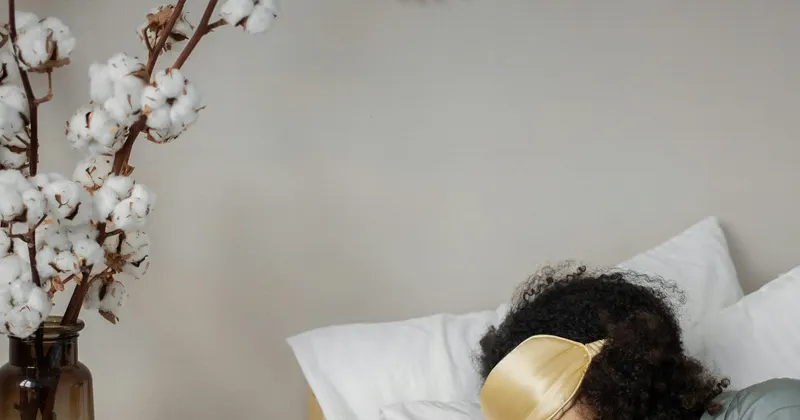
Sleep is the period when your skin shifts into active repair mode, increasing blood flow to the dermis, accelerating collagen synthesis, and restoring the lipid barrier that prevents water loss and shields against environmental irritants throughout the day 1. Poor sleep disrupts every stage of this process.
"Beauty sleep" sounds like something your grandmother made up. It is not. The research behind sleep and skin health is more robust than most people expect, and the mechanisms go far deeper than just looking rested. Your body runs a tightly scheduled maintenance shift every night, and your skin is one of the biggest beneficiaries.

Key Takeaways
What actually happens to your skin while you sleep?
Your skin operates on a circadian rhythm. During the day, it focuses on defense: UV protection, antioxidant deployment, and barrier maintenance. At night, the priorities flip to repair and regeneration. Blood flow to the skin increases, which is why your face may feel warmer at bedtime. This increased circulation delivers oxygen and nutrients that fuel cell turnover 4.
The real heavy lifting happens during deep sleep, also called slow-wave sleep. Your pituitary gland releases roughly 70% of its daily growth hormone output during these stages 2. Growth hormone is not just for growing taller. It stimulates fibroblasts, the cells responsible for producing collagen and elastin. Without adequate deep sleep, this repair window shrinks.
Your skin also ramps up its absorption of topical products at night. Trans-epidermal water loss (TEWL), the rate at which moisture escapes through the skin surface, follows a circadian pattern and peaks overnight 5. That is one reason why a good evening moisturizer matters, and why sleeping in a dehydrated state shows on your face by morning.
Does sleep deprivation cause skin aging?
Yes, and the evidence is more specific than you might expect. A clinical study from University Hospitals Case Medical Center found that chronic poor sleepers showed increased signs of intrinsic aging, including fine lines, uneven pigmentation, and reduced elasticity. Good sleepers, on the other hand, recovered 30% faster from skin barrier disruption caused by tape-stripping 1.
A separate study on Korean women in their 40s found that just one day of sleep restriction significantly reduced skin hydration, increased wrinkles, and worsened elasticity 6. The effects were measurable within 24 hours. Skin gloss, texture, and transparency all declined after a single night of poor sleep.
The aging connection makes biological sense. Collagen production depends on growth hormone, and growth hormone depends on deep sleep 2. Cut into that sleep window, and you are cutting into your skin's repair budget.
How does sleep loss change the way your face looks?
Other people can literally see when you have not slept. A study published in the journal Sleep asked independent raters to evaluate photographs of people after normal sleep versus sleep deprivation. The sleep-deprived faces were rated as less healthy, less attractive, and more tired 7. Raters were also less inclined to socialize with the sleep-deprived individuals.
A follow-up study identified the specific visual cues: hanging eyelids, redder and more swollen eyes, darker under-eye circles, paler skin, more fine lines, and droopier mouth corners 8. These are not subjective impressions. They are measurable changes in facial appearance that other people detect reliably.
The mechanism involves both fluid redistribution and inflammation. Poor sleep increases cortisol, which promotes water retention in some tissues (hence the puffiness) while simultaneously increasing trans-epidermal water loss from the skin surface. The result is a paradox: a puffy face with dehydrated skin.
What role does cortisol play in sleep-related skin problems?
Cortisol is your body's primary stress hormone, and sleep deprivation keeps it elevated. After partial or total sleep loss, evening cortisol levels can rise by 37 to 45% 3. That matters for your skin because cortisol breaks down collagen, impairs wound healing, and triggers inflammatory pathways.
Chronic elevation of cortisol is linked to increased sebum production, which can worsen acne. It also weakens the skin barrier by degrading ceramides and other protective lipids. If you have ever noticed that your skin flares up after a stressful, sleep-deprived week, this is the biochemical explanation.
For people with inflammatory skin conditions like eczema or psoriasis, the effect is even more pronounced. Research shows that sleep deprivation at the early stages of a psoriatic flare can worsen inflammation through IL-1 beta and IL-6 pathways 9. Sleep is not just cosmetic. For compromised skin, it is therapeutic.
Does your brain's waste removal system affect your skin?
Your brain has its own cleaning crew called the glymphatic system. During deep sleep, cerebrospinal fluid flows through the brain at roughly twice the rate it does while you are awake, flushing out metabolic waste products including amyloid-beta and other neurotoxic proteins 10. This process depends heavily on non-rapid eye movement sleep.
While the glymphatic system cleans the brain rather than the skin directly, the systemic effects matter. Poor glymphatic function is associated with chronic inflammation, which circulates through your body and affects skin health. Think of it as upstream maintenance: a brain that cannot clear its own waste puts more inflammatory stress on every organ, including your largest one.
The hormonal cascade also connects the two. Melatonin, the hormone that initiates sleep, doubles as an antioxidant. In the skin, melatonin scavenges free radicals generated by UV exposure and other environmental damage 11. When sleep is disrupted and melatonin rhythms are thrown off, your skin loses one of its nighttime antioxidant defenses.
How much sleep does your skin actually need?
The standard recommendation of seven to nine hours is a reasonable target, but consistency matters more than sheer quantity. Research on sleep timing shows that irregular sleep schedules are independently associated with worse health outcomes, even when total sleep duration is adequate 12. Your circadian clock needs a predictable rhythm to properly sequence all the repair processes.
For skin specifically, the quality of your sleep may matter even more than the duration. Deep sleep is when the repair magic happens, and deep sleep is most abundant in the first half of the night. If you are getting seven hours but falling asleep at wildly different times, your skin is not getting the consistent repair window it needs.
The Skin Bliss app's Skin Diary can help you spot patterns between your sleep habits and skin condition over time. Tracking how your skin feels on mornings after good sleep versus poor sleep often reveals the connection faster than any study could.
Can better sleep replace your skincare routine?
No, but it can make your existing routine work significantly harder. Your skin absorbs active ingredients more efficiently at night, and the increased blood flow during sleep delivers those ingredients deeper into the dermis. A retinoid applied before a full night of sleep has a better shot at doing its job than one applied before four hours of tossing and turning.
Sleep also amplifies the effects of anti-inflammatory ingredients like niacinamide and centella asiatica. When your baseline cortisol is lower because you slept well, these ingredients are fighting less inflammation and can focus on repair. It is the difference between bailing water out of a boat and actually patching the hole.
That said, sleep alone will not fix sun damage, deep wrinkles, or hyperpigmentation. Think of sleep as the foundation. Your products are the tools. You need both, and neither works as well without the other.
Frequently asked questions
Does one bad night of sleep damage your skin?
A single night of poor sleep produces measurable changes in skin hydration, elasticity, and gloss 6. Your face may look paler and puffier, and under-eye circles can darken. These effects are temporary and typically reverse with a good night's rest. Chronic sleep deprivation is where lasting damage accumulates.
Is sleeping on your side or stomach bad for your skin?
Sleeping face-down or on your side creates prolonged compression on facial skin, which can contribute to sleep wrinkles over time. These are distinct from expression lines and tend to appear asymmetrically. Sleeping on your back reduces this compression. A silk pillowcase can help reduce friction if you are a side sleeper.
Does napping help your skin recover from lost sleep?
Short naps of 20 to 30 minutes can reduce cortisol and improve alertness, but they do not produce the sustained deep sleep cycles where most skin repair happens. Naps are useful for damage control, not a replacement for consistent nighttime sleep.
When should I apply my skincare routine relative to sleep?
Apply your evening routine 15 to 30 minutes before getting into bed. This gives products time to absorb before your face contacts the pillow. Active ingredients like retinoids, AHAs, and BHAs are best used at night since they can increase photosensitivity. Always pair nighttime actives with SPF the following morning and patch test new actives before adding them to your routine.

In your browser
Free Skin Quiz: Understand your skin profile in under 5 minutes
Oily or dry is only the start. Find out what your skin actually needs across six skin dimensions, with a plain note on what each one means for your routine. Results appear in your browser, and you can keep them in the app.

Maria combines her background in AI research with a passion for evidence-based skincare. She built Skin Bliss to help people make informed decisions about their skin, backed by science rather than marketing.
Sources (12)
- Oyetakin-White P et al. (2015). "Does poor sleep quality affect skin ageing?" *Clinical and Experimental Dermatology*.
- Van Cauter E, Plat L. (1996). "Physiology of growth hormone secretion during sleep." *Journal of Pediatrics*.
- Leproult R et al. (1997). "Sleep loss results in an elevation of cortisol levels the next evening." *Sleep*.
- Yosipovitch G et al. (2004). "Time-dependent variations of the skin barrier function in humans: transepidermal water loss, stratum corneum hydration, skin surface pH, and skin temperature." *Journal of Investigative Dermatology*.
- Le Fur I et al. (2001). "Stress-induced changes in skin barrier function in healthy women." *Journal of Investigative Dermatology*.
- Kim MA et al. (2019). "A study of skin characteristics with long-term sleep restriction in Korean women in their 40s." *Skin Research and Technology*.
- Axelsson J et al. (2010). "Beauty sleep: experimental study on the perceived health and attractiveness of sleep deprived people." *BMJ*.
- Sundelin T et al. (2013). "Cues of fatigue: effects of sleep deprivation on facial appearance." *Sleep*.
- Hirotsu C et al. (2019). "Immunomodulatory effects of sleep deprivation at different timing of psoriasiform process on skin inflammation." *Journal of Immunology Research*.
- Xie L et al. (2013). "Sleep facilitates clearance of metabolites from the brain: glymphatic function in aging and neurodegenerative diseases." *Molecular Neurodegeneration*.
- Fischer TW et al. (2013). "Melatonin's protective effect against UV radiation: a systematic review of clinical and experimental studies." *Journal of Pineal Research*.
- Chaput JP et al. (2020). "Sleep timing, sleep consistency, and health in adults: a systematic review." *Applied Physiology, Nutrition, and Metabolism*.