Journal · Skin Barrier & Recovery
What Is Slugging and How Does It Repair Your Skin Barrier?
What slugging is and how an occlusive layer may reduce water loss and support barrier repair overnight, plus who should skip this popular K-beauty trend

Maria Otworowska, PhD, Co-founder of Skin Bliss
· 7 min read
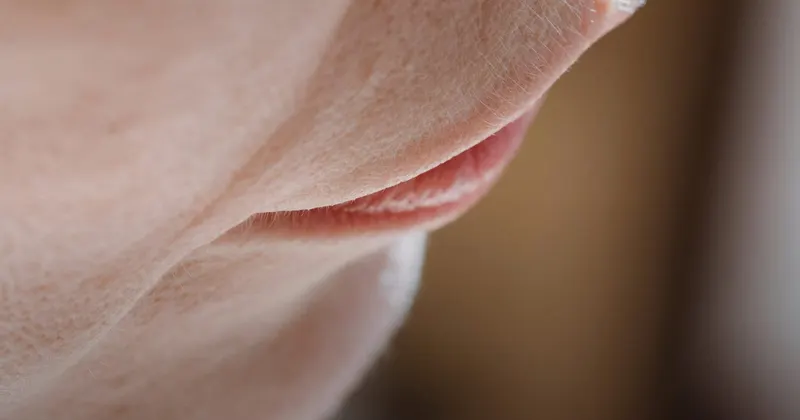
Slugging is a skincare technique where you apply a thin layer of an occlusive product, traditionally petroleum jelly, as the final step in your nighttime routine to create a physical seal that prevents transepidermal water loss and allows your skin barrier to repair itself while you sleep.
The name comes from the shiny, slug-like finish it leaves on your face. The idea came from Korean beauty culture, but the science behind it is older than any trend. Dermatologists have recommended occlusive moisturizers for decades. Slugging just gave the approach a catchy name and a wave of social media attention.
Key Takeaways
How does slugging actually repair the skin barrier?
Your skin barrier loses water constantly through a process called transepidermal water loss, or TEWL. In healthy skin, this rate is low: about 2 to 15 grams of water per square meter per hour. When the barrier is damaged, that number can spike to 50 or higher, which is why compromised skin always feels dry and tight no matter how much moisturizer you use 1.
Slugging works by placing an occlusive layer over your skin that physically blocks this water from escaping. Petroleum jelly reduces TEWL by up to 99%, which is more than any other topical ingredient 2. But the benefit goes beyond passive moisture trapping. Research shows that petrolatum permeates throughout the stratum corneum's intercellular spaces and actually accelerates barrier recovery rather than just sitting on the surface 2.
That acceleration happens because barrier repair is partly driven by TEWL itself. When your skin senses water loss, it triggers lipid production. By reducing water loss artificially, petrolatum gives your skin the stable, hydrated environment it needs to rebuild its natural ceramide, cholesterol, and fatty acid matrix without being under constant stress 3.
What products can you use for slugging?
Petroleum jelly is the classic choice and the most studied. But modern slugging, sometimes called Slugging 2.0, has expanded the options to include lighter alternatives that suit different skin types and preferences.
| Product type | Occlusive strength | Best for | Considerations |
|---|---|---|---|
| Petroleum jelly | Very high (~99%) | Dry skin, severe barrier damage | Heavy feel, potential pillow transfer |
| Healing ointments (CeraVe, Aquaphor) | High | Dry to normal skin, general barrier support | Lighter than pure petrolatum, contain ceramides or panthenol |
| Squalane oil | Moderate | Oily or acne-prone skin | Lightweight, non-comedogenic, absorbs faster |
| Ceramide balms | Moderate to high | All skin types during repair | Repair and protect simultaneously |
| Silicone-based products | Low to moderate | Oily skin, daytime use | Breathable film, water-vapor permeable |
Squalane deserves special attention. It is a saturated derivative of squalene, a lipid that your skin naturally produces as part of its sebum. Human sebum contains about 13% squalene 4. Because squalane mimics what your skin already makes, it is well tolerated and unlikely to clog pores. Research confirms its emollient properties and safety profile across skin types 4.
Silicone-based products like dimethicone are technically not true occlusives. Studies show they form water-vapor-permeable films rather than blocking moisture loss the way petrolatum does 5. They protect the surface, but they do not trap moisture as aggressively. Useful for daytime slugging or for people who find petrolatum too heavy.
How do you apply slugging products correctly?
The technique is simple, but a few details make the difference between waking up with plump skin and waking up with stained pillowcases and no noticeable improvement.
Start with clean skin. Double cleanse if you wear makeup or sunscreen. Then apply your full evening skincare routine: hydrating toner, serums, moisturizer. Wait 5 to 10 minutes for everything to absorb. Then take a pea-sized amount of your chosen occlusive, warm it between your fingertips, and press it gently into your skin. Do not rub. Pressing deposits a thin, even layer without displacing the products underneath.
Focus on areas that tend to be driest: cheeks, around the mouth, forehead. If you are oily in the T-zone, skip that area entirely. There is no rule that says you have to slug your entire face.
Wait another 5 to 10 minutes before touching your pillow. This lets the occlusive set slightly and reduces transfer. A silk or satin pillowcase helps too, both for reduced product transfer and for less friction on your skin overnight.
When should you slug and when should you skip it?
Slugging is most effective when your skin is losing moisture faster than it should be. That means it works best during barrier recovery, in dry or cold climates, and during winter months when indoor heating drops humidity levels. Research confirms that low-humidity environments significantly increase TEWL, and occlusive products directly counteract that effect 6.
You should skip slugging, or at least modify your approach, if you are using certain actives. Sealing retinoids or strong AHAs under an occlusive can amplify their irritation potential. If you are using a retinoid at night, either slug on your off nights or apply your retinoid, wait 30 minutes, then slug. Some people tolerate the combination, others do not. Patch test first.
Skin Bliss can help you figure out whether your current routine is compatible with slugging through its Ingredient Compatibility Checker, which flags potential clashes between products you are layering together.
Acne-prone skin needs a cautious approach. Petrolatum itself is not highly comedogenic according to research 7, but sealing bacteria and excess sebum under an occlusive layer is not ideal if you are actively breaking out. Lightweight alternatives like squalane are a better starting point.
Frequently asked questions
Does petroleum jelly clog pores?
Research on petrolatum's comedogenicity shows it is generally not considered comedogenic 7. It sits on the skin surface and in the intercellular spaces of the stratum corneum rather than penetrating into pores. That said, individual responses vary. If you are acne-prone, start with a patch test on one cheek for three nights before committing to full-face slugging.
How often should you slug?
For barrier repair, nightly slugging for 1 to 2 weeks can accelerate recovery. For maintenance, 2 to 3 times per week is enough for most people. Daily slugging is unnecessary for healthy, undamaged skin and can feel excessive.
Can you slug in the morning?
You can, but traditional petroleum jelly under makeup is impractical. For daytime slugging, use a lightweight occlusive like squalane or a silicone-based primer that provides barrier benefits without the heavy, shiny finish. Apply after moisturizer, before sunscreen.
Does slugging replace moisturizer?
No. Occlusives prevent water loss but do not add moisture. You still need a moisturizer with humectants like hyaluronic acid or glycerin underneath. Think of it this way: moisturizer fills the tank, slugging prevents the tank from leaking.
How long until you see results from slugging?
Most people notice softer, more hydrated skin within 1 to 3 days of consistent nighttime slugging. Barrier repair benefits become measurable within 1 to 2 weeks. If you are slugging for general hydration rather than damage repair, the plumping effect is usually visible the next morning.

In your browser
Free Skin Quiz: Understand your skin profile in under 5 minutes
Oily or dry is only the start. Find out what your skin actually needs across six skin dimensions, with a plain note on what each one means for your routine. Results appear in your browser, and you can keep them in the app.

Maria combines her background in AI research with a passion for evidence-based skincare. She built Skin Bliss to help people make informed decisions about their skin, backed by science rather than marketing.
Sources (7)
- Alexander H et al. (2018). "Research techniques made simple: transepidermal water loss measurement as a research tool." *Journal of Investigative Dermatology*.
- Ghadially R et al. (1992). "Effects of petrolatum on stratum corneum structure and function." *Journal of the American Academy of Dermatology*.
- Grubauer G et al. (1989). "Transepidermal water loss: the signal for recovery of barrier structure and function." *Journal of Lipid Research*.
- Huang ZR et al. (2009). "Biological and pharmacological activities of squalene and related compounds: potential uses in cosmetic dermatology." *Molecules*.
- Menon GK et al. (2014). "Silicones as nonocclusive topical agents." *Skin Pharmacology and Physiology*.
- Denda M et al. (2007). "Artificial reduction in transepidermal water loss improves skin barrier function." *Skin Pharmacology and Physiology*.
- Rawlings AV et al. (2023). "Petroleum jelly: a comprehensive review of its history, uses, and safety." *Journal of the American Academy of Dermatology*.