Journal · Skin Concerns
Is Sulfur the Best Acne Spot Treatment That Won't Wreck Your Barrier?
How sulfur spot treatments may calm acne through antibacterial and keratolytic action without stripping your barrier like benzoyl peroxide often does

Maria Otworowska, PhD, Co-founder of Skin Bliss
· 8 min read
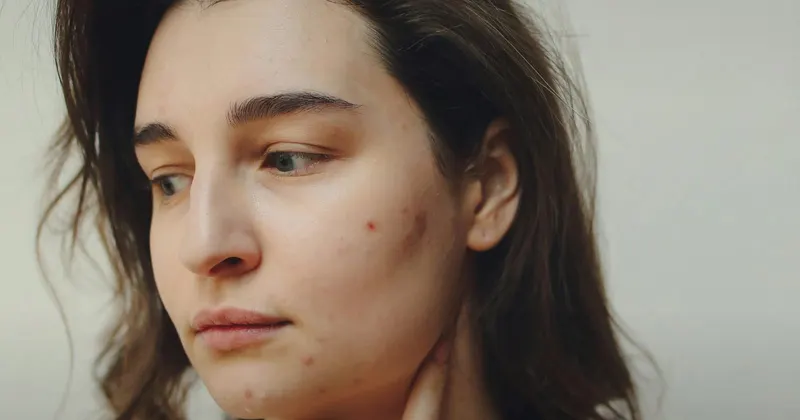
Sulfur is one of the oldest acne-fighting ingredients in dermatology, valued for its antibacterial and keratolytic properties that target breakouts at the surface without stripping the moisture barrier the way benzoyl peroxide or high-strength salicylic acid sometimes can 1. Newer powder-to-cream and peptide-buffered formulas have made sulfur gentler, faster, and far less smelly than the versions your grandparents used. If you have been cycling through spot treatments that leave your skin dry and irritated, sulfur deserves a closer look.
Key takeaways
Sulfur kills acne-causing bacteria and dissolves dead skin cells through a dual antibacterial-keratolytic mechanism 1.Sulfur nanoparticle formulations show strong activity against antibiotic-resistant Staphylococcus strains linked to acne 2.Side effects from topical sulfur are uncommon and mostly limited to mild local irritation 1.Sulfur may work best for inflammatory papules and pustules rather than deep cystic acne 4.
How does sulfur actually fight acne?
Sulfur tackles breakouts from two directions at once. First, it is antibacterial: it creates an environment on the skin surface that discourages the growth of Cutibacterium acnes and Staphylococcus species that fuel inflammation 1. Second, it is keratolytic, meaning it helps loosen and shed dead skin cells that would otherwise clog pores. That keratolytic action happens when sulfur particles interact directly with keratinocytes to produce hydrogen sulfide, and smaller particle sizes increase the effect 1.
The result is a spot treatment that reduces both the bacteria driving a pimple and the dead-cell plug trapping them inside the pore. A 2004 review in the Journal of the American Academy of Dermatology confirmed sulfur's longstanding use across acne, rosacea, and seborrheic dermatitis, noting that adverse effects from topical application are uncommon 1. For a single-ingredient approach, that dual mechanism is hard to beat.
Why do so many acne treatments damage the barrier?
Benzoyl peroxide is effective, but it is also an oxidizing agent that can cause significant dryness, peeling, and redness, especially at concentrations above 5% 5. High-strength salicylic acid and alcohol-based formulas carry similar risks. When your barrier is compromised, transepidermal water loss goes up, irritation increases, and your skin may actually produce more oil to compensate. That cycle of stripping and overproducing is one reason acne can feel impossible to manage.
Sulfur sidesteps much of this because it does not rely on oxidation or deep exfoliation. It works at the surface, and modern formulations buffer it with hydrating and soothing ingredients rather than drying alcohols 13. That said, sulfur is not irritation-free for everyone. If you have very dry or eczema-prone skin, patch test on your inner arm first and start with lower concentrations.
How does sulfur compare to benzoyl peroxide and salicylic acid?
Each of these actives has a distinct profile. The right choice depends on your skin type, acne severity, and how your barrier is holding up.
| Factor | Sulfur (5-10%) | Benzoyl peroxide (2.5-10%) | Salicylic acid (0.5-2%) |
|---|---|---|---|
| Primary mechanism | Antibacterial + keratolytic 1 | Oxidizing antibacterial 5 | Keratolytic (pore-penetrating) |
| Best for | Inflammatory papules, pustules | Moderate-to-severe inflammatory acne | Blackheads, whiteheads, oily skin |
| Barrier impact | Low to moderate | Moderate to high (drying, peeling) | Low to moderate |
| Common side effects | Mild irritation, odor in older formulas 1 | Dryness, peeling, bleaching fabrics 5 | Mild dryness, stinging |
| Antibiotic resistance risk | Not reported | Not reported (non-antibiotic) | Not applicable |
Sulfur tends to be the gentlest of the three for spot-treating individual pimples. Benzoyl peroxide remains the strongest broad-coverage antibacterial. Salicylic acid is the go-to for clogged pores on oily skin. You can also combine sulfur with salicylic acid, a pairing that has been used in dermatology for decades 4.
Can sulfur handle antibiotic-resistant acne bacteria?
This is where recent research gets interesting. A 2022 study tested sulfur nanoparticles against Staphylococcus strains carrying the SCCmec A gene, a marker of methicillin resistance. The nanoparticles showed strong antibacterial activity with a minimum inhibitory concentration (MIC) of 5.5 micrograms per milliliter, and they were effective against multidrug-resistant isolates 2.
That matters because antibiotic-resistant acne bacteria are becoming more common as topical and oral antibiotics are overprescribed. Sulfur is not an antibiotic, so it does not carry the same resistance risk. For anyone who has been through multiple rounds of clindamycin or erythromycin without lasting improvement, sulfur-based treatments offer a different path 12.
What makes newer sulfur formulations gentler?
Older sulfur products had two problems: they were drying, and they smelled like rotten eggs. Current formulations solve both issues. Powder-to-cream formats activate on contact with the skin, allowing precise application and reducing the sulfur odor. Many new products also include glycerin, a humectant shown to improve skin hydration and accelerate barrier recovery even at modest concentrations 36.
Some formulations add calming peptides, like synthetic sequences designed to reduce redness and soothe irritation at the application site. The goal is to keep the antibacterial and keratolytic benefits of sulfur while eliminating the collateral dryness that made older versions difficult to use daily 1. If you are using the Skin Bliss Ingredient Compatibility Checker, you can verify how sulfur interacts with the rest of your routine before adding a new product.
Who should try sulfur, and who should skip it?
Good candidates for sulfur spot treatments:
- You get occasional inflammatory pimples (red, raised, sometimes with a white head)
- Benzoyl peroxide dries you out or causes excessive peeling
- You are looking for a targeted spot treatment rather than an all-over product
- Your skin is sensitive or your barrier is already compromised
Consider a different approach if:
- Your acne is primarily deep, cystic, or nodular (sulfur works on the surface, not deep in the dermis)
- You have a known sulfur allergy or sulfonamide sensitivity
- You are already using multiple actives and want to simplify rather than add another ingredient
As with any active ingredient, introduce sulfur one product at a time. Apply it at night to clean skin, follow with a moisturizer, and use SPF during the day. Most people see visible improvement in inflammatory lesions within one to two weeks of consistent use.
FAQ
Is sulfur drying for the skin?
Older sulfur formulas could be drying, but current formulations typically include humectants like glycerin and soothing agents that offset that effect. Most people with normal-to-oily skin tolerate sulfur well. If your skin runs dry, look for a sulfur product with a cream or emollient base rather than a gel or lotion 16.
Can I use sulfur with retinoids?
Yes, but with caution. Both sulfur and retinoids are active ingredients, and layering them on the same area of skin at the same time may increase irritation. A common approach is to use sulfur as a spot treatment and retinoids on unaffected areas, or to alternate them on different nights. Patch test first, and always use SPF during the day when using retinoids.
How long does sulfur take to work on a pimple?
Some newer formulations claim visible reduction within hours. Realistically, expect to see a reduction in redness and size within one to three days for an inflammatory papule. Sulfur will not do much for closed comedones (blackheads and whiteheads) because those require deeper pore-clearing action.
Does sulfur smell bad?
Traditional precipitated sulfur products have a distinct rotten-egg odor from hydrogen sulfide. Newer powder-to-cream and encapsulated formats have largely eliminated this. Check product reviews or look for formulations that specifically address odor.
Is sulfur safe during pregnancy?
Sulfur is generally considered low-risk for topical use during pregnancy, but always confirm with your healthcare provider before starting any new active during pregnancy or breastfeeding.

In your browser
Free Skin Quiz: Understand your skin profile in under 5 minutes
Oily or dry is only the start. Find out what your skin actually needs across six skin dimensions, with a plain note on what each one means for your routine. Results appear in your browser, and you can keep them in the app.

Maria combines her background in AI research with a passion for evidence-based skincare. She built Skin Bliss to help people make informed decisions about their skin, backed by science rather than marketing.
Sources (6)
- Lin AN, et al. "The use of sulfur in dermatology."
- El-Sayed MH, et al. "Antimicrobial activities encountered by sulfur nanoparticles combating Staphylococcal species harboring SCCmec A recovered from acne vulgaris."
- Gupta AK, Nicol K. "Glycerol and the skin: holistic approach to its origin and functions."
- Decker A, Graber EM. "Topical azelaic acid, salicylic acid, nicotinamide, sulphur, zinc and fruit acid (alpha-hydroxy acid) for acne."
- Sagransky M, et al. "Benzoyl peroxide and sulfur: foundation for acne management."
- Fluhr JW, et al. "The influence of a cream containing 20% glycerin and its vehicle on skin barrier properties."