
The Dermatologist-Approved 5-Minute Routine That's Changing Millennial Skincare Forever
Achieve healthy, youthful skin with a dermatologist-backed 3-product routine: gentle cleanser, mineral sunscreen, and retinoid.
In a world where 12-step Korean skincare routines dominate social media feeds and beauty influencers promote ever-expanding product collections, dermatologists are advocating for a refreshingly simple approach: a 5-minute, 3-product routine that delivers professional-grade results without the complexity, expense, or time commitment. This evidence-based approach centers around three powerhouse ingredients that dermatologists consistently recommend: mineral sunscreen, gentle cleanser, and retinoid.[^1][^2][^3]
The beauty of this routine lies not just in its simplicity, but in its scientific foundation. Recent studies show that skincare routines with fewer, high-quality products often outperform complex regimens because they reduce the risk of ingredient interactions, minimize skin irritation, and ensure consistent usage. For millennial women juggling demanding careers, social lives, and the pursuit of healthy aging, this streamlined approach offers maximum impact with minimal effort.[^4][^5]
The Science Behind Simplicity: Why Less is More
Dermatologists have long advocated for simplified skincare routines, and the research strongly supports this approach. A comprehensive study published in 2024 found that skincare regimens comprising three to four products showed superior clinical outcomes compared to routines with seven or more products. The key lies in product synergy rather than product quantity.[^4]
The Foundation: Understanding Your Skin's Needs
Our skin has evolved over millions of years to protect and repair itself, requiring only targeted support rather than overwhelming intervention. The three core functions any effective routine must address are:
- Cleansing: Removing environmental pollutants, excess sebum, and dead skin cells[^6][^7]
- Protection: Shielding from UV damage and environmental stressors[^2][^8]
- Renewal: Supporting natural cell turnover and collagen production[^3][^9]
Morning vs Evening Skincare Routine: Timing and Product Order
Modern dermatological research demonstrates that these three functions can be effectively addressed with just three carefully selected products, each formulated with clinically proven ingredients that work synergistically to maintain optimal skin health.[^1][^6]
Product #1: The Gentle Cleanser - Your Skin's Daily Reset
Gentle cleansing forms the cornerstone of any effective skincare routine, serving as the foundation upon which all other products build their efficacy. However, the term "gentle" doesn't mean ineffective – it means formulated to clean thoroughly without disrupting the skin's natural protective barrier.[^6][^7]
The Science of Effective Cleansing
Research published in dermatological journals consistently shows that over-cleansing and harsh surfactants are among the leading causes of compromised skin barrier function. The ideal cleanser should have a pH between 4.5 and 6.5, matching your skin's natural acidic mantle, and should remove impurities without stripping essential lipids.[^6][^7]
Morning cleansing requirements differ significantly from evening needs. In the morning, your skin primarily needs removal of overnight sebum production and any residual nighttime products. For most skin types, this can be accomplished with a simple water rinse or a very gentle cleanser. However, evening cleansing must address the day's accumulation of sunscreen, makeup, environmental pollutants, and excess oil production.[^10][^11][^12][^13]
Choosing Your Ideal Cleanser by Skin Type
For Normal to Dry Skin: Cream-based or lotion cleansers containing ceramides, glycerin, and hyaluronic acid provide effective cleansing while maintaining moisture levels. These formulations often use mild surfactants like cocamidopropyl betaine rather than harsher sulfates.[^7]
For Oily and Acne-Prone Skin: Foaming gel cleansers with salicylic acid (0.5-2%) offer superior oil control and pore-clearing benefits. The key is finding formulations that control oil without over-drying, which can paradoxically increase sebum production.[^14][^15][^16]
For Sensitive Skin: Sulfate-free, fragrance-free formulations with minimal ingredient lists reduce the risk of irritation. Look for cleansers with soothing ingredients like chamomile, allantoin, or colloidal oatmeal.[^17][^18]
Professional Application Technique
The method of cleansing is as important as the product choice. Dermatologists recommend lukewarm water (never hot, which can damage the skin barrier), gentle circular motions using fingertips rather than harsh scrubbing, and 30-60 seconds of massage time to ensure thorough removal of impurities without irritation.[^7][^10]
Product #2: Mineral Sunscreen - Your Daily Shield Against Aging
Mineral sunscreen represents the single most important anti-aging product in any skincare routine, yet it's often the most misunderstood. Unlike chemical sunscreens that absorb UV radiation and convert it to heat, mineral sunscreens create a physical barrier that reflects and scatters harmful rays away from the skin.[^2][^8][^19]
The Mineral Advantage: Why Physical Beats Chemical
Mineral sunscreens use zinc oxide and titanium dioxide as active ingredients, both of which have been extensively studied and proven safe for all skin types, including sensitive and acne-prone complexions. Recent research shows that zinc oxide offers superior broad-spectrum protection while providing additional anti-inflammatory benefits that can actually improve skin health over time.[^8][^19][^20]
The advantages of mineral formulations include:
- Immediate protection upon application (no 20-minute wait time)
- Broad-spectrum coverage against both UVA and UVB rays
- Non-comedogenic properties that won't clog pores
- Anti-inflammatory benefits from zinc oxide
- Environmental safety (reef-safe formulations)
Addressing Common Mineral Sunscreen Concerns
Modern mineral sunscreen formulations have evolved significantly from the thick, white formulas of the past. Today's mineral sunscreens offer elegant, lightweight textures that blend seamlessly into all skin tones. Innovations in micronized mineral technology have created formulations that provide excellent protection without the ghostly white cast that deterred many users from mineral options.[^21]
For Acne-Prone Skin: Studies demonstrate that zinc oxide-based sunscreens can actually improve acne due to zinc's anti-inflammatory and antimicrobial properties. Look for oil-free, non-comedogenic formulations that won't contribute to pore congestion.[^19][^20]
For Dry Skin: Many modern mineral sunscreens incorporate hydrating ingredients like hyaluronic acid, ceramides, and glycerin, effectively serving as a moisturizer and sunscreen in one product.[^21]
For Sensitive Skin: Pure zinc oxide or titanium dioxide formulations without chemical additives, fragrances, or preservatives offer maximum protection with minimal irritation risk.[^8][^19]
Application: The Quarter-Teaspoon Rule
Proper sunscreen application requires approximately ¼ teaspoon for the face and neck. This amount ensures adequate coverage for the labeled SPF protection. Dermatologists emphasize that under-application is the primary reason sunscreen fails – most people apply only 25-50% of the recommended amount, significantly reducing protection.[^22][^23]
Product #3: Retinoids - The Gold Standard of Anti-Aging
Retinoids, derivatives of Vitamin A, represent the most clinically proven anti-aging ingredients available in skincare. With over four decades of research supporting their efficacy, retinoids address multiple skin concerns simultaneously: fine lines, wrinkles, acne, hyperpigmentation, and overall skin texture.[^3][^9][^24][^25]
Understanding the Retinoid Family
The retinoid family includes several forms, each with different potency levels and tolerability profiles:
Over-the-Counter Options:
- Retinol: The most popular and widely available form, requiring conversion to retinoic acid in the skin[^9][^25]
- Retinyl Palmitate: The gentlest option, ideal for sensitive skin or beginners[^25]
- Retinaldehyde: A newer option offering efficacy between retinol and prescription tretinoin[^18]
Prescription Options:
- Tretinoin: The gold standard, most clinically studied retinoid[^25]
- Adapalene: Now available over-the-counter, originally prescription-only[^25]
- Tazarotene: The most potent topical retinoid, typically reserved for severe acne[^25]
The Retinoid Benefits: Beyond Anti-Aging
Research consistently demonstrates that regular retinoid use provides multiple skin benefits:[^3][^9]
Anti-Aging Effects: Retinoids stimulate collagen production and accelerate cell turnover, reducing the appearance of fine lines, wrinkles, and age spots. Studies show visible improvements in skin texture and firmness within 12 weeks of consistent use.[^24][^3]
Acne Treatment: Retinoids prevent comedone formation by normalizing skin cell turnover and preventing pores from becoming clogged with dead skin cells. This makes them equally effective for both acne treatment and prevention.[^9][^25]
Hyperpigmentation Improvement: Enhanced cell turnover helps fade dark spots and even skin tone by bringing new, undamaged cells to the surface more rapidly.[^3][^9]
Retinoid Integration: The Tolerance-Building Approach
Successful retinoid integration requires a gradual introduction protocol to minimize the adjustment period commonly called "retinoid purging". Dermatologists recommend starting with:[^9][^25]
Week 1-2: Apply every third night
Week 3-4: Apply every other night
Week 5-6: Apply nightly if tolerated
Ongoing: Consistent nightly application for optimal results
Professional tips for retinoid success:
- Start with clean, completely dry skin (wait 20-30 minutes after cleansing)
- Use a pea-sized amount for the entire face
- Avoid the eye area initially until tolerance is established
- Apply 20-30 minutes before moisturizer if using additional hydration
- Never use retinoids in the morning due to increased photosensitivity
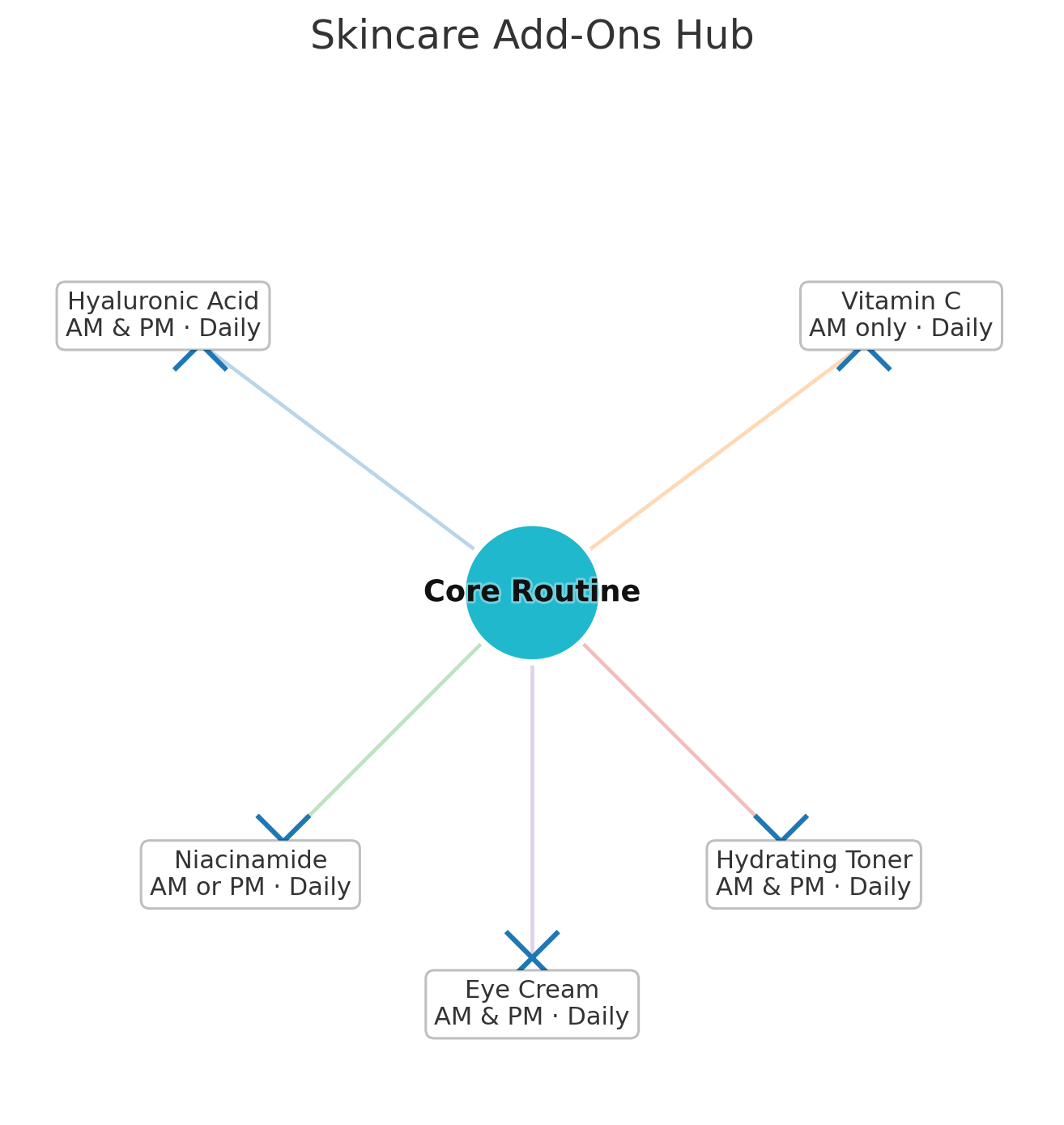
Optional Skincare Add-ons: Enhance Your 3-Product Routine Without Overcomplicating
Morning vs. Evening: Timing Your Routine for Maximum Efficacy
The timing of product application significantly impacts their effectiveness, with certain ingredients performing better at specific times of day due to skin biology and environmental factors.[^11][^26]
Morning Routine: Protection and Preparation
Morning skincare focuses on protection and preparation for the day's environmental stressors. Your skin's circadian rhythm naturally produces less oil in the morning, and cellular repair processes slow down as cortisol levels rise.[^11][^26]
Step 1: Gentle Cleansing (30 seconds)
- Normal/dry skin: Water rinse only to preserve natural oils[^10][^11]
- Oily skin: Light foaming cleanser to remove excess sebum[^27][^11]
Step 2: Optional Antioxidant Protection (1 minute)
- Vitamin C serum: Provides environmental protection and brightening[^28][^29][^27]
- Apply to clean, dry skin and allow full absorption before next step[^29][^30]
Step 3: Hydration as Needed (30 seconds)
- Light moisturizer if skin feels dry or tight[^26][^11]
- Skip if using hydrating sunscreen to avoid product layering issues[^26]
Step 4: Mineral Sunscreen (1-2 minutes)
- Apply as final step before makeup[^22][^26]
- Ensure even coverage with gentle patting motions[^22]
Evening Routine: Repair and Renewal
Evening routines emphasize repair and renewal, taking advantage of the skin's natural overnight recovery processes when cellular regeneration peaks and growth hormone production increases.[^12][^13]
Step 1: Thorough Cleansing (2 minutes)
- Remove all traces of sunscreen, makeup, and daily pollutants[^13][^12]
- Double cleansing may be beneficial for heavy makeup or sunscreen users[^13]
Step 2: Retinoid Application (1 minute)
- Apply to completely clean, dry skin[^11][^12]
- Wait 20-30 minutes before applying additional products if needed[^11]
Step 3: Optional Moisturization (1 minute)
- Use only if retinoid causes dryness or irritation[^12][^11]
- Choose non-comedogenic formulations to avoid pore congestion[^12]
Skin Type Modifications: Customizing Your Core Routine
While the three-product foundation works universally, specific skin types benefit from targeted modifications that address their unique challenges without complicating the routine.[^17][^18]
Sensitive Skin Adaptations
Sensitive skin requires the gentlest possible approach while still maintaining routine effectiveness. The key modifications include:[^17][^18]
Cleanser Modifications:
- Choose sulfate-free, fragrance-free formulations[^18][^17]
- Use lukewarm water exclusively and avoid hot water[^17]
- Limit cleansing time to 30-45 seconds to minimize irritation potential[^18]
Sunscreen Adjustments:
- Select pure zinc oxide formulations (15-20%) without chemical additives[^8][^19]
- Avoid fragrances, essential oils, and botanical extracts that commonly cause sensitivity[^18]
- Choose products labeled "hypoallergenic" and tested on sensitive skin[^18]
Retinoid Integration:
- Start with retinyl palmitate or 0.1% retinol[^25][^18]
- Introduce extremely gradually (once weekly for first month)[^18]
- Consider alternating nights with a gentle moisturizer to buffer irritation[^18]
Acne-Prone Skin Enhancements
Acne-prone skin benefits from ingredients that address excess oil production and prevent pore congestion while maintaining the core routine simplicity.[^14][^15]
Enhanced Cleansing Options:
- Salicylic acid cleansers (0.5-2%) provide chemical exfoliation[^15][^14]
- Benzoyl peroxide cleansers (2.5-5%) offer antimicrobial benefits[^14]
- Alternate between treatment cleansers to prevent over-drying[^16]
Optimized Sunscreen Selection:
- Non-comedogenic, oil-free mineral formulations[^19][^20][^16]
- Zinc oxide provides anti-inflammatory benefits that can improve acne[^20][^19]
- Matte-finish formulations control shine throughout the day[^16]
Retinoid Optimization:
- Prescription tretinoin offers superior acne control[^25]
- Consistent daily application prevents new comedone formation[^9][^25]
- Combine with benzoyl peroxide in cleanser for enhanced antimicrobial effect[^14]
Optional Add-Ons: Enhancing Without Overcomplicating
Strategic addition of targeted treatments can enhance the core routine for specific concerns without sacrificing the simplicity that makes the routine sustainable.[^30][^31]
Hydration Boosters
Hyaluronic Acid Serum: This moisture-binding molecule can hold up to 1,000 times its weight in water, making it ideal for all skin types seeking enhanced hydration. Apply after cleansing but before heavier treatments, both morning and evening.[^29][^30][^31]
Hydrating Toner: Alcohol-free formulations with glycerin, ceramides, or hyaluronic acid can provide an extra hydration layer, particularly beneficial for dry or sensitive skin. Use immediately after cleansing to prep skin for subsequent products.[^18][^12]
Targeted Treatment Serums
Vitamin C Serum: L-ascorbic acid or stable vitamin C derivatives provide antioxidant protection and brightening benefits. Best used in morning routines, applied after cleansing but before sunscreen. Those with sensitive skin should start with 10% concentrations or less.[^28][^29][^30][^27]
Niacinamide Serum: This form of Vitamin B3 regulates oil production, reduces redness, and minimizes pore appearance. Suitable for both morning and evening use, it's particularly beneficial for oily, acne-prone, or sensitive skin types.[^30][^31]
Specialized Eye Care
Eye Cream: The delicate eye area benefits from targeted formulations addressing fine lines, dark circles, and puffiness. Apply after serums but before moisturizer, using gentle patting motions with the ring finger to minimize pressure on this sensitive area.[^26][^12]
Integration Guidelines
Successful add-on integration follows the "thinnest to thickest" rule:[^30][^31]
- Cleanser (always first)
- Toner (if using)
- Serums (vitamin C, niacinamide, hyaluronic acid)
- Eye cream
- Moisturizer (if needed)
- Sunscreen (morning only, always last)
- Retinoid (evening only, can go before or after moisturizer depending on sensitivity)
| Product Type | Normal/Dry Skin | Oily/Combination Skin | Sensitive Skin |
|---|---|---|---|
| Gentle Cleanser | Cream or lotion cleanser with ceramides, glycerin | Foaming gel cleanser with salicylic acid | Sulfate-free, fragrance-free cream cleanser |
| Mineral Sunscreen | Zinc oxide 15-20% with moisturizing ingredients | Oil-free, non-comedogenic zinc oxide formula | Pure zinc oxide or titanium dioxide, fragrance-free |
| Retinoid | Over-the-counter retinol 0.25-0.5% | Prescription tretinoin 0.025-0.1% | Retinyl palmitate or gentle retinol 0.1% |
Common Mistakes and Professional Solutions
Even simple routines can fail when common application errors occur. Understanding these pitfalls helps ensure maximum routine effectiveness.[^11][^12]
Application Order Errors
Mistake: Applying sunscreen before serums or moisturizers
Solution: Always apply sunscreen as the final step before makeup to maintain protective film integrity[^22][^26]
Mistake: Using retinoids in the morning
Solution: Restrict retinoid use to evening routines only due to increased photosensitivity[^3][^11][^12]
Product Selection Issues
Mistake: Choosing products based on marketing rather than skin type needs
Solution: Select products based on your specific skin concerns and tolerance levels, not trending ingredients[^18][^31]
Mistake: Over-cleansing or using harsh formulations
Solution: Match cleanser intensity to skin type – normal/dry skin needs gentler formulations than oily skin[^7][^10]
Integration Problems
Mistake: Introducing all products simultaneously
Solution: Add one new product at a time with 2-4 week intervals to assess tolerance and effectiveness[^18][^25]
Mistake: Inconsistent application
Solution: Consistency trumps perfection – a simple routine used daily outperforms complex routines used sporadically[^4][^5]
The Economics of Simplicity: Cost-Effective Skincare
A three-product routine offers significant economic advantages over complex multi-step regimens while delivering superior results through consistent use and product synergy.[^1][^6]
Investment Analysis
Quality three-product routines typically cost $80-150 total and last 3-4 months, compared to complex routines that can cost $300-500+ and require constant replenishment of multiple products. The per-day cost of an effective simplified routine ranges from $0.75-1.25, making professional-grade skincare accessible to most budgets.[^1]
Long-term Value
Prevention-focused skincare reduces future treatment costs significantly. Regular sunscreen use and retinoid application can prevent or delay the need for professional treatments like chemical peels, laser therapy, or injectables, potentially saving thousands of dollars over time.[^2][^3]
Professional Monitoring and Adjustments
Even simplified routines benefit from periodic professional evaluation, particularly when introducing retinoids or addressing specific skin concerns.[^5][^32]
When to Consult a Dermatologist
- Persistent irritation or sensitivity despite proper product selection
- Lack of improvement after 3-4 months of consistent use
- Severe acne that doesn't respond to over-the-counter retinoids
- Significant sun damage requiring professional treatment integration
Monitoring Progress
Track routine effectiveness through:
- Monthly progress photos taken in consistent lighting
- Skin texture and tone improvements over 3-month periods
- Reduced acne frequency or severity within 6-8 weeks
- Overall skin health and comfort indicators
The Future of Simplified Skincare
Dermatological research increasingly supports minimalist approaches that prioritize skin barrier health and consistent use over product quantity. As our understanding of skin biology advances, the trend toward fewer, more effective products with proven ingredients continues to gain momentum among both professionals and consumers.[^4][^5][^33]
Emerging technologies in mineral sunscreen formulations, retinoid delivery systems, and gentle cleansing agents promise even more elegant solutions for maintaining healthy skin with minimal effort. The future of skincare lies not in complexity, but in the intelligent application of scientifically proven ingredients that work synergistically to support skin health.
Sources
- 1. Modern Dermatology of KY - Benefits of a Mineral Sunscreen for Skincare
- 2. Dermatology Directory - What is a Mineral Sunscreen?
- 3. Fargo Dermatology - 5 Reasons You Should Include Retinol in Your Skincare Routine
- 4. Novel Protection and Repair Skincare Regimen Shows Efficacy for Improving Environmental Skin Aging - J Drugs Dermatol. 2024;23(10):866-872
- 5. Effectiveness of a Machine Learning-Enabled Skincare Recommendation for Mild-to-Moderate Acne Vulgaris - JMIR Dermatology Research, 2024
- 6. CampusWell - Simplify skin care with this 3-step routine
- 7. Wirecutter - The 8 Best Facial Cleansers of 2025
- 8. JDDD - Effects of a Sheer 100% Mineral Sunscreen Moisturizer on Facial Photodamage
- 9. Waccamaw Dermatology - The Retinol Benefits Dermatologists Love
- 10. Good Housekeeping - The Best Morning and Night Skincare Routine for All Skin Types
- 11. Vogue - This Tretinoin Skin-Care Routine Is Key to Calm Skin When Using Retinoids
- 12. The Ordinary - How to Build a Custom Nighttime Skincare Routine
- 13. Glo Skin Beauty - Dermatologist Tips On The Best Nighttime Skincare Routine
- 14. New York Magazine - 9 Best Face Washes for Acne
- 15. CeraVe - Acne Control Cleanser
- 16. Exclusive Beauty Club - 7 Best Sunscreens for Acne Prone Skin in 2025
- 17. BeBeautiful - Morning and night time skincare routine for sensitive skin
- 18. Certified Skin Solutions - Comprehensive Guide to a Sensitive Skin Care Routine
- 19. Revoderm - Mineral vs Chemical Sunscreens for Acne-Prone Skin
- 20. Blume - Why Dermatologists Recommend Mineral Sunscreen for Acne-Prone Skin
- 21. JDDD - Effects of a Sheer 100% Mineral Sunscreen Moisturizer on Facial Photodamage
- 22. Naked Sundays - Sunscreen Skincare Order Steps Routine
- 23. Era Organics - Morning Skin Care Routine: Importance, Steps and Order
- 24. Siny Dermatology - Spotlight on Retinoids: The Anti-Aging Miracle Ingredient
- 25. Cleveland Clinic - Retinol: Cream, Serum, What It Is, Benefits, How To Use
- 26. ISDIN - What Goes First? Your Step-by-Step Guide to Building a Skincare Routine
- 27. Dermstore - How to Build a Morning Skincare Routine Like a Dermatologist
- 28. JDDD - Two-Step Skincare Regimen Addressing Aging in Three Unique Geographic Locations
- 29. Lancôme AU - Vitamin C \& Hyaluronic Acid: Benefits \& How to Layer
- 30. Seoul Ceuticals - How to Layer Vitamin C, Niacinamide AND Hyaluronic Acid
- 31. Dang Lifestyle - Niacinamide vs. Hyaluronic Acid: Allies or Alternatives in Skincare?
- 32. Vogue - Dermatologists Share the 8 Best Skincare Routines for Every Skin Type