
Why Your Moisturizer Might Be the Problem: The Occlusive Trap
You slug. You layer. You apply that thick, buttery balm every night because the internet said "glass skin" requires it. And yet - your skin feels tight, looks congested, or radiates heat after your...
You slug. You layer. You apply that thick, buttery balm every night because the internet said "glass skin" requires it. And yet - your skin feels tight, looks congested, or radiates heat after your routine.
What if moisturizing more is actually the problem?
Dry and Dehydrated Are Not the Same Thing
This is where most routines go wrong. Dryness means your skin lacks oil (lipids). Dehydration means it lacks water. They feel similar, but the fix is completely different.
Humectants like glycerin and hyaluronic acid pull water into your skin. Occlusives like petroleum jelly and thick butters create a physical seal to prevent water from escaping (dermatologists call this transepidermal water loss, or TEWL).
Here's the problem: when your routine is all occlusives and no humectants, you're sealing in... nothing. It's like putting a lid on an empty pot. The seal is airtight, but there's no water inside.
That's the Occlusive Trap.
What Heavy Creams Actually Do to Reactive Skin
Petroleum-based jellies and dense botanical butters are strong barriers. But barriers trap everything - not just moisture.
If you have rosacea-prone or reactive skin, heavy occlusives can act as thermal insulators. Your skin can't radiate heat, so the trapped warmth widens blood vessels (vasodilation), which may worsen redness and inflammation.
These dense layers also trap sebum and bacteria against your skin's surface. The result: disrupted oil production and localized congestion.
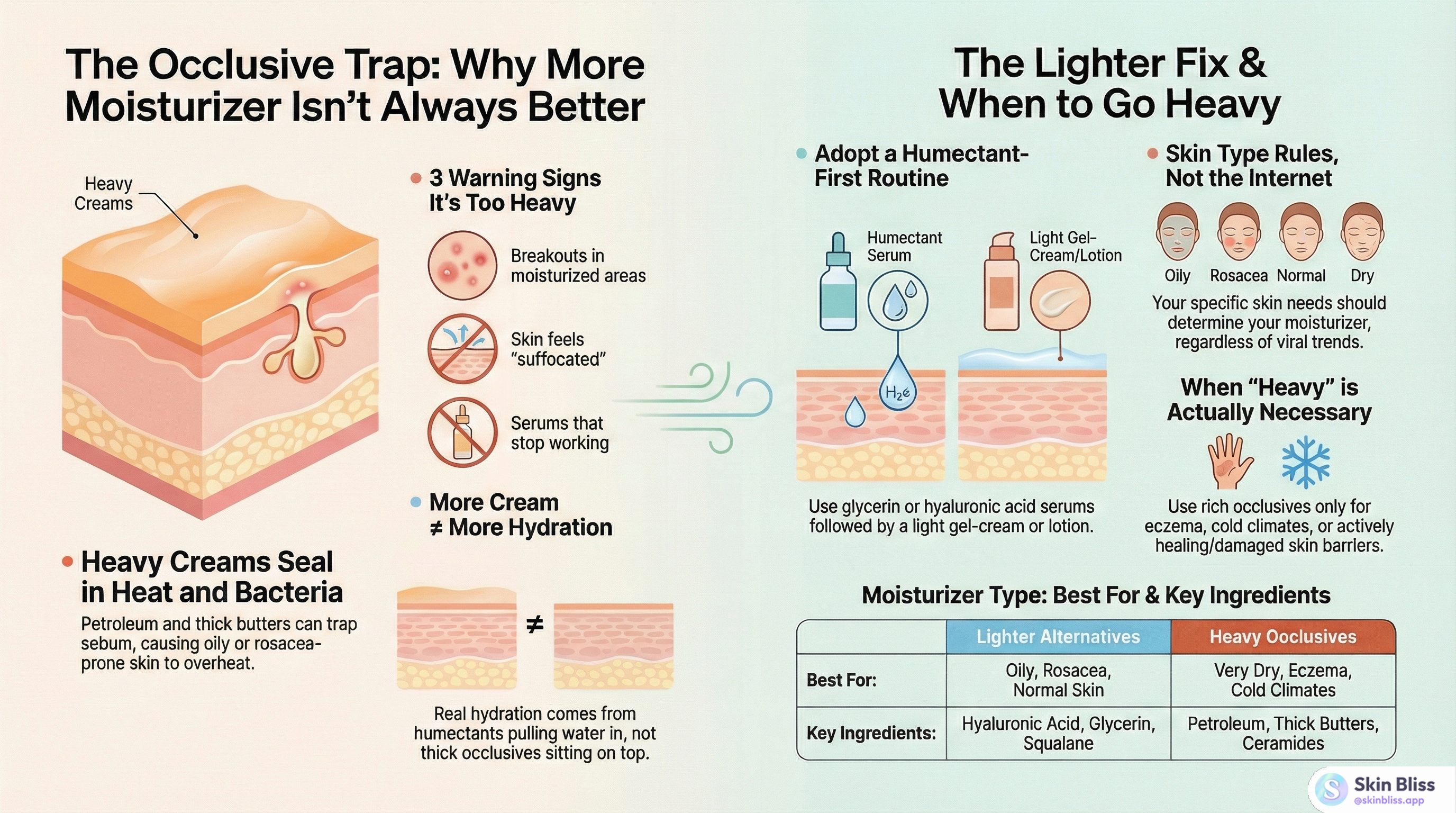
3 Signs Your Routine Is Too Heavy
Breakouts where you apply the most product. If new blemishes appear specifically in the areas getting the heaviest cream, that product may be preventing normal sebum clearance.
Your skin feels "suffocated." Tightness or warmth right after applying your moisturizer isn't a sign that the ingredients are "working." That's trapped heat. Healthy skin needs to regulate its own temperature.
Your serums stopped delivering results. Heavy occlusives - especially petroleum-based ones - create a hydrophobic film. That film can physically block water-soluble actives from reaching deeper skin layers (the stratum corneum). Your expensive serum might be sitting on top of your cream doing nothing.
Your Skin Type Matters More Than Any Trend
Slugging gets presented as a universal solution. It's not. Your skin type - not a social media algorithm - should dictate your moisture strategy.
Most skin types don't need a heavy industrial seal to stay healthy. If you have oily, combination, or rosacea-prone skin, heavy occlusives may actively work against you.
The Humectant-First Approach
Escaping the Occlusive Trap means flipping your priorities: hydrate first, then seal lightly.
- Start with humectants. Use a serum with glycerin or hyaluronic acid to pull water into your skin. This is genuine hydration - not just a greasy surface layer.
- Switch to gel-cream textures. Modern gel-creams deliver lipids and moisture without the weight that suffocates pores.
- Use light emollients as your seal. Squalane or ceramide-based lotions offer a breathable barrier. They help prevent TEWL without trapping heat.
Expect to notice a difference in skin texture and congestion within 2-4 weeks of lightening up your routine.
When Heavy Occlusives Are the Right Call
This isn't about demonizing heavy creams. They're specialized tools with real uses:
- Eczema or chronically dry skin: A deficient barrier genuinely needs maximum lipid protection to compensate.
- Cold, dry climates: Low humidity strips moisture aggressively. A heavier shield helps maintain skin integrity through winter.
- Post-procedure recovery: Healing skin after a chemical peel or professional treatment needs a temporary heavy barrier.
If that's you, heavy occlusives aren't the trap - they're the treatment.
What's Your Skin Actually Asking For?
Next time your skin feels tight or reactive, pause before reaching for the heaviest jar on your shelf.
Is it asking for more protection? Or is it asking for room to breathe?
If you've been layering heavy creams and your skin still feels off, try the humectant-first approach for a few weeks. Your barrier might just need water, not another lid.
What does your current routine look like - heavy or light? Tell us in the comments.