Journal · Devices, Body & Lifestyle
AI Skin Analysis vs. Dermatologist: Which Is More Accurate?
How AI skin analysis tools compare with dermatologists, where they shine, where they fall short, and how they may fit into smart tracking routines

Maria Otworowska, PhD, Co-founder of Skin Bliss
· 6 min read
AI skin analysis is the use of machine learning algorithms, typically deep neural networks trained on large image datasets, to identify skin conditions from photographs. These tools range from smartphone apps that classify moles to clinical-grade systems that assist dermatologists with diagnosis. In certain narrow tasks, their accuracy now rivals board-certified specialists.
The promise is compelling: point your phone at a spot, get an instant assessment. But the reality is more complicated than any app store listing suggests. AI performs brilliantly in controlled settings and stumbles in others, and the gap between a research paper and your bathroom mirror is wider than most people realize.

Key Takeaways
How accurate is AI at diagnosing skin conditions?
In controlled research settings, AI does well. Really well. A 2017 study trained a convolutional neural network on 129,450 clinical images covering 2,032 skin diseases and matched the classification accuracy of 21 board-certified dermatologists 1. A systematic review covering studies from 2013 to 2023 found AI was non-inferior or superior to dermatologists in 30 out of 34 studies, with pooled sensitivity of 86% and specificity of 94% for melanoma detection 2. Those numbers are impressive. But they come with an asterisk: these results reflect performance on curated research datasets, not the messy, poorly lit photos you take in your bathroom.
Do skin analysis apps work as well as the studies suggest?
Not yet. A systematic review of algorithm-based smartphone apps found that current tools "cannot be relied on to detect all cases of melanoma" and that real-world performance is likely worse than what research papers report 3. Only five dermatology apps had supporting peer-reviewed evidence, and just four disclosed their regulatory approval status 4. One commercially available app, SkinVision, achieved 80% sensitivity and 78% specificity in studies, but independent analysis described its accuracy against expert recommendations as poor. The gap between a laboratory benchmark and your phone camera on a Tuesday morning is real, and it matters.
Does AI work equally well on all skin tones?
No, and this is one of the biggest unresolved problems in dermatology AI. Research shows that state-of-the-art models perform substantially worse on darker skin tones and uncommon diseases 5. The root cause is training data: most image datasets used to build these systems heavily overrepresent lighter skin, which means the algorithms have simply seen fewer examples of conditions presenting on dark skin 6. A scoping review confirmed systematic underreporting and underrepresentation of diverse skin types in machine learning research for skin cancer detection 7. Fine-tuning models on more diverse image sets does close this performance gap, but until that becomes standard practice, AI skin analysis carries a built-in equity problem.
| Factor | AI skin analysis | Dermatologist |
|---|---|---|
| Melanoma sensitivity | ~86% (pooled) | ~91% (experienced) |
| Works on all skin tones | Limited by training data | Varies with clinician experience |
| Context awareness | Image only | Full medical history, touch, context |
| Availability | 24/7, any smartphone | Appointment required, weeks-long waits |
| Cost | Free to low-cost | Insurance dependent, often $100+ |
| Regulatory oversight | Mostly unregulated | Board-certified, licensed |
When should you trust AI over a dermatologist (and vice versa)?
AI is strongest as a screening and tracking tool. If you want to monitor a mole over time, flag something that looks suspicious, or get a second data point before booking an appointment, that is where these tools earn their keep. The Skin Bliss Face Scanner, for example, uses AI to build a personalized skin profile and track changes over time. It gives you data to bring to your dermatologist rather than replacing that visit.
Where AI falls short is nuance. A dermatologist touches your skin, asks about your medications, considers your family history. An AI model that has never seen you before processes pixels. For anything concerning, a lesion that has changed shape, color, or size, a human expert remains the standard of care.
Can AI and dermatologists work together effectively?
Yes, and the combination outperforms either one alone. A study on explainable AI found that when dermatologists used AI as a decision-support tool, their diagnostic balanced accuracy improved by 2.8 percentage points compared to using standard AI or no AI at all 8. Computer algorithms in the International Skin Imaging Collaboration challenge achieved a higher area under the curve (0.87) than dermatologists (0.74) for melanoma classification, but clinicians still outperformed AI when they had access to clinical context 9. AI is a useful collaborator. Treating it as one produces better outcomes than treating it as either a savior or a gimmick.
Frequently Asked Questions
Can an AI app replace my dermatologist?
No. Current AI skin analysis apps lack consistent clinical validation and cannot account for your medical history, medication interactions, or the tactile information a dermatologist gathers during an exam. They are best used for monitoring and awareness, not for definitive diagnosis.
Are AI skin analysis apps regulated?
Most are not. A review of commercially available AI dermatology apps found that only four disclosed their FDA or CE Mark approval status 4. This means many apps making diagnostic claims have not been independently verified for safety or accuracy.
Why does AI perform worse on darker skin?
AI models learn from training data, and the datasets used in dermatology research overwhelmingly feature images of lighter skin tones 6. With fewer examples of conditions on dark skin, algorithms have less information to draw on, which reduces their accuracy for those skin types.
How can I use AI skin tools responsibly?
Use them to track changes over time and to flag concerns you want to discuss with a professional. Do not use an app result as a reason to skip a dermatologist appointment, especially for new, changing, or symptomatic lesions. Bring your AI tracking data to your next visit so your doctor has more information to work with.
In your browser
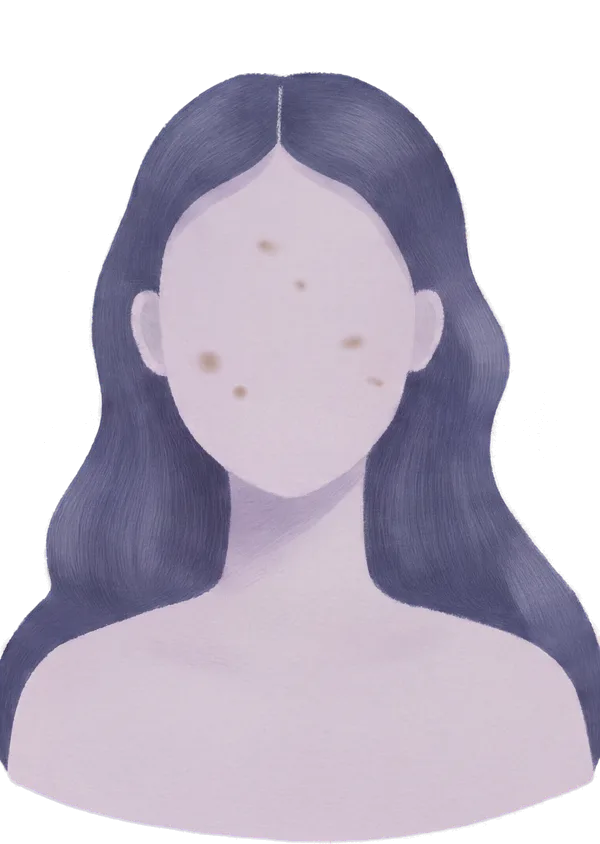
Free Skin Quiz: Understand your skin profile in under 5 minutes
Oily or dry is only the start. Find out what your skin actually needs across six skin dimensions, with a plain note on what each one means for your routine. Results appear in your browser, and you can keep them in the app.

Maria combines her background in AI research with a passion for evidence-based skincare. She built Skin Bliss to help people make informed decisions about their skin, backed by science rather than marketing.
Sources (9)
- Esteva A, Kuprel B, Novoa RA, et al. (2017). "Dermatologist-level classification of skin cancer with deep neural networks." *Nature*.
- Diagnostic accuracy of artificial intelligence compared to family physicians and dermatologists for skin conditions: a systematic review and meta-analysis. (2025).
- Freeman K, Dinnes J, Chuchu N, et al. (2020). "Algorithm based smartphone apps to assess risk of skin cancer in adults: systematic review of diagnostic accuracy studies." *BMJ*.
- Current State of Dermatology Mobile Applications With Artificial Intelligence Features. (2024).
- Daneshjou R, Vodrahalli K, Novoa RA, et al. (2022). "Disparities in dermatology AI performance on a diverse, curated clinical image set." *Sci Adv*.
- Wen D, Khan SM, Ji Xu A, et al. (2022). "Bias in, bias out: Underreporting and underrepresentation of diverse skin types in machine learning research for skin cancer detection." *J Am Acad Dermatol*.
- Marchetti MA, Codella NCF, Dusza SW, et al. (2019). "Computer algorithms show potential for improving dermatologists' accuracy to diagnose cutaneous melanoma." *J Am Acad Dermatol*.
- Dermatologist-like explainable AI enhances melanoma diagnosis accuracy: eye-tracking study. (2025).
- Marchetti MA, Codella NCF, Dusza SW, et al. (2019). "Computer algorithms show potential for improving dermatologists' accuracy to diagnose cutaneous melanoma: Results of the ISIC 2017." *J Am Acad Dermatol*.