Journal · Skin Barrier & Recovery
How Ceramides Repair Your Skin Barrier: The Science Behind the Ingredient
How topical ceramides may rebuild your skin barrier, reduce water loss within a day, and help actives like retinoids feel less irritating over time

Maria Otworowska, PhD, Co-founder of Skin Bliss
· 8 min read
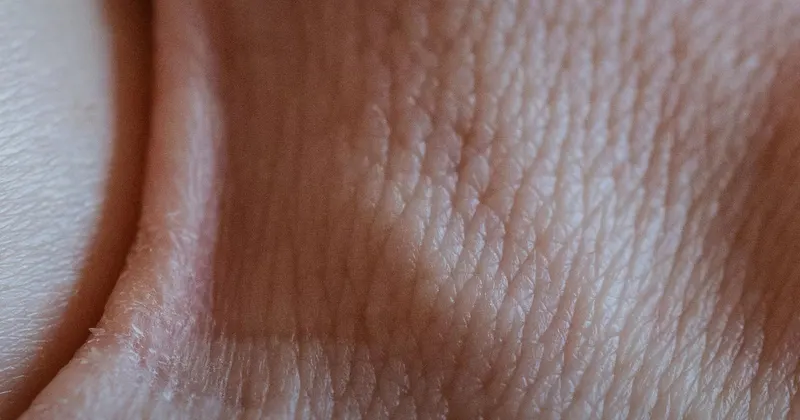
Ceramides are lipid molecules that make up roughly 50% of your skin barrier's protective structure, filling the gaps between skin cells to hold moisture in and keep irritants out. They are not a trendy ingredient. They are a structural component of healthy skin. When applied topically, ceramides integrate into your existing lipid matrix and can help restore barrier density, with clinical research showing measurable reductions in water loss through the skin within 24 hours of application 12.
Key Takeaways
Topical ceramide application can reduce transepidermal water loss within 24 hours 2Using ceramides alongside retinoids may reduce irritation by 60-68%, helping you stay consistent with treatment 5Your skin produces fewer ceramides as you age, making topical replenishment increasingly important 6
What are ceramides and why does your skin need them?
Think of your skin barrier as a brick wall. The bricks are dead skin cells called corneocytes. The mortar holding them together is a mix of lipids: ceramides (about 50%), cholesterol (about 25%), and free fatty acids (about 15%) 132.
Ceramides are sphingolipid molecules, a sphingoid base linked to a fatty acid. That structure makes them uniquely suited to fill the spaces between skin cells and maintain the barrier's ability to hold water 13.
When this system is intact, your skin loses water at a normal rate, between 2-15 g/m2/h. When it breaks down, from over-exfoliation, harsh products, environmental damage, or simply aging, that rate can spike above 50 g/m2/h 27. That is when you feel the dryness, the stinging, the tight and reactive sensation that signals a compromised barrier.
How do topical ceramides actually repair the barrier?
When you apply a ceramide-rich product, the lipid molecules integrate into the existing structure between your skin cells. They fill gaps, reinforce weak spots, and help restore optimal lipid density 28.
The speed is notable. Clinical research shows measurable reductions in transepidermal water loss within 24 hours of application 2. This is not a slow, indirect effect. You are replenishing the exact molecules your barrier uses for structural integrity.
Your barrier also maintains a slightly acidic pH (4.5-5.5) that supports beneficial bacteria and optimizes the enzymes responsible for repair 2. Ceramide-rich formulations that respect this pH range support both lipid restoration and the broader ecosystem of barrier health.
Why does ceramide production decline with age?
Aging skin loses barrier function progressively 69. Several changes compound over time:
- Ceramide production decreases, which increases permeability 610
- Overall lipid synthesis slows, reducing the skin's capacity to repair itself 9
- Skin pH rises, impairing the enzymes that drive recovery 2
- Inflammatory responses increase, causing further damage to barrier components 2
A study in Archives of Dermatological Research found significantly decreased levels of all major lipid species, ceramides in particular, with increasing age 6. These levels dropped even further in winter months, which helps explain why mature skin often feels driest and most reactive in cold weather.
Maintaining barrier function through ceramide replenishment may help slow visible signs of aging by reducing water loss, supporting natural repair, and protecting against environmental damage 9.
Which ceramide types matter in skincare products?
Not all ceramide formulations perform equally. The most effective products contain multiple ceramide types that work together 3:
| Ceramide type | Role |
|---|---|
| Ceramide NP | Primary barrier lipid, supports moisture retention |
| Ceramide AP | Supports the organization of the barrier's layered structure |
| Ceramide EOP | Long-chain ceramide critical for overall barrier integrity |
These three ceramides have complementary functions. For the best results, look for products that also include cholesterol and free fatty acids. Research shows that a ceramide-dominant ratio of these three lipid types, mimicking the proportions found in healthy skin, accelerates barrier recovery more effectively than ceramides alone 43.
Can ceramides help if you use retinoids or other strong actives?
Yes, and the evidence is strong. A clinical study found that participants using retinoids alongside ceramide-rich products experienced 60-68% less irritation across measures of redness, flaking, and subjective discomfort compared to controls 5.
The practical impact was significant. The ceramide group maintained consistent retinoid use throughout the study. The control group frequently had to take breaks because irritation became intolerable 5. If you use retinoids, AHAs, or other actives that challenge the barrier, ceramides can help you stay on track with your treatment.
When using any retinoid, always apply SPF 30+ during the day and reapply every 2 hours of sun exposure. No sunscreen provides 100% protection.
How can you tell if your barrier needs ceramide support?
Research on people with atopic dermatitis, who naturally have reduced ceramide levels, shows that consistent topical ceramide use leads to sustained improvements in barrier function and reduced sensitivity 811. SCORAD values (a measure of skin disease severity) improved significantly in 22 of 24 patients within three weeks, with transepidermal water loss decreasing in parallel 11.
These findings apply more broadly. If your skin is reactive, persistently dry despite moisturizing, or stinging with products it used to tolerate, reduced ceramide levels may be contributing.
Skin Bliss can help you evaluate whether your current routine supports barrier health. The Ingredient Compatibility Checker analyzes your products for barrier-supporting ingredients like ceramides, cholesterol, and fatty acids, and flags potential gaps. If you are experiencing sensitivity after introducing new actives, it can identify whether your routine includes enough barrier support to offset those treatments.
If you want to see how this reads on a real shelf, our ceramide cream ranking at dm applies the same whole-formula standard to every product on it.
FAQ
How long do ceramides take to repair the skin barrier?
Clinical studies show measurable improvements in water retention within 24 hours of topical ceramide application 2. Sustained barrier repair typically takes 2-4 weeks of consistent use. Research in atopic dermatitis patients shows ongoing improvements over longer treatment periods 811.
Can you use ceramides with vitamin C or other actives?
Ceramides are highly compatible with other skincare ingredients. They work especially well alongside actives that may temporarily challenge the barrier, like retinoids, AHAs, and vitamin C, by reinforcing the lipid matrix these ingredients can disrupt 5.
Do ceramide supplements work as well as topical ceramides?
The strongest clinical evidence supports topical application, where ceramides directly integrate into the barrier's lipid structure. Oral ceramide supplements exist, but their mechanism and evidence base are different. For barrier repair specifically, topical delivery remains the most proven approach 12.
Are ceramide products suitable for oily or acne-prone skin?
Barrier dysfunction affects all skin types. Oily skin can still have compromised ceramide levels, especially after using harsh cleansers or acne treatments. Look for lightweight, non-comedogenic ceramide formulations rather than heavy creams 312.
This article is for informational purposes. If you are using retinoids or other active treatments, patch test new products and introduce them gradually. Consult a dermatologist for persistent barrier concerns or skin conditions like eczema.

In your browser
Free Skin Quiz: Understand your skin profile in under 5 minutes
Oily or dry is only the start. Find out what your skin actually needs across six skin dimensions, with a plain note on what each one means for your routine. Results appear in your browser, and you can keep them in the app.

Maria combines her background in AI research with a passion for evidence-based skincare. She built Skin Bliss to help people make informed decisions about their skin, backed by science rather than marketing.
Sources (12)
- Coderch, L. et al. (2003). "Ceramides and skin function." *American Journal of Clinical Dermatology*.
- Elias, P.M. (2005). "Stratum corneum defensive functions: an integrated view." *Journal of Investigative Dermatology*.
- Meckfessel, M.H. & Brandt, S. (2014). "The structure, function, and importance of ceramides in skin and their use as therapeutic agents in skin-care products." *Journal of the American Academy of Dermatology*.
- Man, M.Q. et al. (1996). "Optimal ratios of topical stratum corneum lipids improve barrier recovery in chronologically aged skin." *Journal of Lipid Research*.
- Draelos, Z.D. (2008). "The effect of ceramide-containing skin care products on eczema resolution duration." *Cutis*.
- Rogers, J. et al. (1996). "Stratum corneum lipids: the effect of ageing and the seasons." *Archives of Dermatological Research*.
- Kottner, J. et al. (2013). "Transepidermal water loss in young and aged healthy humans: a systematic review and meta-analysis." *Archives of Dermatological Research*.
- Chamlin, S.L. et al. (2002). "Ceramide-dominant barrier repair lipids alleviate childhood atopic dermatitis: changes in barrier function provide a sensitive indicator of disease activity." *Journal of the American Academy of Dermatology*.
- Farage, M.A. et al. (2008). "Intrinsic and extrinsic factors in skin ageing: a review." *International Journal of Cosmetic Science*.
- Imokawa, G. et al. (1991). "Decreased level of ceramides in stratum corneum of atopic dermatitis: an etiologic factor in atopic dry skin?" *Journal of Investigative Dermatology*.
- Chamlin, S.L. et al. (2001). "Ceramide-dominant, barrier-repair lipids improve childhood atopic dermatitis." *Archives of Dermatology*.
- Zeichner, J.A. et al. (2014). "Moisturizers for acne: what are their constituents?" *Journal of Clinical and Aesthetic Dermatology*.