Journal · Skin Concerns
Menopausal Acne: Why Breakouts Come Back, and What Treats Them
Hormone shifts during perimenopause and menopause can trigger jaw and chin breakouts. Here's what causes menopausal acne and what actually works.

Maria Otworowska, PhD, Co-founder of Skin Bliss
· 7 min read
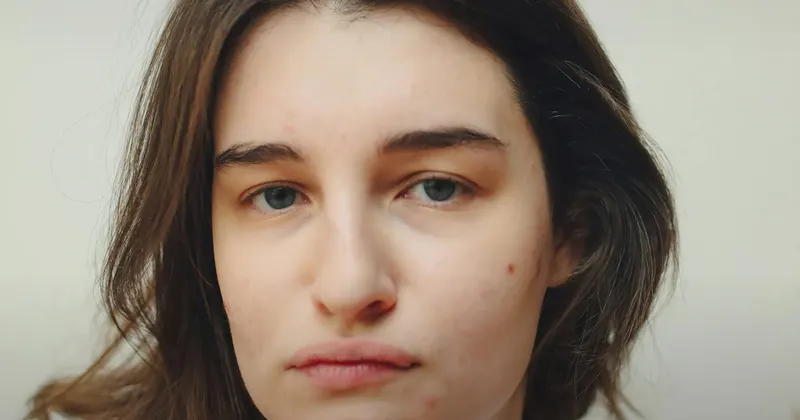
Acne during perimenopause and menopause is more common than most people expect. Around 26.3% of women in their 40s report active acne, and roughly 30% experience breakouts for the first time during this life stage. The cause comes down to a shift in hormone balance rather than any single deficiency, and the approach that works for a teenager's skin is rarely the right fit here.
Why Do Breakouts Come Back After Years of Clear Skin?
The short answer: the relationship between estrogen and androgens shifts.
During reproductive years, estrogen helps keep androgen activity in check at the skin level. As estrogen begins to decline in perimenopause, that counterbalance weakens. Androgen levels do not necessarily spike; they may stay roughly the same or even fall slightly. Even so, the skin's sebaceous glands become more sensitive to them. That relative androgen excess is what drives excess sebum production and, in turn, clogged pores and inflammation 1.
This pattern mirrors what happens at puberty, just in reverse. Androgen-driven sebum production is the key element in acne formation, alongside follicle obstruction and inflammation 3.
A Cochrane meta-analysis found that elevated androgen activity (via DHEA supplementation in perimenopausal women) was associated with a 3.77× higher odds of developing acne compared to placebo. That figure shows clearly how the androgen-to-estrogen ratio shapes breakout risk 2.
Where Does Menopausal Acne Show Up?
Hormonal acne in adults tends to cluster in predictable places: the jaw, chin, and lower cheeks. This is different from the forehead-and-nose pattern more typical of teenage skin.
The lesions also tend to run deeper. Rather than surface blackheads, the more common presentation is inflamed papules and cysts along the jawline: the kind that are tender to touch and slow to resolve 1.
Menopausal acne is classified into three types:
| Type | Description | Prevalence |
|---|---|---|
| Persistent | Carried over from earlier adult acne | 75–85% of cases |
| New-onset | First episode at 45+ with no prior history | ~15–25% of cases |
| Recurrent | Clear skin in 30s–40s, then returns | Smaller subset |
If new acne appears after full menopause (not perimenopause), a dermatologist visit is warranted to rule out other hormonal causes.
Why Teen-Acne Tactics Tend to Backfire
Products designed for teenage skin are typically formulated for oilier, thicker, more resilient skin with a high natural moisture turnover. Perimenopausal skin plays by different rules.
Estrogen helps maintain ceramide production in the skin barrier. As estrogen falls, transepidermal water loss increases and the barrier becomes easier to disrupt. A high-concentration benzoyl peroxide wash or a full-strength retinol serum can strip what little barrier function remains, triggering redness, peeling, and paradoxically more breakouts, because a damaged barrier is more prone to inflammation 4.
Alcohol-based toners, astringent cleansers, and over-exfoliation follow the same pattern. They may reduce oiliness temporarily while worsening barrier integrity and sensitivity over time.
The Barrier-Acne Cycle
When the barrier is compromised, the skin is more reactive to the Cutibacterium acnes bacteria that contribute to inflammatory lesions. Treating the barrier disruption first, then addressing active acne, often works better than going straight to aggressive actives.
What Actually Works for Menopausal Acne
The goal is to address sebum regulation and inflammation without wrecking barrier function. These actives have evidence for adult acne and suit a more reactive skin 4:
Azelaic acid (10–20%): Reduces bacterial colonisation, calms inflammation, and helps with the post-breakout pigmentation that tends to linger longer on perimenopausal skin. A Cochrane review found azelaic acid comparable to tretinoin in treatment response for mild-to-moderate acne with fewer irritation side effects 4. It does not thin the skin or increase photosensitivity.
Niacinamide (2–5%): Supports ceramide synthesis, which means it actively helps rebuild what a compromised barrier has lost. It also moderates sebum production and has a lower irritation profile than most other acne actives 4.
Low-concentration salicylic acid (0.5–2%): A BHA that dissolves inside pores rather than at the surface. At 2%, it can clear comedones without the stripping effect of higher concentrations.
Low-strength retinoids (0.025–0.05% tretinoin or equivalent): Effective at reducing comedone formation but require careful introduction on perimenopausal skin. Start on alternate nights, always with SPF during the day. Patch test first.
The SPF Non-Negotiable
Any active that accelerates cell turnover (retinoids, BHAs, azelaic acid) increases sensitivity to UV. Daily SPF 30+ is not optional when using these ingredients. Post-inflammatory hyperpigmentation from breakouts also takes longer to fade without sun protection, so this step matters twice over.
Patch test all new actives on the inner arm before applying to the face, especially if your skin has become more reactive in recent months.
When to See a Dermatologist
Topical actives cover a lot of ground, but some presentations of hormonal acne respond best to systemic treatment. Worth booking an appointment when:
- Breakouts are nodular or cystic and not improving after 12 weeks of consistent topical use
- New acne appears for the first time after menopause (rather than perimenopause)
- There are other signs that might point to androgen imbalance: irregular cycles, hair loss, or unwanted hair changes
Prescription options include low-dose oral contraceptives, anti-androgen medications, or spironolactone. All work at the hormonal level rather than the surface, and all require a proper assessment from a doctor or dermatologist.
Use This in Your Routine
If you're noticing jaw or chin breakouts alongside other skin changes in perimenopause, the Skin Bliss Routine Builder can help you layer actives in the right order without overloading a more reactive barrier. You can build a routine around azelaic acid or low-strength salicylic acid that also supports barrier repair, and the tool flags potential ingredient conflicts before they become skin problems. Start building at skinbliss.app.
FAQ
Is menopausal acne the same as teenage acne?
Not quite. Both involve excess sebum production driven by androgen activity, but the hormonal mechanism differs (relative androgen sensitivity rather than absolute increase), the location is typically lower-face and jawline rather than forehead and nose, and the skin context is different. Perimenopausal skin usually has a more compromised barrier and lower resilience, which means aggressive teen-acne tactics often make things worse.
Can niacinamide help with hormonal acne?
Niacinamide does not directly block androgen activity, but it supports the skin barrier, moderates sebum production, and calms inflammation. All of that addresses the conditions that allow hormonal acne to take hold. At 2–5%, it is one of the gentler multi-taskers for this skin type.
How long before I see improvement from azelaic acid?
Most people notice reduced inflammation within 4–6 weeks and measurable lesion reduction by 12 weeks. Fading of post-breakout pigmentation can take 2–3 months beyond that, especially without consistent SPF use.
Should I stop using retinoids in perimenopause?
Retinoids remain effective actives for comedone-type acne. The key is concentration and introduction speed. Starting at a lower strength (0.025% tretinoin or an equivalent OTC retinol) on alternate nights reduces the barrier disruption that more reactive perimenopausal skin is vulnerable to.
When is menopausal acne a sign I should see a doctor?
New acne appearing after full menopause (rather than during the transition), cystic lesions that do not respond to 12 weeks of topical treatment, or acne that comes with other signs of androgen imbalance are all reasons to check in with a dermatologist. Prescription options exist and are often highly effective.
In your browser
Free Skin Quiz: Understand your skin profile in under 5 minutes
Oily or dry is only the start. Find out what your skin actually needs across six skin dimensions, with a plain note on what each one means for your routine. Results appear in your browser, and you can keep them in the app.
Go deeper on Learn: Hormonal & cyclical breakouts →

Maria combines her background in AI research with a passion for evidence-based skincare. She built Skin Bliss to help people make informed decisions about their skin, backed by science rather than marketing.
Sources (4)
- Dias da Rocha MA, et al. "Unveiling the Nuances of Adult Female Acne: A Comprehensive Exploration of Epidemiology, Treatment Modalities, Dermocosmetics, and the Menopausal Influence."
- Scheffers CS, et al. "Dehydroepiandrosterone for women in the peri- or postmenopausal phase."
- Parkinson H. "Adult and perimenopausal acne and the nurse's role in management."
- Liu H, et al. "Topical azelaic acid, salicylic acid, nicotinamide, sulphur, zinc and fruit acid (alpha-hydroxy acid) for acne."