Journal · Sun Protection & Longevity
Can Tinted SPF Replace Your Foundation?
Can a tinted SPF replace your foundation, how iron oxides may add visible light defense, and how to build a one-product base that still protects skin

Maria Otworowska, PhD, Co-founder of Skin Bliss
· 10 min read
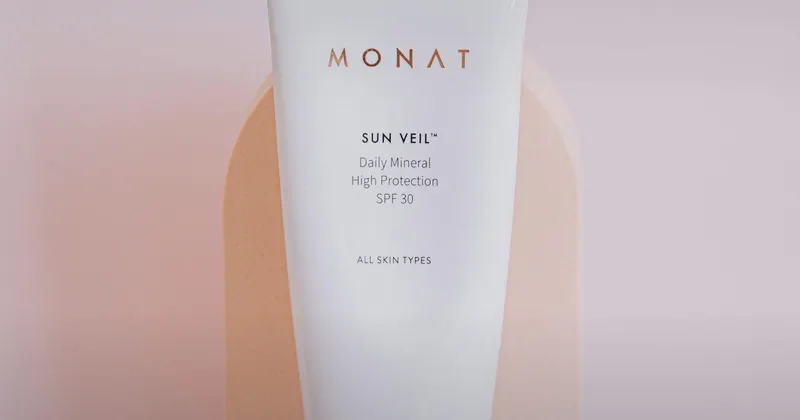
A tinted SPF is a sunscreen formula that combines broad-spectrum UV protection with skin-tone-matching pigments, typically iron oxides blended with mineral or chemical UV filters, designed to provide light-to-medium coverage while eliminating the need for a separate foundation in everyday routines.
Fewer products, less fuss, better skin. That is the promise behind swapping your foundation for a tinted SPF. The skinimalism trend is not just about aesthetics. It is about cutting steps that are redundant, potentially comedogenic, or just unnecessary on days when full coverage is not the goal. But can a single tinted sunscreen actually hold up as your base? The answer depends on what you expect from it.
Key Takeaways
What does a tinted SPF actually give you that foundation does not?
Sun protection. That is the fundamental difference. A foundation with SPF 15 sounds protective, but the amount of foundation most people apply falls well below what is needed to achieve that SPF rating. Testing requires 2 mg/cm2, and typical cosmetic application sits between 0.5 and 1.0 mg/cm2 2. At those real-world amounts, the UV protection from SPF-labeled makeup is a fraction of what the label promises.
A dedicated tinted SPF is formulated to be the sunscreen first and the cosmetic second. The active UV filters, whether mineral (zinc oxide, titanium dioxide) or chemical, are present at concentrations calibrated for meaningful protection at intended application amounts. Iron oxides add the tint and also block visible light wavelengths between 400 and 500 nm 5, offering protection that no conventional foundation provides regardless of its SPF claim.
Tinted SPFs with iron oxides have been shown to outperform non-tinted sunscreens for preventing melasma relapse and visible light-induced pigmentation 6. If you are managing hyperpigmentation or spend significant time outdoors, that visible light coverage is not a cosmetic perk. It is clinically relevant.
How much coverage can you realistically expect?
Tinted SPFs range from sheer to medium coverage. The sheerest formulas even out skin tone and provide a light veil of color, similar to a BB cream. Mid-range options cover mild redness, minor dark spots, and uneven texture. None of them match the opacity of a full-coverage matte foundation.
For a one-product base approach, your expectations should align with a "your skin but slightly better" result. If you have significant discoloration or acne scarring that you want fully covered, a tinted SPF alone will not get you there. You can spot-conceal over it, and that is where most people land: tinted SPF as the base, concealer where needed, done.
Texture is also a factor. Older mineral tinted sunscreens had a reputation for being thick and chalky. Modern formulations with nano-sized zinc oxide and titanium dioxide produce lighter, more blendable textures 7. Many now set to a natural, satin-like finish that photographs well and feels invisible on the skin.
Is SPF in makeup enough to skip standalone sunscreen?
No. Research has consistently shown a gap between labeled SPF in cosmetics and the protection consumers actually get. A 2009 study testing 35 cosmetic products with SPF found that seven did not comply with legislation regarding adequate UVA protection 4. Even compliant products deliver far less protection than labeled when applied at the thin layer typical of cosmetic use.
A 2021 study offered a more optimistic wrinkle. It found that layering sunscreen with makeup products greatly increased the effective SPF compared to using either product alone, even when the amount of each product was below the recommended level 3. The makeup layer helps fill in gaps and thin spots in the sunscreen layer underneath. The combination improved coverage uniformity across the face.
The practical takeaway: a tinted SPF as your base is real sun protection. SPF in your foundation is a bonus layer on top. If you must pick one, the tinted SPF wins. If you wear both, your real-world protection improves.
How do you apply a tinted SPF so it works as both sunscreen and base?
Application amount is the single most important variable. Most people under-apply sunscreen by roughly half 2. For your face, aim for about a quarter-teaspoon, or roughly a two-finger-length strip. This amount may feel like more than you would normally use for foundation. That is the point.
Apply it after your last skincare step (moisturizer or serum) and before any additional makeup. Use your fingers for the most even coverage. Pressing and patting the product into skin, rather than wiping or rubbing, reduces streaking and helps the formula set evenly. Let it sit for 60 seconds before adding concealer, powder, or anything else.
If the amount needed for proper SPF gives you too much coverage or a heavy look, that formula is not the right one for your one-product base approach. You need a formula where a quarter-teaspoon feels natural and looks skin-like. The Skin Bliss Smart Product Search can help you compare tinted SPFs by coverage level, finish, and active ingredients to find one that matches your needs.
What skin types get the most from a tinted SPF base?
Tinted SPFs work best for normal, dry, and combination skin types seeking a low-maintenance everyday look. Dry skin benefits from the hydrating bases common in many tinted SPFs. Combination skin can pair them with a light setting powder in the T-zone.
Oily skin is where the one-product approach gets trickier. Many mineral tinted SPFs contain zinc oxide, which has mild oil-absorbing properties 8, but the emollient base of most tinted formulas can feel heavy on very oily skin by midday. Look for oil-free formulations with a matte or semi-matte finish if shine control is a priority.
For sensitive and reactive skin, mineral tinted SPFs have a strong track record. Zinc oxide and titanium dioxide sit on top of the skin rather than being absorbed, which makes them well-tolerated by most people with eczema-prone or rosacea-prone skin 7. Fragrance-free is non-negotiable for sensitive skin around the nose and cheeks.
| Skin type | Best tinted SPF traits | Watch out for |
|---|---|---|
| Dry | Hydrating base, dewy or satin finish | Very matte formulas that emphasize flaking |
| Oily | Oil-free, matte finish, zinc oxide based | Heavy emollient bases that slide by afternoon |
| Combination | Lightweight, buildable, natural finish | Overly hydrating formulas that flood the T-zone |
| Sensitive | Fragrance-free, mineral only, minimal ingredients | Chemical UV filters (oxybenzone, avobenzone) that may irritate |
| Acne-prone | Non-comedogenic, oil-free, zinc oxide | Heavy silicones or coconut-derived emollients |
Do you still need to reapply if you are wearing tinted SPF as makeup?
Yes. This is the part nobody wants to hear. Sunscreen degrades with UV exposure, friction, sweat, and sebum. The recommendation is to reapply every two hours during sustained outdoor sun exposure 9. Research suggests that for indoor workers with minimal sun exposure, protection may persist longer than two hours 10, but the two-hour guideline remains the safe standard for outdoor activity.
Reapplying over makeup is admittedly inconvenient. Your options: a mineral powder SPF dusted over your base (adds a UV-filtering layer without disrupting what is underneath), a setting spray with SPF (lighter but less reliable in coverage), or simply reapplying your tinted SPF with a sponge (works if you do not mind refreshing your look). None of these are perfect. The most practical approach for most people is to reapply a powder SPF at midday and reserve full reapplication of cream sunscreen for beach days or extended outdoor time.
No sunscreen provides 100% protection. Even SPF 50 lets through about 2% of UVB radiation. Reapplication, shade-seeking, and UV-protective accessories all contribute to a complete strategy.
Frequently asked questions
Can a tinted SPF cause breakouts?
Any product can cause breakouts depending on your skin's specific triggers. Look for non-comedogenic labeling and avoid formulas heavy in coconut-derived emollients or thick silicones if you are acne-prone. Mineral tinted SPFs with zinc oxide tend to be less comedogenic than chemical-filter-based options, and zinc oxide itself has mild anti-inflammatory properties 8.
How do you find the right shade in a tinted SPF?
Shade matching is still a weak point for many tinted SPF brands. Test on your jawline in natural light, not on your hand. If a brand offers only one "universal" shade, be aware that these tend to suit medium skin tones best and may not match very light or very deep complexions 11. Brands expanding to 6 or more shades are becoming more common.
Is tinted SPF better than wearing sunscreen under foundation?
Both provide UV protection, but a tinted SPF simplifies the routine and reduces the risk of product interaction (pilling, streaking, formula incompatibility). Research shows that layering sunscreen plus makeup boosts protection 3, so wearing tinted SPF under a light foundation is actually the highest-protection combo if you are willing to add a step.
What SPF level should a tinted sunscreen have?
SPF 30 is the minimum recommended by most dermatological guidelines for daily use. SPF 50 provides marginally more UVB protection (blocking about 98% versus 97%). Given that most people under-apply, choosing SPF 50 provides a buffer that helps compensate for real-world application amounts 12.
Does tinted SPF protect against aging?
UV radiation is the primary external driver of skin aging. A tinted SPF with broad-spectrum protection blocks both UVA (which drives photoaging) and UVB (which drives sunburn), plus visible light via iron oxides. Using it consistently is one of the most effective anti-aging steps you can take. Pair it with the Skin Bliss Routine Evaluator to make sure your full routine supports your skin goals.

In your browser
Free Skin Quiz: Understand your skin profile in under 5 minutes
Oily or dry is only the start. Find out what your skin actually needs across six skin dimensions, with a plain note on what each one means for your routine. Results appear in your browser, and you can keep them in the app.

Maria combines her background in AI research with a passion for evidence-based skincare. She built Skin Bliss to help people make informed decisions about their skin, backed by science rather than marketing.
Sources (12)
- Dumbuya H et al. (2020). "Photoprotection beyond ultraviolet radiation: A review of tinted sunscreens." *J Am Acad Dermatol*.
- Schalka S, dos Reis VM. (2011). "Application of sunscreen: theory and reality." *An Bras Dermatol*.
- Kim M et al. (2021). "Layering sunscreen with facial makeup enhances its sun protection factor under real-use conditions." *Photodermatol Photoimmunol Photomed*.
- Wang SQ et al. (2009). "Are cosmetic products which include an SPF appropriate for daily use?" *J Drugs Dermatol*.
- Bernstein EF et al. (2021). "Iron oxides in novel skin care formulations attenuate blue light for enhanced protection against skin damage." *Int J Cosmet Sci*.
- Castanedo-Cazares JP et al. (2014). "Near-visible light and UV photoprotection in the treatment of melasma: a double-blind randomized trial." *J Clin Aesthet Dermatol*.
- Burnett ME, Wang SQ. (2020). "Photoprotection with mineral-based sunscreens." *Dermatol Clin*.
- Gupta M et al. (2014). "Zinc therapy in dermatology: a review." *Dermatol Res Pract*.
- Diffey BL. (2001). "When should sunscreen be reapplied?" *J Am Acad Dermatol*.
- Matta MK et al. (2018). "Sunscreen application to the face persists beyond 2 hours in indoor workers." *Br J Dermatol*.
- Perper M et al. (2024). "Objective assessment of color match for a universal tinted sunscreen on individuals with skin of color: a pilot study." *J Am Acad Dermatol*.
- Wang SQ et al. (2012). "High-SPF sunscreens (SPF >= 70) may provide ultraviolet protection above minimal recommended levels by adequately compensating for lower sunscreen user application amounts." *J Am Acad Dermatol*.