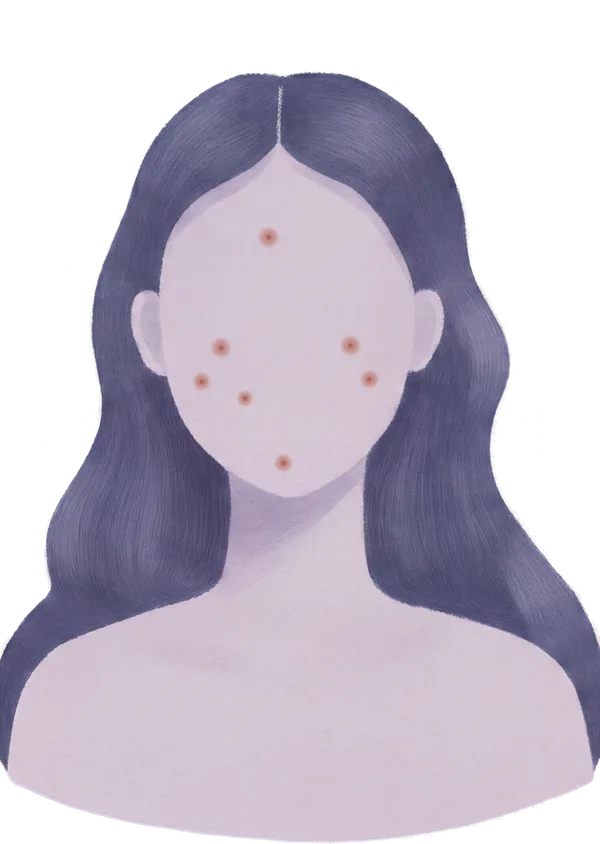
Cycle-syncing your routine
Cycle-syncing skincare means loosely adjusting your routine to the phases of your menstrual cycle, since the hormone shifts across the month can change how your skin behaves. The idea is to lean into what your skin needs in each phase rather than fighting it.
The one thing
Tune into how your skin actually feels week to week, dry, oily, or balanced, and adjust how rich or active your routine is to match.
Why it matters
If your skin seems to swing between dry, glowing, and breaking out at different points in the month, those shifts often track your cycle, and noticing the pattern can take some of the surprise out of it.
If you've noticed you only seem to get one good skin week a month, your menstrual cycle is often part of the story. As hormone levels rise and fall across the month, your skin can shift too, drier at some points, oilier at others. Cycle-syncing just means adjusting your routine to roughly follow those changes instead of being caught off guard by them.
The main hormones behind it are oestrogen (which rises in the first half of the cycle), progesterone (which climbs in the second half), and testosterone. You don't need to track them precisely. The phases are a useful enough map.
What each phase tends to look like
- Menstrual phase (the bleeding days): Hormones dip to their lowest, and skin can feel dry, dull, or a bit sensitive. A good moment to focus on comfort and hydration, like a richer moisturizer or a few drops of face oil.
- Follicular phase (just after your period): Oestrogen rises and skin often settles into a good place. If you want to introduce gentle actives like exfoliating acids or a retinoid, this can be a comfortable window to do it.
- Ovulation (mid-cycle): Skin often feels its most balanced and hydrated. You can usually keep things light here.
- Luteal phase (the run-up to your period): Oil production tends to climb, and this is when many people notice premenstrual breakouts. Lighter, non-clogging products and a gentle ingredient like a mild acid can help you stay ahead of it.
A gentle reality check
Every cycle is different, and some are irregular enough that pinning down an exact phase isn't realistic. So the most reliable version of this is simply listening to your skin: notice whether it feels dry, oily, or calm that day, and work from there. If breakouts are persistent, painful, or clearly tied to your hormones in a way that bothers you, a doctor or dermatologist can help you sort out what's going on.

In your browser
Free Skin Quiz: Understand your skin profile in under 5 minutes
Oily or dry is only the start. Find out what your skin actually needs across six skin dimensions, with a plain note on what each one means for your routine. Results appear in your browser, and you can keep them in the app.