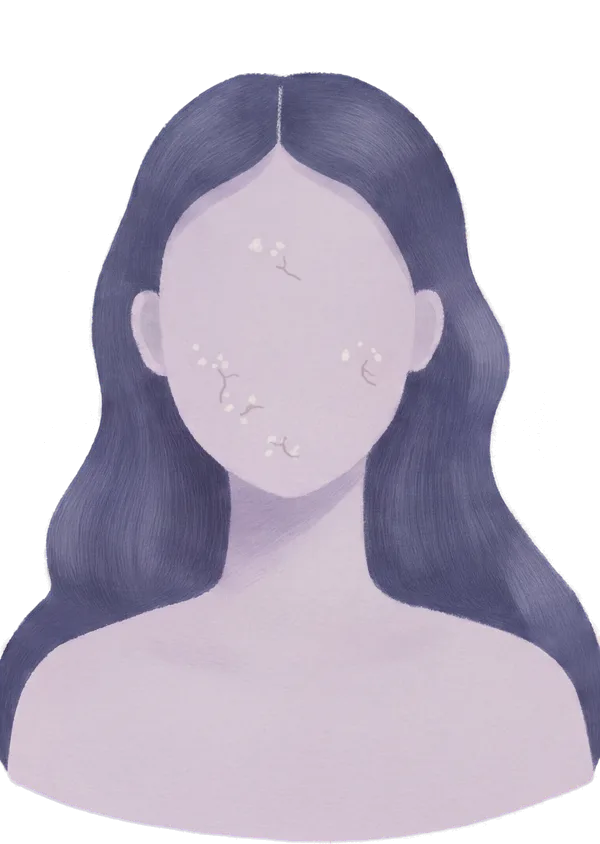
Dry skin
Dry skin is a type where the skin makes less oil (sebum) than average. With fewer of its own lipids to seal in water, it can feel tight and look a little dull or rough.
The one thing
Cleanse gently and follow with a moisturiser that includes both water-binding humectants and richer emollients, so you add water and help hold it in.
Why it matters
If your skin runs dry as a baseline, gentle, richer textures tend to keep it comfortable, while harsh or stripping products can make tightness and flaking worse.
Dry skin as a type means your oil glands run on the quieter side. Sebum is the oil your skin makes to coat its surface and slow water loss, so when there's less of it, your skin has a harder time staying sealed and can feel tight, especially after cleansing.
This is different from skin that's gone dry for a moment because of weather or a harsh product. A dry type is your everyday baseline, the way your skin tends to behave most of the year.
It's also worth separating from dehydration. Dryness is about a shortage of oil; dehydration is about a shortage of water, and any type, even oily skin, can be dehydrated. Many people with dry skin are dealing with both at once, which is why a single rich cream doesn't always fix the tight feeling on its own.
What tends to help
The general idea is to be gentle and to add moisture in two ways: ingredients that draw in water, and ingredients that help keep it there.
- Cleanse with something mild and creamy rather than a foaming wash that strips. Look for soothing, buttery ingredients instead of harsh sulphate cleansers.
- Use humectants like hyaluronic acid or glycerin to pull water into the skin, and richer emollients to soften and seal.
- Go easy on strong exfoliating acids and high-alcohol toners, which can leave dry skin feeling tighter.
- Don't skip sunscreen. A moisturising SPF works well over a dry-skin routine.
When to see a professional
Occasional tightness is normal for this type. But if your skin is persistently flaking, cracking, itching, or staying irritated no matter what you do, that may be more than a dry type, and a dermatologist can help you sort it out. If your dryness feels severe or you're constantly battling flaking and a raw, tight feeling, the very dry skin concern is a closer match for what to do next.

In your browser
Free Skin Quiz: Understand your skin profile in under 5 minutes
Oily or dry is only the start. Find out what your skin actually needs across six skin dimensions, with a plain note on what each one means for your routine. Results appear in your browser, and you can keep them in the app.