Very dry skin
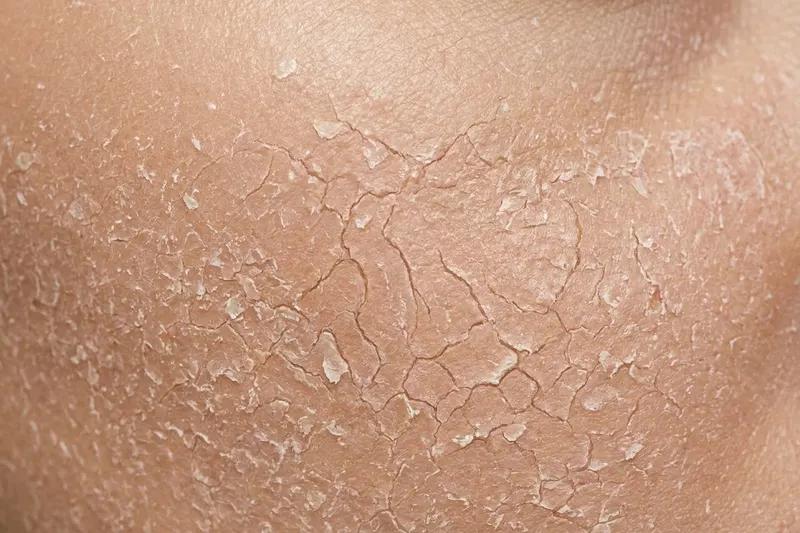
Very dry skin has tipped past everyday dryness into discomfort, with intense tightness, visible flaking, and a rough texture. It is short on both the fats (lipids) and the water that keep skin comfortable.

The one thing
Layer a humectant like glycerin or hyaluronic acid under a rich, fragrance-free cream, and seal it overnight with something heavier like a balm.
Why it matters
When skin is this dry, its barrier is leaking moisture faster than it can replace it, which can leave it sore and easily irritated. Knowing how to replace and seal that moisture is what brings real comfort back.
Very dry skin is skin that has tipped past everyday dryness into real discomfort: intense tightness, visible flaking, and a rough texture you can feel. It is short on both lipids (the fats that hold the barrier together) and water, so it struggles to stay comfortable. Worth a quick distinction here. This is the concern version of dryness, the flaring symptom you want to calm, while the dry skin type is more about your skin's baseline tendency to make less oil.
Why it happens
When skin is very dry, its barrier (the outer layer that locks moisture in) is not holding up its end of the deal. That can come from naturally low oil production, but it is often made worse by outside stress: cold or windy weather, low humidity, hot showers, harsh or stripping cleansers, and over-exfoliation. Age and certain conditions can play a part too. The result is the same either way, water escapes faster than skin can replace it, and you get that tight, papery feeling.
What tends to help
Think replace and seal. Humectants like glycerin and hyaluronic acid pull water into the skin, emollients smooth and soften the rough patches, and occlusives such as petrolatum or a thick balm lock everything in, which is especially helpful overnight. Switching to a creamy, fragrance-free cleanser and easing off acids gives the barrier room to rebuild. Ceramides are useful too, since they top up the fats your skin is missing. If you want to check whether your current routine actually supports dry, barrier-stressed skin, the Skin Bliss Routine Evaluator can flag the gaps.
When to see a professional
Most very dry skin responds to gentler care and richer moisturizers within a couple of weeks. If yours stays cracked, painful, itchy, or inflamed despite that, or if it comes with redness and rashes, it is worth seeing a dermatologist, since persistent dryness can overlap with conditions like eczema.
In your browser
Free Skin Quiz: Understand your skin profile in under 5 minutes
Oily or dry is only the start. Find out what your skin actually needs across six skin dimensions, with a plain note on what each one means for your routine. Results appear in your browser, and you can keep them in the app.