Journal · Routines & Protocols
Humectant-First Moisturizing: A Lighter Approach
The humectant-first approach to moisturizing: pull water in with glycerin and HA, then seal lightly so skin feels hydrated without feeling suffocated

Maria Otworowska, PhD, Co-founder of Skin Bliss
· 7 min read
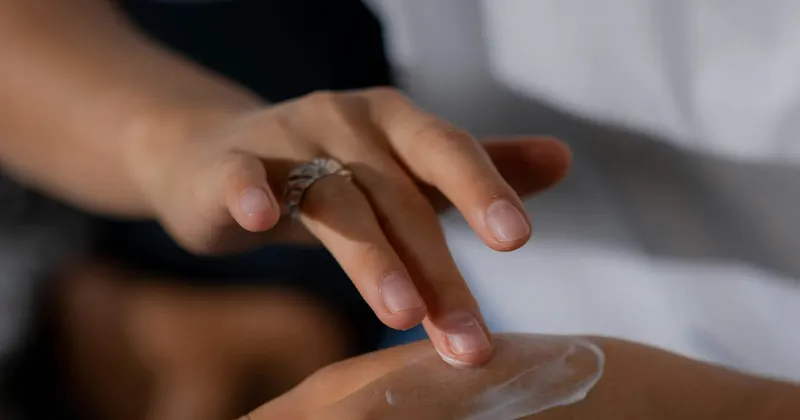
The humectant-first approach is a moisturizing strategy that flips the usual order: pull water into your skin with ingredients like glycerin and hyaluronic acid first, then seal with a light barrier. It replaces the heavy occlusive layering that can trap heat, sebum, and bacteria against your skin's surface.
If your skin feels congested, overheated, or perpetually tight despite slathering on rich creams every night, you might not need more moisture. You might need a different kind of moisture.
Key Takeaways
Hydrate first with humectants (glycerin, hyaluronic acid), then seal lightly.Gel-cream textures deliver lipids and barrier support without suffocating pores.Squalane and ceramide-based lotions offer breathable occlusion that does not trap heat.Most people notice changes in texture and congestion within two to four weeks.Heavy occlusives still have legitimate uses for eczema, dry climates, and post-procedure recovery.

What Is the Humectant-First Approach?
Most moisturizing advice follows a simple formula: apply something thick and rich. That works for genuinely dry skin. For many other people, it creates what dermatologists informally call the Occlusive Trap: sealing the skin's surface without actually adding water underneath.
The humectant-first approach reverses the priority. Instead of starting with a heavy barrier cream, you start by getting water into your skin, then apply a lightweight seal to keep it there.
This matters because humectants and occlusives do fundamentally different things. Humectants (glycerin, hyaluronic acid, urea) attract water molecules and pull them into the upper layers of your skin. Occlusives (petroleum jelly, thick butters) create a physical film that prevents that water from escaping 1. Both are useful. But order and ratio make the difference between skin that feels genuinely hydrated and skin that just feels greasy.
How Do You Apply a Humectant-First Routine?
Three steps. No ten-step routine required.
Step 1: Start with humectants. Apply a serum containing glycerin or hyaluronic acid to damp skin, right after cleansing, before the water evaporates. This is real hydration. These ingredients pull water into your skin rather than coating it with a layer of oil 2.
Step 2: Switch to a gel-cream. Modern gel-creams deliver lipids and moisture without the dense, pore-blocking weight of traditional heavy creams. Look for formulas with ceramides or fatty acids that reinforce your barrier in a breathable format 3.
Step 3: Use a light emollient as your seal. Squalane or ceramide-based lotions offer a barrier that helps prevent transepidermal water loss (TEWL) without trapping heat 4. Your skin still benefits from some occlusion. It just does not need an industrial seal.
The Skin Bliss Routine Builder can help you assemble a humectant-first routine based on your skin type and concerns, with ingredient-smart scheduling that flags potential conflicts.
Why Does Layering Order Matter So Much?
Think of occlusives as a lid on a pot. Humectants are the water inside. If you apply a heavy occlusive first, or skip humectants entirely, you are sealing in nothing. The barrier is airtight, but there is no moisture underneath to retain 5.
That explains why some people apply thick, expensive creams every night and still wake up with tight, uncomfortable skin. The seal works fine. The hydration is absent.
Order also affects how your other products perform. Heavy occlusives, especially petroleum-based ones, create a hydrophobic film that can physically block water-soluble actives from reaching deeper skin layers. Your niacinamide or vitamin C serum may just be sitting on top of that film 6.
By applying humectants first, you ensure your skin absorbs water before any barrier goes on. Lightweight emollients then protect that hydration without blocking whatever comes next.
What Results Should You Expect, and How Quickly?
Most people notice a tangible difference within two to four weeks of switching to a humectant-first routine.
Texture tends to change first. Skin that felt perpetually congested or bumpy often smooths out as trapped sebum clears. Redness may calm down as your skin regulates temperature more effectively without a heavy thermal insulator sitting on top.
Within the first week, you may notice your serums performing better. Without a dense occlusive barrier blocking absorption, water-soluble actives like niacinamide and vitamin C can actually reach the skin layers where they work.
The shift is not dramatic on any single day. It is gradual. But proper hydration compounds over time in ways that surface-level occlusion does not.
When Are Heavy Occlusives Still the Right Choice?
Heavy creams are not bad. They are specialized tools with real purposes.
| Situation | Why Heavy Occlusives Help |
|---|---|
| Eczema or chronically dry skin | A deficient barrier genuinely needs maximum lipid protection to compensate for what it cannot produce |
| Cold, dry climates | Low humidity strips moisture aggressively, and a heavier shield helps maintain skin integrity through winter 7 |
| Post-procedure recovery | Healing skin after chemical peels or professional treatments needs a temporary heavy barrier |
If any of these apply, heavy occlusives are not the trap. They are the treatment. The humectant-first principle still applies, though. Even when a heavy seal is warranted, putting humectants underneath means you are locking in actual moisture, not just creating an empty barrier 1.
The goal is matching your moisture strategy to what your skin genuinely needs, not defaulting to the heaviest option because it trended on social media.
How Do You Know If This Approach Is Right for You?
If you have been layering rich creams and your skin still feels tight, congested, or reactive, the humectant-first approach is worth a try. It works particularly well for oily, combination, and rosacea-prone skin types that do not need a heavy occlusive seal.
Start simple. Swap your heavy night cream for a humectant serum plus a gel-cream moisturizer. Give it two to four weeks. If congestion clears and your skin feels genuinely comfortable, not just greasy-on-the-surface comfortable, you have your answer.
Your barrier might just need water, not another lid.
FAQ
Can I use the humectant-first approach with tretinoin or other retinoids?
Yes. Apply your humectant serum first, let it absorb, then apply your retinoid, then follow with a lightweight moisturizer. This "buffer" method may reduce irritation while maintaining efficacy. Always use SPF during the day when using retinoids. Patch test on your inner arm if you are starting a new retinoid for the first time.
Does hyaluronic acid pull moisture out of my skin in dry climates?
In very low humidity, hyaluronic acid can draw water from deeper skin layers if there is not enough moisture in the air. Pairing it with a light occlusive on top prevents this. The seal ensures the humectant retains water rather than losing it to the environment.
Is this approach safe for sensitive or rosacea-prone skin?
Gel-creams and light emollients are generally well-tolerated by sensitive and rosacea-prone skin. Heavy occlusives, by contrast, can trap heat and worsen vasodilation. Start with fragrance-free formulas and patch test on your inner arm first if you are introducing new products.

In your browser
Free Skin Quiz: Understand your skin profile in under 5 minutes
Oily or dry is only the start. Find out what your skin actually needs across six skin dimensions, with a plain note on what each one means for your routine. Results appear in your browser, and you can keep them in the app.

Maria combines her background in AI research with a passion for evidence-based skincare. She built Skin Bliss to help people make informed decisions about their skin, backed by science rather than marketing.
Sources (7)
- Sethi, A. et al. (2016). "Moisturizers: The Slippery Road." *Indian Journal of Dermatology*.
- Rawlings, A.V. & Harding, C.R. (2004). "Moisturization and Skin Barrier Function." *Dermatologic Therapy*.
- Meckfessel, M.H. & Brandt, S. (2014). "The Structure, Function, and Importance of Ceramides in Skin and Their Use as Therapeutic Agents in Skin-Care Products." *Journal of the American Academy of Dermatology*.
- Huang, Z.R. et al. (2009). "Biological and Pharmacological Activities of Squalene and Related Compounds: Potential Uses in Cosmetic Dermatology." *Molecules*.
- Lodén, M. (2003). "Role of Topical Emollients and Moisturizers in the Treatment of Dry Skin Barrier Disorders." *American Journal of Clinical Dermatology*.
- Rawlings, A.V. & Lombard, K.J. (2012). "A Review on the Extensive Skin Benefits of Mineral Oil." *International Journal of Cosmetic Science*.
- Del Rosso, J.Q. & Levin, J. (2011). "The Clinical Relevance of Maintaining the Functional Integrity of the Stratum Corneum." *Journal of Clinical and Aesthetic Dermatology*.