
Skin Barrier Rehab 101: The Science-Backed Guide to Healing Irritated Skin
Restore compromised skin with ceramides, prebiotics, azelaic acid, and strategic active pausing. Learn how to track progress and achieve a healthy, resilient glow.
Your comprehensive roadmap to restoring compromised skin with ceramides, prebiotics, azelaic acid, and strategic active pausing-plus the exact metrics to track your progress.
The skin barrier is having a major moment in skincare, and for good reason. When this crucial protective layer becomes compromised-whether from over-exfoliation, harsh weather, or aggressive product use-it can leave your skin feeling tight, stinging, and perpetually irritated. But here's the good news: with the right approach and ingredients, you can restore your skin's natural defenses and get back to that healthy, resilient glow.
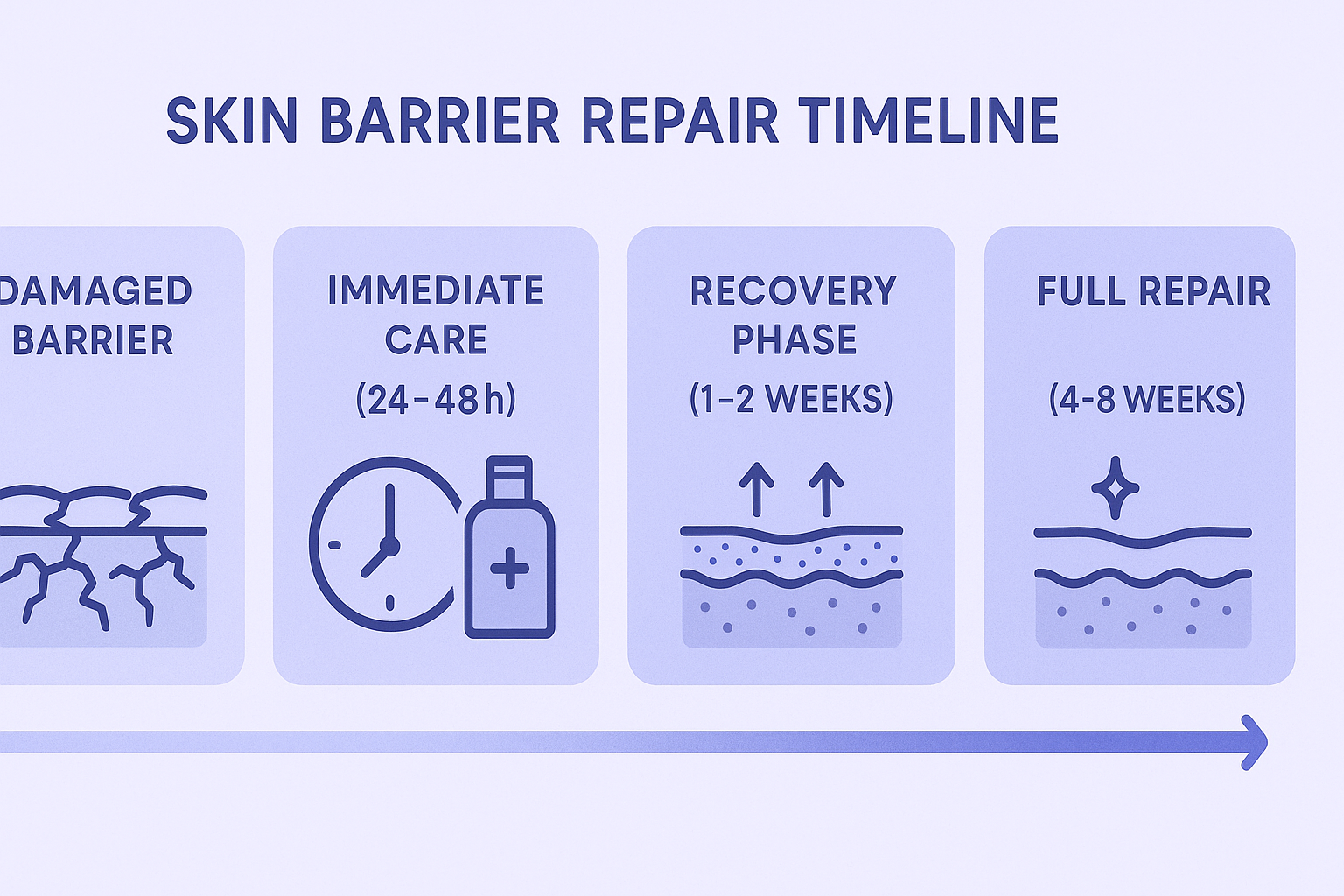
Skin barrier repair timeline showing the four key stages of recovery
Understanding when to pause your beloved retinoids and acids, how to leverage barrier-repairing ingredients, and which metrics actually matter for tracking recovery can make the difference between a quick bounce-back and months of sensitivity. Let's dive into the science-backed strategies that will have your skin barrier functioning optimally again.
Understanding Your Skin Barrier: The Foundation of Healthy Skin
Your skin barrier, scientifically known as the stratum corneum, functions like a sophisticated brick-and-mortar structure. The "bricks" are dead skin cells called corneocytes, while the "mortar" consists of lipids-primarily ceramides (50%), cholesterol (25%), and free fatty acids (15%).[^1][^2]
This intricate architecture serves two critical functions: preventing water loss and blocking harmful substances from penetrating deeper skin layers. When functioning optimally, normal skin maintains a transepidermal water loss (TEWL) rate of just 2-15 g/m²/h. However, when this barrier becomes compromised, TEWL can skyrocket to over 50 g/m²/h, leading to the cascade of symptoms we associate with irritated skin.[^3][^4][^5]
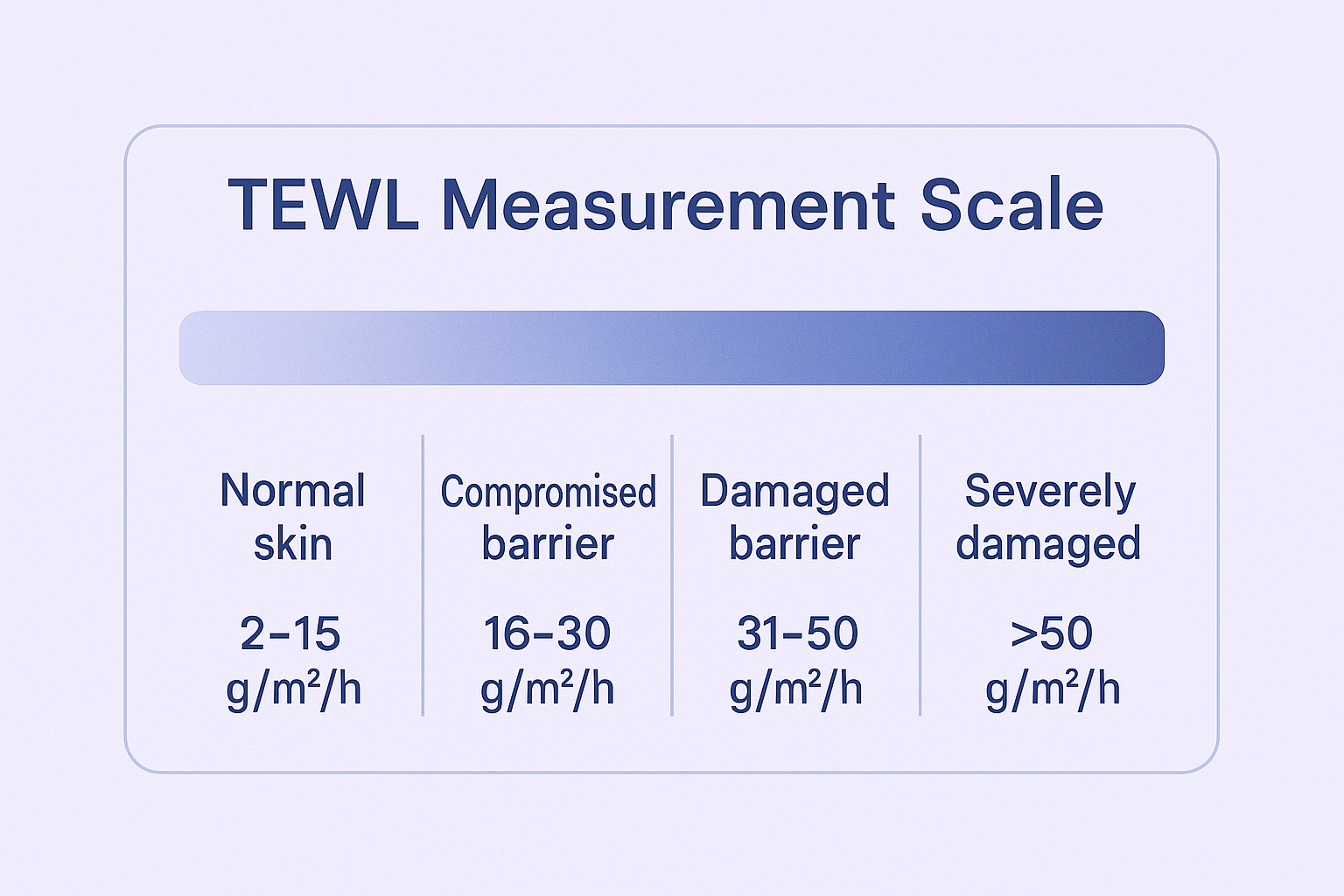
TEWL measurement scale showing different levels of skin barrier function
The barrier's pH also plays a crucial role, with healthy skin maintaining a slightly acidic environment between 4.5-5.5. This acid mantle supports beneficial bacteria while inhibiting harmful pathogens and optimizing the enzymes responsible for barrier repair.[^6]
The Power Players: Key Ingredients for Barrier Rehabilitation
Ceramides: The Ultimate Barrier Rebuilders
Ceramides are the skincare world's most scientifically validated barrier-repair ingredient. These lipid molecules are naturally found in the stratum corneum, where they form lamellar bilayers that are essential for barrier function.[^1][^2]
Research reveals that atopic dermatitis patients-who often have severely compromised barriers-show significant deficiencies in specific ceramide classes, particularly Cer[EOS] and Cer[NP]. Clinical studies consistently demonstrate that topical ceramide application, especially in 3:1:1 ratios with cholesterol and fatty acids, accelerates barrier recovery more effectively than individual ingredients alone.[^2]
The Science: Ceramides work by directly replenishing the intercellular lipids that form your skin's protective matrix. Unlike temporary moisturizing effects, ceramides actually restructure the barrier at a molecular level.[^7][^1]
Prebiotics and Postbiotics: The Microbiome Modulators
Your skin's microbiome-the ecosystem of beneficial bacteria living on its surface-plays an increasingly recognized role in barrier health. Prebiotics feed beneficial bacteria, while postbiotics are the bioactive compounds these bacteria produce.[^8][^9]
Recent multi-omic research shows that prebiotic skincare products significantly reduce opportunistic pathogens like Pseudomonas stutzeri while increasing beneficial commensals such as Staphylococcus equorum and Streptococcus mitis. These changes directly correlate with improved skin hydration and reduced TEWL.[^9][^8]
Postbiotics, including lactic acid and antimicrobial peptides, strengthen the barrier by enhancing lipid synthesis and providing anti-inflammatory effects. Unlike live probiotics, postbiotics are stable in skincare formulations and don't pose contamination risks.[^10]
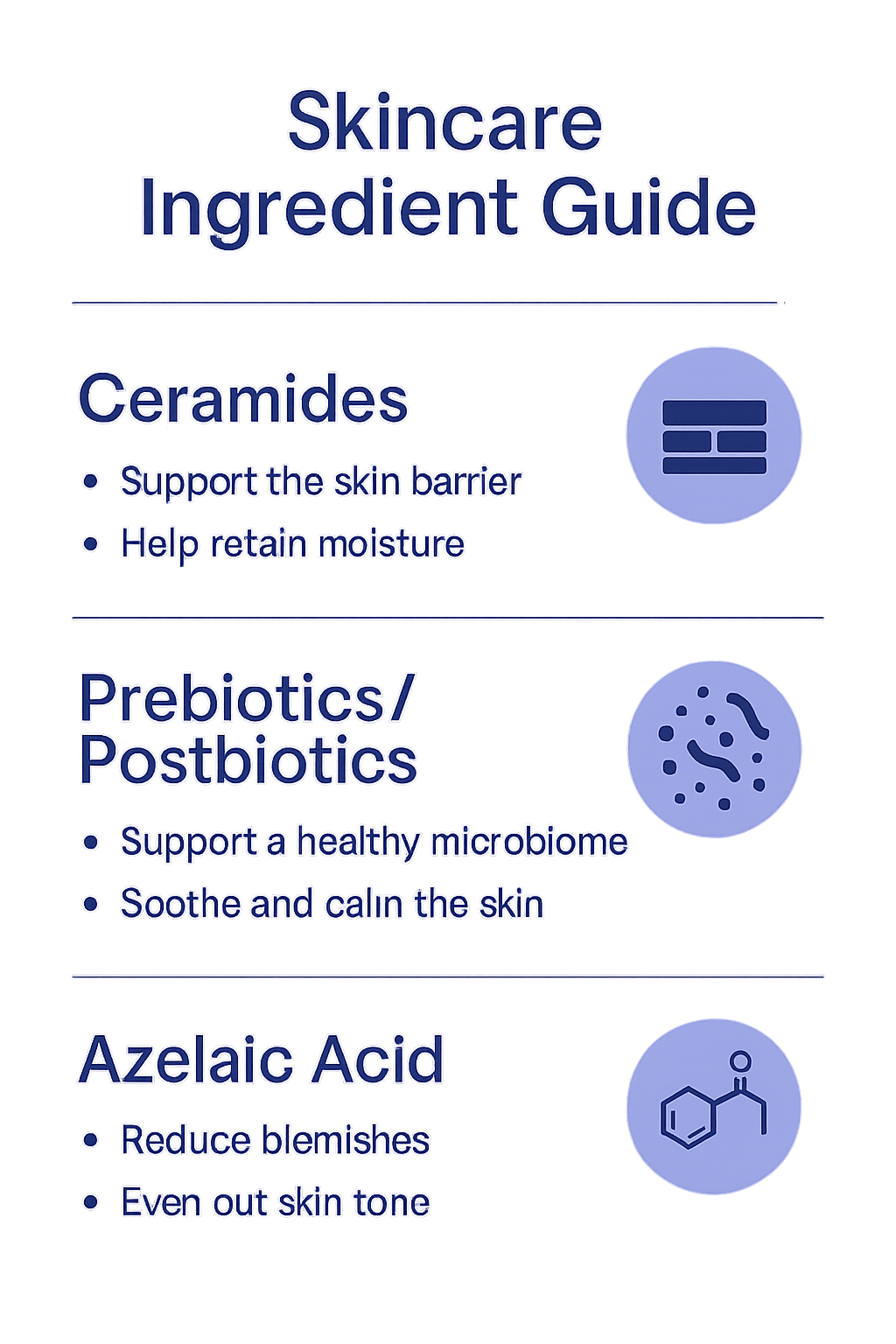
Visual guide to key skin barrier repair ingredients and their mechanisms
Azelaic Acid: The Gentle Multi-Tasker
Often overlooked in barrier repair discussions, azelaic acid offers a unique combination of benefits that make it particularly valuable during the recovery process. This naturally occurring dicarboxylic acid provides anti-inflammatory, antimicrobial, and keratolytic effects without the irritation potential of traditional acids.[^11][^12]
Research demonstrates that azelaic acid reduces pro-inflammatory cytokines (IL-1β and TNF-α) while inhibiting the enzyme tyrosinase, making it excellent for addressing both sensitivity and post-inflammatory hyperpigmentation. Unlike stronger acids that can further compromise a damaged barrier, azelaic acid actually supports barrier function while providing gentle exfoliation.[^13][^14][^11]
Clinical insight: Concentrations of 10-20% are most effective, with prescription formulations showing superior results for severely compromised barriers.[^15][^11]
The Strategic Pause: When to Stop Acids and Retinoids
Knowing when to temporarily discontinue active ingredients is crucial for successful barrier rehabilitation. Here are the definitive warning signs that indicate it's time to pause:
Immediate Red Flags
- Stinging or burning upon product application, especially with previously tolerated products
- Persistent redness that doesn't subside within 30 minutes of application
- Increased sensitivity to basic products like moisturizers or cleansers
- Peeling or flaking that continues beyond the typical retinoid adjustment period
- Tightness that persists even after moisturizing
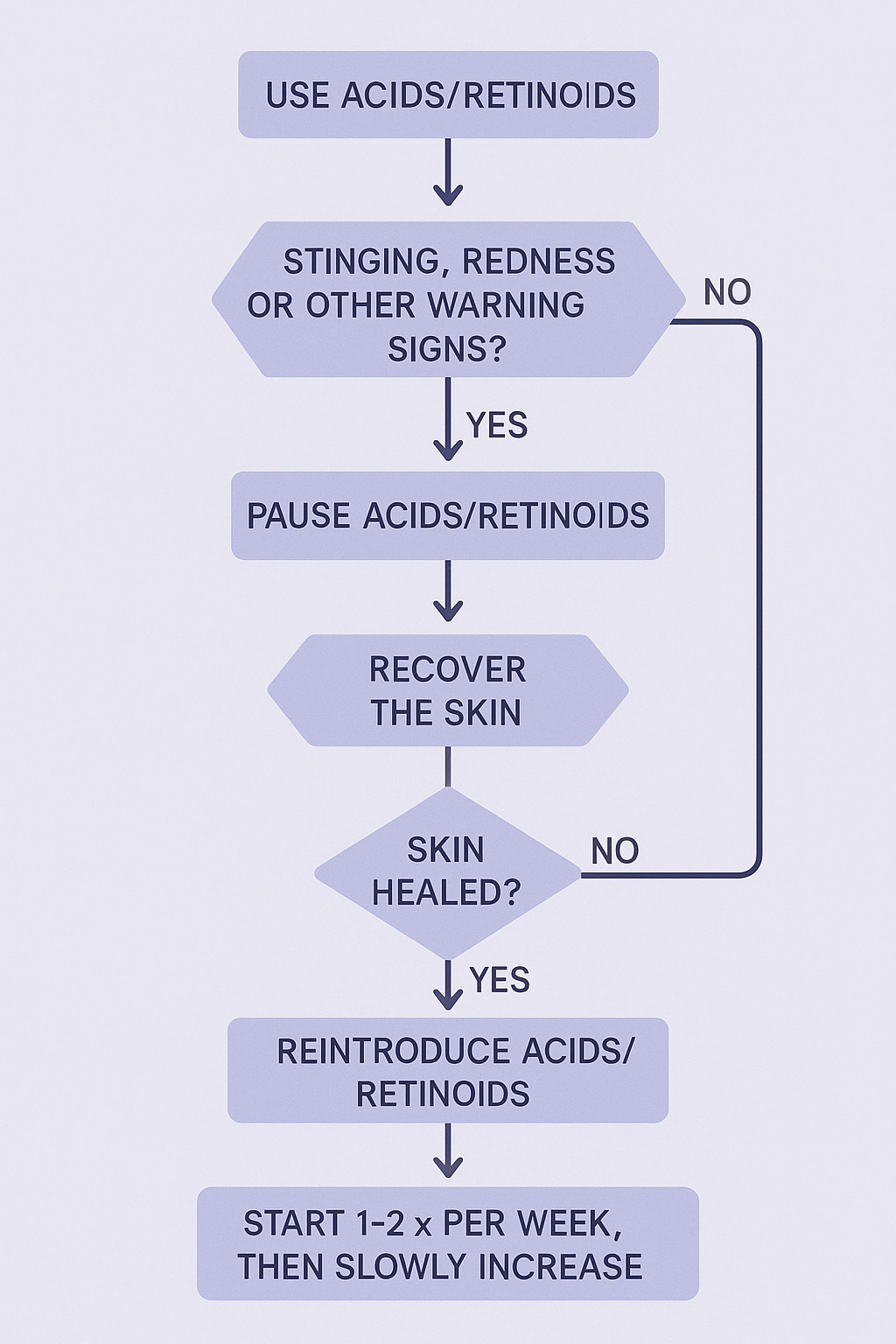
Decision flowchart for pausing and reintroducing active skincare ingredients safely
The Science-Based Timeline
Research indicates that barrier recovery follows a predictable pattern:[^16][^17][^18]
- 24-48 hours: Initial comfort improvement with proper care
- 1-2 weeks: Significant reduction in sensitivity and TEWL
- 4-8 weeks: Full barrier restoration for severely damaged skin
Reintroduction protocol: Wait a minimum of 3-5 days after symptoms resolve before reintroducing any actives. Start with once weekly application and increase frequency only if no irritation occurs.[^19][^20][^21]
Product-Specific Guidelines
BHA/AHAs: Completely discontinue until barrier shows clear improvement signs. These can continue to compromise an already weakened barrier.[^21][^22]
Retinoids: The most crucial to pause, as they increase cell turnover and can perpetuate irritation. Even low-strength retinol should be avoided until the barrier stabilizes.[^19][^23][^21]
Vitamin C: High concentrations (>15%) can be irritating. Switch to lower concentrations or pause entirely during active repair.[^19]
Chart showing how key skin barrier metrics improve over an 8-week recovery period
Practical Protocols: Your Step-by-Step Recovery Plan
Phase 1: Immediate Intervention (0-48 hours)
Goal: Stop further damage and provide immediate relief
Cleansing: Switch to a gentle cream cleanser with a pH of 5.5-6.5. Avoid foaming agents and limit to evening use only.[^24][^25]
Treatment: Apply 5% niacinamide with ceramides twice daily. This combination provides immediate anti-inflammatory benefits while beginning barrier repair.[^26][^27]
Protection: Use mineral SPF 30+ every morning. Physical sunscreens are less likely to cause additional irritation.[^25]
Phase 2: Early Recovery (2-7 days)
Goal: Establish consistent repair processes
Cleansing: Resume twice-daily cleansing with the same gentle formula.[^24]
Treatment: Introduce a ceramide-dominant moisturizer containing the 3:1:1 lipid ratio. Apply liberally twice daily.[^28][^2]
Additional support: Consider adding hyaluronic acid before moisturizer for enhanced hydration without barrier disruption.[^29][^30]
Phase 3: Mid Recovery (1-3 weeks)
Goal: Support natural renewal while maintaining gentleness
Cleansing: Transition to a pH-balanced gel cleanser if skin tolerates increased cleansing.[^24]
Treatment: Introduce azelaic acid 10% every other evening, but only if no stinging occurs. This provides gentle exfoliation with anti-inflammatory benefits.[^13][^14]
Monitoring: Track improvements in comfort and appearance. TEWL should be decreasing, and sensitivity should be minimal.[^31][^32]
Phase 4: Maintenance (3+ weeks)
Goal: Prevent future barrier damage while achieving skincare goals
Cleansing: Use a low pH cleanser optimized for your skin type.[^24]
Active reintroduction: Begin with retinol 0.25% twice weekly, increasing gradually based on tolerance.[^19][^21]
Protection: Upgrade to broad-spectrum SPF with antioxidants for comprehensive environmental protection.[^25]
Tracking Your Progress: The Metrics That Matter
Subjective Measures
Stinging Test: The gold standard for assessing barrier recovery is the lactic acid stinging test (LAST). While this requires professional administration, you can perform a modified version by noting how your skin reacts to mildly acidic products.[^33][^34][^35]
Comfort Scale: Rate your skin's comfort level from 1-10 throughout the day. Improved barrier function correlates with sustained comfort, especially in low-humidity environments.[^16][^18]
Objective Indicators
Visual Assessment:
- Redness reduction: Measure using the a* color parameter if you have access to colorimetric tools, or simply photograph your skin in consistent lighting[^36][^37][^38]
- Texture improvement: Decreased flakiness and improved smoothness indicate barrier recovery[^16][^39]
Hydration Response: Well-functioning barriers maintain hydration for 6+ hours after moisturizer application. If you need to reapply within 2-3 hours, your barrier likely needs more support.[^28][^16]
Product Tolerance: The ultimate test is how your skin responds to previously irritating products. Successful barrier repair allows gradual reintroduction of actives without immediate reactivity.[^19][^20]
Advanced Considerations: Customizing Your Approach
Age and Recovery Speed
Research shows that younger patients demonstrate faster barrier recovery, with children showing superior response to ceramide treatments compared to adults. If you're over 40, extend each recovery phase by 1-2 weeks and be more conservative with active reintroduction.[^40]
Environmental Factors
Humidity levels significantly impact barrier recovery. TEWL increases dramatically in low-humidity environments, so consider using a humidifier during recovery periods and applying occlusive ingredients like squalane or petrolatum in dry climates.[^5][^41]
Seasonal Adjustments
Winter presents unique challenges, as cold temperatures and low humidity stress the barrier. Studies show that psoriasis and atopic dermatitis flares predictably increase during winter months due to compromised barrier function. Adjust your protocol by increasing ceramide application frequency and using more occlusive moisturizers.[^41]
The Future of Barrier Science: Emerging Research
Recent advances in barrier research are revealing exciting new approaches. Multi-vesicular emulsion technology allows for sustained ceramide delivery, providing hydration benefits that last over 24 hours compared to traditional formulations that require 3-4 daily applications.[^28]
Nanotechnology applications are improving ingredient penetration while minimizing irritation. Liposomal ceramide formulations show enhanced bioavailability and deeper skin penetration without compromising the barrier.[^42][^43]
Personalized approaches based on individual ceramide profiles and microbiome analysis represent the future of barrier care, moving beyond one-size-fits-all solutions to truly customized protocols.[^8][^44]
Key Takeaways for Barrier Success
Successful skin barrier rehabilitation requires patience, consistency, and strategic ingredient selection. The most effective approach combines immediate damage control with long-term repair strategies, using scientifically validated ingredients in appropriate concentrations.
Remember that barrier recovery is not linear-you may experience temporary setbacks, especially during seasonal transitions or stress periods. The key is maintaining your simplified routine until stability is achieved, then gradually reintroducing actives based on your skin's demonstrated tolerance.
Most importantly, prevention is always easier than repair. Once your barrier is restored, maintain it with regular ceramide use, pH-balanced cleansing, and strategic active scheduling to prevent future damage.
Sources
- 1. Dysfunctional epidermal barrier and skin infections
- 2. Skin Barrier Dysfunction in Atopic Dermatitis: An Update
- 3. The Skin Barrier
- 4. Transepidermal Water Loss (TEWL)
- 5. Transepidermal water loss
- 6. The Epidermal Barrier and Its Disturbance in Irritant Contact Dermatitis
- 7. Lipid Abnormalities in the Pathogenesis of Atopic Dermatitis
- 8. Lipid Measurements in Stratum Corneum
- 9. Skin Barrier and the Interplay With Cutaneous Microbiota: Impact of Modern Lifestyle
- 10. The Role of Prebiotics, Probiotics, and Postbiotics in Skincare
- 11. The Effect of Probiotics on the Skin Barrier, Prevention of Atopic Dermatitis and Enhancement of the Beauty of the Skin: A Narrative Review
- 12. Azelaic Acid vs Niacinamide: The Ultimate Face-Off For Your Best Skin Yet
- 13. Azelaic Acid Before & After: See Real Results and Benefits
- 14. Retinol + Azelaic Acid: The Power Couple
- 15. Melatonin-Loaded Nanomaterials for Enhanced Skin Protection against UV Radiation: Recent Advances and Perspectives
- 16. How Long Does it Take to Repair Your Skin Barrier? A Detailed Timeline
- 17. How Long Does It Take to Repair Skin Barrier?
- 18. Just a Super Useful Guide to Repairing a Damaged Skin Barrier
- 19. How Do You Know When to Stop Using Retinol?
- 20. Retinoids: Why Skin Purges & How Long it Lasts
- 21. Can You Use Retinol After An AHA/BHA Peel?
- 22. Damaged Skin Barrier: The Ultimate Guide to Repairing It
- 23. Retinol Burn: Symptoms, Treatment, and Prevention
- 24. Cleansing that does not damage the skin barrier
- 25. Skin Barrier Face Washes
- 26. Ceramide vs Niacinamide: Skin Care Ingredients
- 27. 10% Niacinamide Serum with Ceramides & Hyaluronic Acid- 15ml
- 28. Ceramides and Skin Barrier Function
- 29. Skin barrier responses to occlusion
- 30. Ceramides vs Hyaluronic Acid: Which Is Better For You?
- 31. The impact of topical corticosteroid treatment on skin barrier function in adults with eczema
- 32. Effects of visible light on the skin
- 33. Lactic Acid Stinging Test: Protocol and interpretation
- 34. Questionnaire and Lactic Acid Sting Test Play Different Role on the Asian Skin
- 35. Correlation between perceived sensitive skin and transepidermal water loss, stratum corneum hydration, skin surface pH, and lactic acid stinging test
- 36. Colorimeter DSM III
- 37. Scarletred®Vision: A Scalable Digital Solution for Measurement of the Individual Typology Angle (ITA°), and Changes in the Skin Tone
- 38. Skin-Colorimeter Flex CL 440
- 39. The Complete Guide To Skin Barrier Repair And Protection
- 40. Clinical and histopathological study of chronic inflammatory skin diseases: treatment duration, age correlation and improvement rates
- 41. The role of tight junctions in the skin barrier
- 42. Probiotics and Their Effects on the Skin: An Overview
- 43. Biodegradable Microneedle Patches for Enhanced Topical Delivery of Macromolecules to the Skin
- 44. Skin Barrier Dysfunction in Chronic Dermatoses: From Pathophysiology to Emerging Therapeutic Strategies
- 45. Skin barrier and modern cosmetics
- 46. Skin barrier and modern cleansing formulations
- 47. UV exposure shapes the composition of human skin bacteria
- 48. Baseline characteristics of children with atopic dermatitis enrolled in the PEDISTAD study
- 49. Natural Remedies for Skin Barrier Repair
- 50. Ageing and the epidermal barrier
- 51. Influence of age and sex on the biomechanical properties of human skin
- 52. Skin Barrier Dysfunction in Atopic Dermatitis: An Update
- 53. The Skin Barrier
- 54. Lipid Measurements in Stratum Corneum
- 55. Lipid Abnormalities in the Pathogenesis of Atopic Dermatitis
- 56. Transepidermal Water Loss (TEWL)
- 57. Skin Barrier and the Interplay With Cutaneous Microbiota: Impact of Modern Lifestyle
- 58. Skin Barrier Science: Exploring the Science of the Skin Barrier | CeraVe
- 59. Transepidermal water loss
- 60. The Role of Prebiotics, Probiotics, and Postbiotics in Skincare
- 61. Ceramide vs Niacinamide: Skin Care Ingredients
- 62. Damaged skin barrier, how long would you wait to reintroduce actives?
- 63. Skin Barrier Science: Exploring the Science of the Skin Barrier | CeraVe
- 64. The effect of vehicle and occlusion on percutaneous absorption of salicylic acid from a topical microemulsion
- 65. New insights into the modulation of skin barrier function by cosmetic ingredients and finished products
- 66. Fabrication of Polydopamine-Coated Chitosan Nanoparticles for Enhancing the Skin Delivery of Asiaticoside
- 67. Potential Applications of Phage-Derived Proteins in Enhancing Skin Health and Beauty: A Review
- 68. Advances in nanotechnology-based anti-aging strategies: A review
- 69. Development of a novel self-nanoemulsifying drug delivery system to improve the topical delivery of thymol
- 70. Lipid matrix organization in human stratum corneum
- 71. Formulation and Stability Study of Encapsulated Ceramide in Nanostructured Lipid Carrier (NLC) for Topical Delivery System
- 72. Associations between stratum corneum ceramides and skin physiology in infants: results from the LISA birth cohort study
- 73. Effects of Common Hygiene and Care Products on Skin Barrier Function
- 74. The Critical Role of the Filaggrin Protein in Atopic Dermatitis
- 75. Structure and function of the epidermal barrier
- 76. Help! My Skin Barrier Is Damaged: Expert Tips to Repair It
- 77. The Effect of Probiotics on the Skin Barrier, Prevention of Atopic Dermatitis and Enhancement of the Beauty of the Skin: A Narrative Review
- 78. Narrowband ultraviolet B phototherapy for atopic dermatitis with skin barrier improvement
- 79. The impact of personal care products on the skin barrier function
- 80. Advanced Photodegradable Supramolecular Hydrogels for Enhanced Epidermal Tissue Regeneration and Wound Healing
- 81. The effect of cleansers on stratum corneum
- 82. Exploration of the Skin Moisturizing Mechanism of Gypenosides through Molecular Docking, In vitro, and In vivo Analysis
- 83. How to Rebuild Your Skincare Routine After a Barrier Flare-Up
- 84. NEW Barrier Support Serum with Niacinamide & Ceramides | Fragrance & Essential Oil Free