Journal · Routines & Protocols
What Is Waterless Skincare and Why Are Products 70-90% Water?
What waterless skincare means, why conventional products are 70 to 90% water, and how concentrated formats may deliver more actives per application

Maria Otworowska, PhD, Co-founder of Skin Bliss
· 8 min read
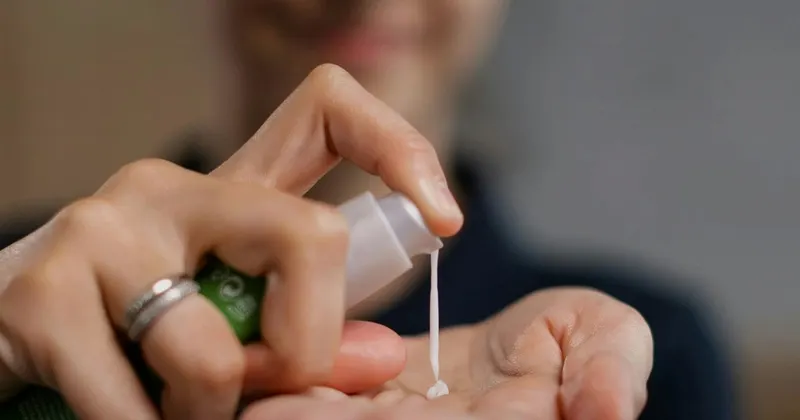
Waterless skincare is a category of beauty products formulated without water (aqua) as a base ingredient, using concentrated botanical oils, butters, waxes, powders, or fermented extracts instead, which eliminates the need for many synthetic preservatives and delivers higher percentages of active ingredients per application.
Pick up almost any cleanser, moisturizer, or serum from your bathroom shelf and check the ingredient list. "Aqua" or "water" is almost certainly the first ingredient listed, meaning it makes up the largest percentage of the formula. In most conventional skincare products, water accounts for 70-90% of the total volume. That is not necessarily a problem. Water is an effective solvent and helps dissolve active ingredients for delivery into the skin. But it does mean that when you pay $50 for a serum, roughly $35-45 of that is paying for water, preservatives to keep that water from growing bacteria, and emulsifiers to keep the oil and water phases from separating.

Key Takeaways
Why is water the primary ingredient in most skincare?
Water is the cheapest, most abundant solvent available to cosmetic formulators. It dissolves a wide range of active ingredients (niacinamide, hyaluronic acid, glycerin, most peptides), creates the lightweight textures consumers expect, and allows products to spread easily across skin. From a manufacturing standpoint, water-based formulations are simpler and cheaper to produce at scale. They also feel familiar. When you pump out a milky lotion or a gel serum, that texture is water doing its job as a vehicle.
The trade-off is dilution. A serum that is 80% water can only contain 20% of everything else combined, and "everything else" includes emulsifiers, thickeners, pH adjusters, and preservatives alongside the active ingredients you are actually paying for. The active ingredient concentration in many mainstream products is quite low. This is not always a bad thing. Some actives, like retinol, are effective at very small percentages (0.025-1%). But for ingredients like vitamin C, niacinamide, or peptides, higher concentrations generally mean better results, and water-heavy formulations make it harder to pack those in.
What preservatives does water require, and do they matter?
Any product containing water is at risk of microbial contamination. Bacteria, mold, and fungi thrive in water-based environments, which is why cosmetic preservatives exist. Common options include phenoxyethanol, parabens, formaldehyde releasers, and organic acids. These preservatives are essential for product safety. A contaminated product is far more dangerous to your skin than any preservative.
That said, the interaction between preservatives and your skin microbiome is more complex than "safe" or "unsafe." An in-vivo study found that despite the antimicrobial efficacy of preservatives in laboratory testing, full cosmetic formulations with preservatives did not significantly impact the skin microbiome in real-world use 1. However, other research shows certain preservatives in leave-on cosmetics might inhibit or reduce Staphylococcus epidermidis, a beneficial bacteria that is part of your skin's natural defense system 2. Waterless formulations largely sidestep this question because without water there is minimal microbial growth risk, which means fewer preservatives are needed. This is an advantage for people with sensitive or reactive skin who want to minimize the number of potentially irritating ingredients.
How do waterless formulations deliver active ingredients differently?
Without water as a vehicle, waterless products use alternative delivery systems. Oils, butters, and waxes act as carriers for oil-soluble actives like retinol, vitamin E, coenzyme Q10, and certain botanical extracts. Powder formulations (enzyme cleansers, vitamin C powders) remain stable in their dry state and activate when you add water at the moment of use. This on-demand activation is particularly relevant for unstable ingredients. L-ascorbic acid (the most effective form of vitamin C) degrades rapidly in water-based formulations, but remains stable indefinitely as a dry powder.
Research on botanical oils shows that the fatty acid composition of the carrier oil affects how deeply active ingredients penetrate the skin. Oils with mono-unsaturated fatty acids (like oleic acid in argan oil) tend to enhance penetration more than oils with a mix of mono and polyunsaturated fatty acids 3. Plant oils have also been shown to provide anti-inflammatory and skin barrier repair effects independent of whatever active ingredients they carry 4. So the vehicle itself becomes part of the treatment in waterless formulations, rather than being an inert filler like water.
Does waterless skincare actually hydrate your skin?
The biggest misconception about waterless skincare is that your skin gets no moisture. Hydration in skincare comes from humectants (which attract water from the environment and deeper skin layers) and occlusives (which prevent water from evaporating off your skin surface). Many waterless products contain potent humectants and occlusives in concentrated forms. A solid balm with squalane, shea butter, and ceramides can be more hydrating than a water-based lotion with 80% water, because the occlusive ingredients seal in your skin's own moisture more effectively.
Research confirms that skin barrier repair products work by reducing transepidermal water loss (TEWL), the rate at which water escapes through your skin surface. A study found that twice-daily application of skin repair formulations containing barrier lipids significantly decreased TEWL 5. These lipid-based formulations work whether they are delivered in a water-based emulsion or an anhydrous balm. The ceramides, cholesterol, and fatty acids that repair your barrier are oil-soluble ingredients. Water is just the vehicle that makes them easier to spread. If you track your skin hydration levels with a tool like the Skin Bliss Skin Diary, you can objectively compare how your skin responds to waterless versus water-based products over a few weeks.
Who benefits most from waterless skincare?
Waterless products are not universally better for everyone. They work particularly well for people with dry or sensitive skin who benefit from the reduced preservative load and higher concentration of emollient ingredients. Travelers love them too -- solid bars and powders are lighter, more compact, and TSA-friendly. And if you want maximum active ingredient concentration per dollar spent, waterless formulations deliver that by default.
People with oily or acne-prone skin should be more selective. Some waterless formulations, particularly heavy balms and oils, can be comedogenic. The key is matching the format to your skin type. Powder cleansers and lightweight oil serums work well for oily skin. Rich balms and solid moisturizers are better for dry and mature skin types. The ingredient list matters more than whether the product contains water.
| Skin type | Best waterless formats | Formats to avoid |
|---|---|---|
| Dry or mature | Balms, oil serums, solid moisturizers | Powder cleansers (may be too stripping) |
| Oily or acne-prone | Powder cleansers, lightweight oil serums | Heavy balms, occlusive bars |
| Sensitive | Fragrance-free balms, minimal ingredient bars | Anything with essential oils |
| Combination | Oil serums for dry zones, powder cleansers for T-zone | Full-face heavy occlusives |
Frequently Asked Questions
Is waterless skincare more expensive than regular skincare?
Per ounce, yes. Per use, often not. Because waterless products are more concentrated, you use significantly less per application. Brands like SBTRCT report their waterless formulations last roughly twice as long as conventional equivalents. When you calculate cost per application rather than cost per ounce, many waterless products are comparable to or cheaper than their water-based counterparts.
Are preservatives in regular skincare dangerous?
No. Cosmetic preservatives are safety-tested and regulated in both the EU and the US. They prevent microbial contamination, which is a far greater safety concern than the preservatives themselves. Some people with sensitive skin may react to specific preservatives, but this is an individual sensitivity issue rather than a universal safety concern. Waterless products simply need fewer of them.
Can you build a complete routine with only waterless products?
Yes, though it requires more deliberate product selection. Cleansers (powder or balm), treatments (oil serums, vitamin C powder), moisturizers (balms, solid bars), and sunscreen (some mineral stick formulations) are all available in waterless formats. The one category where water-based products still dominate is sunscreen, where cosmetic elegance and even application remain challenges for fully anhydrous formulations.
Do waterless products expire faster or slower?
Generally slower. Without water, there is minimal risk of microbial growth, which is the primary reason products expire. Oil-based products can go rancid over time due to oxidation, but this typically takes longer than microbial degradation in water-based products. Proper storage (away from heat and direct sunlight) extends shelf life further. Many waterless products do not require an expiration date under current regulations, though responsible brands include one anyway.

In your browser
Free Skin Quiz: Understand your skin profile in under 5 minutes
Oily or dry is only the start. Find out what your skin actually needs across six skin dimensions, with a plain note on what each one means for your routine. Results appear in your browser, and you can keep them in the app.

Maria combines her background in AI research with a passion for evidence-based skincare. She built Skin Bliss to help people make informed decisions about their skin, backed by science rather than marketing.
Sources (5)
- Lundov MD et al. (2021). "In-vivo impact of common cosmetic preservative systems in full formulation on the skin microbiome." *International Journal of Cosmetic Science*.
- Loomba K et al. (2023). "Effect of leave-on cosmetic antimicrobial preservatives on healthy skin resident Staphylococcus epidermidis." *Journal of Applied Microbiology*.
- Naik A et al. (1998). "Skin penetration enhancing action of cis-unsaturated fatty acids with omega-9, and omega-12-chain lengths." *International Journal of Pharmaceutics*.
- Lin TK et al. (2018). "Anti-Inflammatory and Skin Barrier Repair Effects of Topical Application of Some Plant Oils." *International Journal of Molecular Sciences*.
- Sahle FF et al. (2018). "Reinforcement of barrier function - skin repair formulations to deliver physiological lipids into skin." *International Journal of Cosmetic Science*.