Blackheads & whiteheads
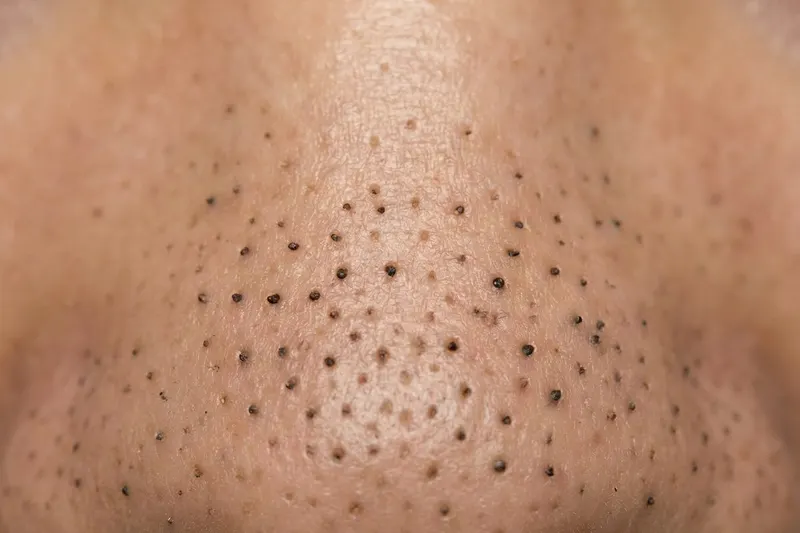
Blackheads and whiteheads are clogged pores, formed when sebum (your skin's natural oil) and dead skin cells build up and plug the opening. A blackhead is an open plug that darkens in the air; a whitehead is a closed plug under a thin layer of skin.

The one thing
Reach for a leave-on or wash-off BHA (most often salicylic acid) a few times a week to help keep the pore lining clear.
Why it matters
They're the most common, mildest form of congestion, and they're not inflamed, so they usually respond well to gentle, consistent care rather than anything aggressive.
Blackheads and whiteheads are clogged pores. They form when sebum (the oil your skin makes on its own) and dead skin cells collect in a pore and create a soft plug. When that plug sits at an open pore and meets the air, it oxidises and turns dark, and you get a blackhead. When the pore stays closed over the top, you get a small white or skin-coloured bump, which is a whitehead.
Both belong to a group called comedones, which is just the medical word for non-inflamed clogged pores. Because there's no redness or swelling, they tend to be easier to live with than deeper, angrier breakouts.
Why they happen
A few things can leave pores more likely to clog: the oil surge that comes with puberty, acne-prone skin in general, richer products that don't suit your skin, and hormonal shifts such as those linked to PCOS (polycystic ovary syndrome). None of it means you're doing skincare wrong. Some skin simply sheds and oils in a way that traps more easily.
What tends to help
For blackheads, a beta hydroxy acid (BHA) like salicylic acid can help because it's oil-soluble, so it works inside the pore where the plug sits. If your skin runs sensitive, a wash-off BHA cleanser gives you the contact-and-rinse version rather than something that lingers.
For whiteheads, an alpha hydroxy acid (AHA) such as glycolic acid works on the surface to loosen the dead cells holding things in. Gentler AHAs like lactic or mandelic acid (or a PHA if you want the gentlest option) are worth a look if stronger ones sting. Start slow, a couple of nights a week, and give your skin time to adjust. Patch test first, and don't skip sunscreen — exfoliating acids increase sun sensitivity. If you're stacking products and aren't sure they get along, the Ingredient Compatibility Checker in the Skin Bliss app can flag clashes before they reach your face.
When to see a professional
If the bumps turn red, sore, or start leaving marks, or nothing shifts after a couple of months of steady care, it's worth checking in with a dermatologist. They can rule out other types of acne and suggest options you can't get over the counter.
In your browser
Free Skin Quiz: Understand your skin profile in under 5 minutes
Oily or dry is only the start. Find out what your skin actually needs across six skin dimensions, with a plain note on what each one means for your routine. Results appear in your browser, and you can keep them in the app.