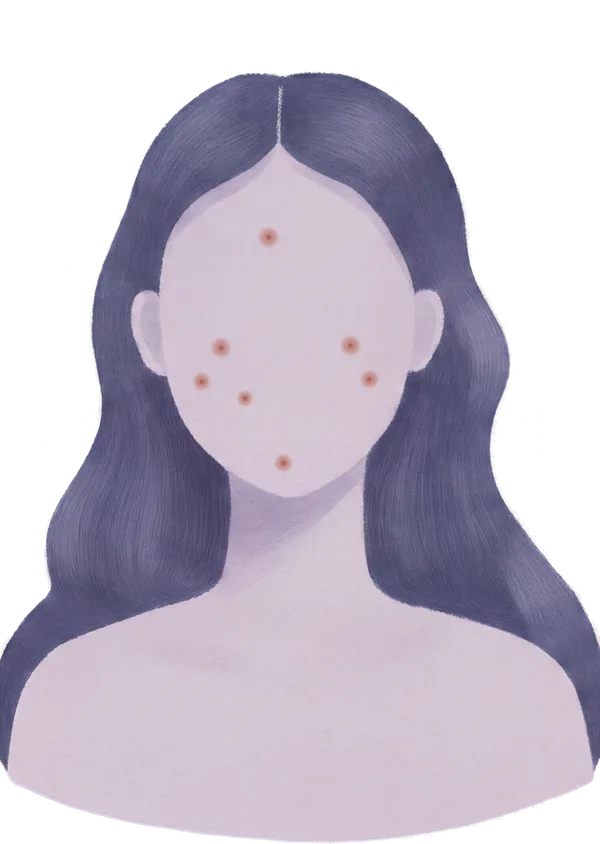
Acne
Acne is a common skin condition that happens when pores get blocked with oil, dead skin cells, and bacteria. It shows up as blackheads, whiteheads, or the red, sore bumps people call pimples.

The one thing
Cleanse gently twice a day and, if you want to add one active, a BHA like salicylic acid is a sensible first step for unclogging pores.
Why it matters
Acne is one of the most common skin concerns there is, so if you have it, you're in very good company. Knowing what type you have can make it a lot easier to pick products that actually suit your skin.
Acne starts inside the pore. Your skin makes an oil called sebum (the oil your skin makes naturally), and when that oil teams up with dead skin cells and the bacteria that live on everyone's face, it can plug the pore. Some of those clogs stay near the surface as blackheads and whiteheads. Others get inflamed and turn into the red, tender bumps most people mean when they say "a breakout."
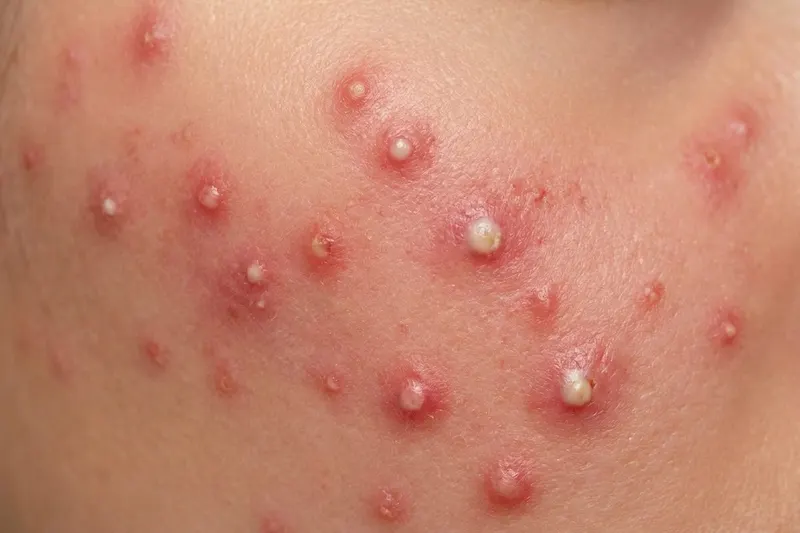
There's a rough scale to it. Mild acne tends to be a handful of blackheads and whiteheads, small and not too widespread. When you start seeing larger papules, pustules, or deeper cysts and nodules, that's a sign of more inflammation, and it's worth taking more seriously.
Why it happens
Acne rarely has one tidy cause. Genetics play a part. So do hormones, which can ramp up oil production, and that's why breakouts often track with puberty or the monthly cycle. How fast your skin sheds its cells matters too, since cells that pile up too quickly are more likely to block a pore. Some hair products and very high-glycemic foods can add to it for certain people, though that varies a lot.
What tends to help
Keeping pores clear is the main goal, and a couple of habits go a long way:
- Cleanse morning and night so oil and grime don't sit on the skin.
- A chemical exfoliant such as a BHA (beta hydroxy acid, an oil-soluble exfoliating acid — salicylic acid is the classic one) can dissolve the gunk inside pores. Using it early, when a breakout is just forming, may help head off clogs before they take hold. Patch test anything new first, and keep up daily sunscreen — BHAs can make skin more sun-sensitive.
- Ingredients like azelaic acid can calm bacteria and redness, which is handy if your breakouts lean inflamed.
Give any new routine a few weeks before you judge it. Skin turnover is slow, and most actives need four to six weeks to show what they can do. The Skin Bliss Routine Builder can help you space these out so you're not piling everything on at once.
When to see a professional
If your acne is painful, leaving marks, or just not budging after a few months of a consistent routine, that's a good moment to see a dermatologist. Deeper cystic or nodular acne in particular usually responds best to prescription treatment, and getting on it sooner can lower the odds of lasting scars.
In your browser
Free Skin Quiz: Understand your skin profile in under 5 minutes
Oily or dry is only the start. Find out what your skin actually needs across six skin dimensions, with a plain note on what each one means for your routine. Results appear in your browser, and you can keep them in the app.