Fine lines & wrinkles
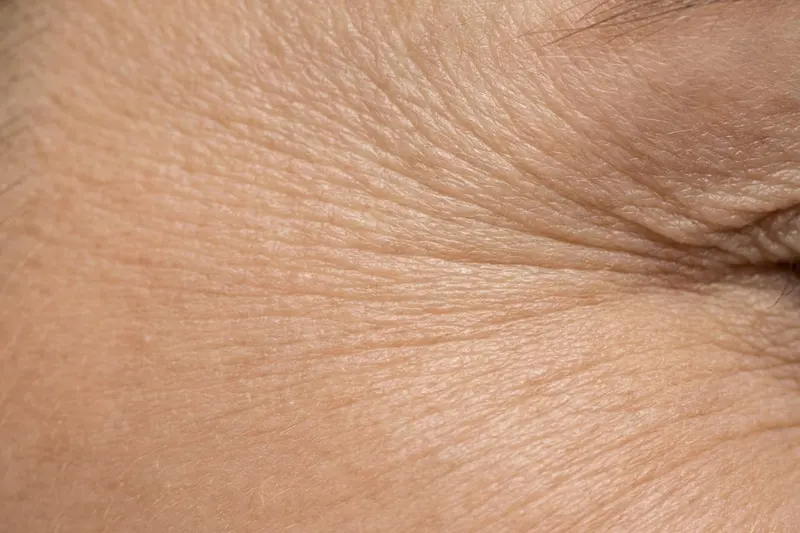
Fine lines and wrinkles are creases in the skin, from shallow surface lines to deeper folds, that show up as skin gradually makes less collagen and elastin, the proteins that keep it firm and springy. The same shift is what people mean by loss of elasticity.

The one thing
Sunscreen every day does more to protect skin's firmness over time than any single line-smoothing product.
Why it matters
This is a normal, universal part of how skin changes over time, and supporting its structure and moisture is about comfort and resilience, not erasing anything.
Fine lines and wrinkles are creases in the skin, and they sit on a spectrum. Fine lines are the shallow ones, often less than a millimetre deep, sometimes appearing simply because skin is a little dehydrated that day. Wrinkles are deeper, more set folds, usually in the places your face naturally creases when you smile, frown, or squint. What people call loss of elasticity is the same story told a different way: skin becoming less able to spring back after it moves.
Underneath all of it is collagen and elastin. Collagen is the protein that gives skin its structure, a bit like cement holding bricks together, and elastin is what lets skin stretch and recoil. Over time skin makes less of both, so it gets thinner and a touch less springy. This is normal and happens to everyone. The aim here is supporting how skin functions, its firmness and resilience, rather than treating change as something to undo.
Why it happens
Some of it is intrinsic, meaning it's simply built in: genetics, the gradual dip in collagen and elastin, and hormonal shifts such as the drop in estrogen around menopause all play a part. Repeated expressions add their own lines where the skin folds most.
The rest is extrinsic, the outside factors you have some say over. Sun exposure is the big one, since UV breaks down collagen and elastin faster than time alone. Pollution, smoking, and even sleep position contribute too. And plain dehydration can make fine lines look more obvious in the short term, which is why a well-moisturised face often looks smoother by evening.
What tends to help
The most protective habit is daily sunscreen, because shielding skin from UV slows the breakdown of the proteins that keep it firm. Reapply every couple of hours when you're out, and remember no sunscreen blocks everything.
Beyond that, a few ingredients support skin's structure. Retinoids (vitamin A, as retinol or retinal) are among the better-studied options for encouraging collagen — patch test first and ease in slowly, as a little dryness or purging early on is normal. Keep up the SPF throughout. Niacinamide and ceramides help replenish the skin's own lipids and support the barrier, and peptides may lend a hand too. For the dehydration side, humectants like hyaluronic acid and glycerin plump the surface and soften the look of fine lines, while richer moisturisers help skin hold onto water.
When to see a professional
If you want to explore options beyond a daily routine, or you're weighing in-clinic treatments, a dermatologist can walk you through what's realistic for your skin. No rush and no obligation, just good information when you want it.
In your browser
Free Skin Quiz: Understand your skin profile in under 5 minutes
Oily or dry is only the start. Find out what your skin actually needs across six skin dimensions, with a plain note on what each one means for your routine. Results appear in your browser, and you can keep them in the app.