Hyperpigmentation
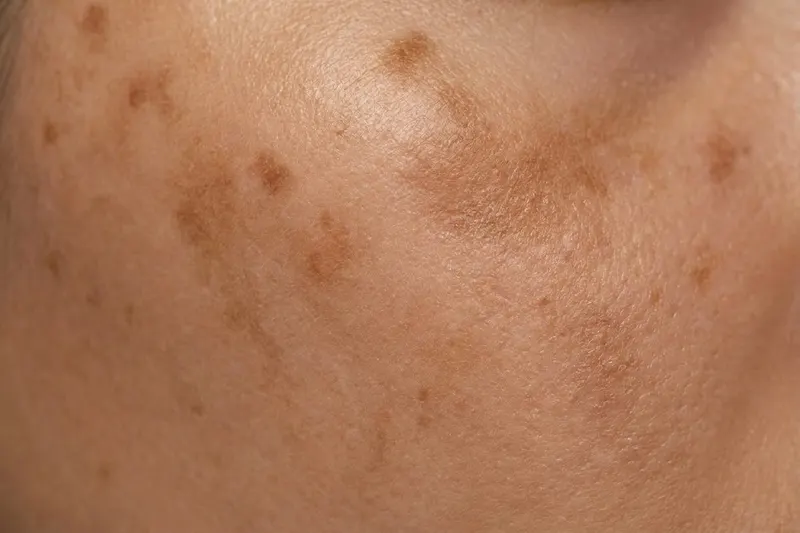
Hyperpigmentation is a common, usually harmless condition where patches of skin turn darker than the skin around them. It happens when pigment-making cells produce extra melanin, the natural pigment that gives skin its colour.

The one thing
Wear sunscreen every day, because UV both triggers new dark spots and deepens the ones you already have.
Why it matters
It's one of the slower concerns to shift, so knowing what's driving it and protecting from the sun day to day tends to matter more than any single brightening product.
Hyperpigmentation is when patches of skin look darker than the skin around them. It's common and usually harmless. The darkening happens because certain skin cells make too much melanin, the pigment that gives skin its colour. It can show up as freckles, as flat spots from past sun exposure, or as larger patches, and the colour ranges from tan and brown through to a deeper blue-grey.
Because it's about pigment sitting in the skin rather than a wound, it tends to fade slowly. Patience is part of the deal.
Why it happens
There are three common triggers. The first is post-inflammatory, meaning a dark mark left behind after the skin has been irritated, often by acne but also by conditions like eczema. The second is UV exposure, which damages skin-cell DNA and prompts more melanin. The third is hormonal: shifts such as those in pregnancy can cause melasma, a symmetrical patchy darkening, often across the cheeks or forehead.
One thing worth knowing: post-inflammatory marks tend to be more common and more stubborn in deeper skin tones, simply because there's naturally more melanin to begin with. It's not a flaw, just a reason to be gentle and sun-aware.
What tends to help
A daily sunscreen is the foundation, because without it the rest is an uphill battle. Beyond that, a few ingredients are commonly used. Gentle exfoliating acids like glycolic or salicylic acid can help lift the surface cells that hold excess pigment. Other ingredients work by easing how much melanin is made or how it spreads, including alpha-arbutin, retinoids, vitamin C (ascorbic acid), and niacinamide. Introduce actives one at a time and slowly, and pair them with consistent sun protection.
When to see a professional
Topical products can only reach pigment in the upper layers of skin. When the pigment sits deeper, it often needs in-clinic treatment such as professional peels or laser, and these need expert handling, especially on deeper skin tones where the wrong approach can cause more marks. If spots are widespread, changing, or not budging, see a dermatologist before going stronger on your own.
In your browser
Free Skin Quiz: Understand your skin profile in under 5 minutes
Oily or dry is only the start. Find out what your skin actually needs across six skin dimensions, with a plain note on what each one means for your routine. Results appear in your browser, and you can keep them in the app.