Journal · Ingredients & Science
The Lip Hydration Layering Technique: A 3-Step Method
A three-step lip hydration technique using hyaluronic acid, ceramides, and an occlusive seal to help dry, flaky lips hold moisture the way skin does

Maria Otworowska, PhD, Co-founder of Skin Bliss
· 9 min read
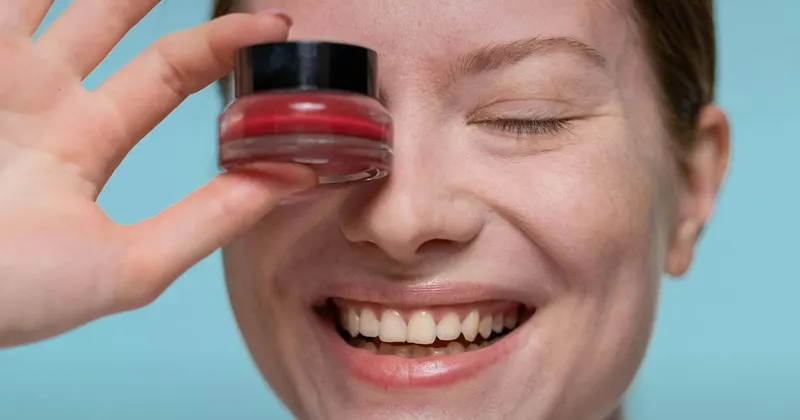
Lip hydration layering is a three-step technique that applies a humectant like hyaluronic acid to attract moisture, follows with ceramides to rebuild the lip's weak barrier, and finishes with an occlusive sealant to lock everything in, addressing the structural reasons lips dry out faster than the rest of your face.
Your lips are not just regular skin. The vermilion border has a thinner stratum corneum, fewer sebaceous glands, and significantly lower ceramide levels than the skin on your cheeks or forehead 12. That is why lip balm alone often is not enough. A single occlusive layer traps whatever moisture happens to be there, but if your lips are already dehydrated, you are sealing in dryness. Layering fixes this by building hydration from the inside out.
Key Takeaways
Why do lips dry out faster than the rest of your face?
The answer is structural. Lip skin has a very thin stratum corneum, the outermost protective layer, and it lacks the sebaceous glands that produce the natural oils keeping the rest of your face moisturized 2. Lips also have fewer melanocytes, which is why they are a different color from surrounding skin, but more relevant to hydration is that the vermilion surface exhibits remarkably poor barrier function and a low hydration state compared with adjacent facial skin 2.
Research confirms that lips contain lower levels of total ceramides than other body sites 1. Ceramides are the lipid molecules that act as mortar between your skin cells, holding the barrier together and preventing water from escaping. When the ceramide content is low, trans-epidermal water loss (TEWL) increases. Your lips lose water faster than they can retain it, and no amount of licking them will help. Saliva actually evaporates and takes moisture with it, making things worse.
How does the three-step layering technique work?
Each layer has a specific job, and the order matters.
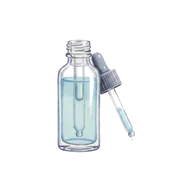
Step 1: Humectant (hyaluronic acid). Apply a hyaluronic acid lip serum or a thin layer of HA-based product to slightly damp lips. The dampness is important because HA is a humectant, meaning it pulls water toward itself. If your lips are bone-dry and the air is dry, HA can actually draw moisture out of deeper tissue. A quick mist of water or applying right after washing your face gives it something to work with. A clinical study on topical HA lip treatment showed significant improvements in lip texture, scaling, definition, and overall condition 4.
Step 2: Barrier repair (ceramides). While the HA is still slightly tacky, apply a ceramide-containing lip treatment. A study on synthetic pseudo-ceramide for lips found that it improved roughness and restored barrier function by being absorbed into the rough areas and improving the overall ceramide profile 1. This layer fills in the gaps your lips are naturally missing.
Step 3: Occlusive seal. Finish with a layer of something occlusive: petroleum jelly, squalane oil, shea butter, or a heavy balm. This physically blocks water from evaporating through the surface. Occlusives decrease trans-epidermal water loss by forming a hydrophobic film over the skin 5.
| Layer | Ingredient examples | What it does | Application tip |
|---|---|---|---|
| 1. Humectant | Hyaluronic acid, glycerin | Attracts and holds water | Apply to damp lips |
| 2. Barrier | Ceramides, cholesterol, fatty acids | Repairs lipid barrier, reduces water loss | Pat gently over humectant layer |
| 3. Occlusive | Petroleum, squalane, shea butter | Seals in moisture physically | Apply last, thin even coat |
When is the best time to layer lip hydration?
Twice a day works well for most people: once in the morning before SPF and once at night before bed. The nighttime application is especially effective because you are not eating, drinking, or talking, so the layers stay intact for hours. Some people call this "lip slugging," borrowing the term from the facial skincare technique of sealing everything with an occlusive overnight.
In the morning, do the full three-step layer and then apply a SPF lip balm on top. Yes, that is four layers on your lips. It sounds excessive, but each layer is thin and the total application time is about 90 seconds. If you are using the Skin Bliss Routine Builder, you can add lip layering as a step in your morning sequence so it becomes automatic rather than something you have to remember separately.
For rescue situations, when your lips are cracked and peeling, do the three-step layer every few hours during the day. Peeling skin means your barrier is severely compromised, and a single application of balm will not rebuild it.
Which hyaluronic acid weight works best for lips?
Hyaluronic acid comes in different molecular weights, and they do different things. High molecular weight HA (over 1,000 kDa) sits on the surface and provides immediate hydration and a plumping effect. Low molecular weight HA (under 50 kDa) penetrates deeper and supports hydration from within the tissue 3.
For lip layering, a product that contains multiple molecular weights gives you both the surface smoothing and the deeper moisture support. The clinical evidence on topical HA for skin shows that multi-weight formulations provide both immediate and long-term hydration benefits 3. Look for products that list "sodium hyaluronate" alongside "hydrolyzed hyaluronic acid" on the ingredient list. The first is typically higher molecular weight, the second is the smaller, more penetrating form.
Can this technique help with chronically peeling lips?
Chronic lip peeling usually signals a barrier that is stuck in a damage cycle. The stratum corneum is trying to repair itself but keeps losing the building materials it needs. Layering ceramides directly addresses this by supplying the lipids that lip skin is naturally deficient in 1. The humectant layer pulls in water to rehydrate the tissue, and the occlusive layer gives the repair process time to work without constant water loss.
If your lips peel despite consistent layering for two or more weeks, consider other causes: mouth breathing during sleep, allergic contact dermatitis from a lip product ingredient (fragrance and certain dyes are common triggers), or nutritional deficiencies. A dermatologist can help rule out conditions like exfoliative cheilitis that require different treatment.
Disclaimer: If you have known allergies to any of these ingredients, patch test a new lip product on the inside of your wrist before applying it to your lips. Stop use immediately if you experience swelling, persistent burning, or a rash.
Frequently Asked Questions
Do I need separate products for each layer, or can one product do it all?
Some lip treatments combine HA, ceramides, and an occlusive in a single formula. These are convenient, but they cannot fully replicate the technique of applying a humectant to damp skin first. When ingredients are pre-mixed, the humectant does not get the same opportunity to expand with water before being sealed in. For best results, use at least two products: an HA serum or treatment first, then a ceramide-rich occlusive balm.
Is petroleum jelly safe for lips?
Petroleum jelly is one of the most effective and well-studied occlusive agents available. It reduces trans-epidermal water loss by up to 98% 5. Cosmetic-grade petrolatum used in lip products is refined to remove impurities. If you prefer a plant-based alternative, squalane oil or shea butter are effective occlusives, though slightly less so than petroleum.
Will hyaluronic acid make my lips look bigger?
HA provides a temporary plumping effect by drawing water into the tissue, which can make lips appear slightly fuller 4. This is not the same as injectable lip filler. The effect lasts as long as the product stays on and your lips remain hydrated. It is subtle but visible, especially on dehydrated lips where the improvement from baseline is more noticeable.
How long does it take to see results from lip layering?
Most people notice softer, smoother lips within the first few days. Restoring barrier function takes longer. Research on ceramide-based lip treatments showed measurable improvement in roughness and barrier function over the course of several weeks of regular use 1. Consistent twice-daily application for two to four weeks is a reasonable timeline for significant improvement.

In your browser
Free Skin Quiz: Understand your skin profile in under 5 minutes
Oily or dry is only the start. Find out what your skin actually needs across six skin dimensions, with a plain note on what each one means for your routine. Results appear in your browser, and you can keep them in the app.

Maria combines her background in AI research with a passion for evidence-based skincare. She built Skin Bliss to help people make informed decisions about their skin, backed by science rather than marketing.
Sources (6)
- Takagi Y et al. (2020). "The efficacy of synthetic pseudo-ceramide for dry and rough lips." *Int J Cosmet Sci*.
- Kobayashi H & Tagami H (2004). "Functional properties of the surface of the vermilion border of the lips are distinct from those of the facial skin." *Br J Dermatol*.
- Pavicic T et al. (2011). "Benefits of topical hyaluronic acid for skin quality and signs of skin aging: From literature review to clinical evidence." *Dermatol Ther*.
- Jegasothy SM et al. (2017). "Clinical Assessment of Immediate and Long-Term Effects of a Two-Step Topical Hyaluronic Acid Lip Treatment." *J Drugs Dermatol*.
- Ghadially R et al. (1992). "Effects of petrolatum on stratum corneum structure and function." *J Am Acad Dermatol*.
- Elias PM (2005). "Stratum corneum defensive functions: an integrated view." *J Invest Dermatol*.