Journal · Ingredients & Science
Beef Tallow on Your Face: What the Evidence Shows
Beef tallow on your face acts mainly as a rich occlusive, and no controlled facial trials exist yet. See its fatty acids, acne risks and how it compares.

Maria Otworowska, PhD, Co-founder of Skin Bliss
· 11 min read
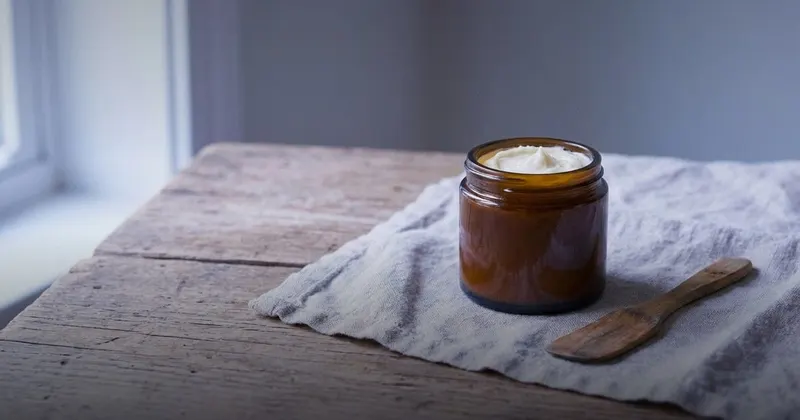
Beef tallow is a rendered cow fat that works on skin mainly as a rich occlusive, slowing water loss the way many balms do. No controlled trial has tested it on human faces yet. What we know comes from its fatty acid profile, a 2024 scoping review and a 2025 study of social media claims.
Is beef tallow good for your face?
Key Takeaways
Tallow may work well as a moisturizer for some people with dry skin. The claims run well ahead of the evidence. A 2025 analysis of 200 tallow posts on YouTube, Instagram and TikTok found that 82% recommended it for skincare, with posts claiming benefits for acne, eczema and psoriasis 1. Evidence was rarely cited. Long-form YouTube videos cited sources most often, and even there only 16% did 1.
The authors concluded the evidence "remains insufficient" 1. A 2024 scoping review screened 147 studies and kept 19, none of them controlled trials of tallow on human facial skin 2.
What is tallow made of, and does it match your skin's sebum?
Tallow is almost entirely fat. The USDA reference record for beef tallow lists 49.8% saturated fat, 41.8% monounsaturated fat and only 4.0% polyunsaturated fat by weight 3. The single biggest fatty acid is oleic acid at 36.0%, followed by palmitic at 24.9% and stearic at 18.9%. Linoleic acid, the fatty acid most studied for acne-prone skin, makes up 3.1% 3.
The "tallow matches your skin" pitch holds up in part. Human sebum and tallow both carry a lot of palmitic and oleic acid 1. But sebum is its own mixture: triglycerides and fatty acids make up 57.5%, wax esters 26% and squalene 12% 4. Tallow is mainly triglycerides 2, so it doesn't supply the wax esters and squalene that make sebum distinctive.
The vitamin claims deserve a second look too. The same USDA record lists vitamin A and vitamin K at zero, with 2.7 mg of vitamin E per 100 g 3.
What does occlusion do, and what can't tallow do?
An occlusive sits on and in the top layer of skin and slows water evaporating out. Dermatologists call that water escape trans-epidermal water loss (TEWL). Petrolatum is the benchmark here: at 5% or more, it reduces TEWL by more than 98%, while lanolin, mineral oil and silicones manage roughly 20 to 30% 5. No comparable TEWL figure exists for tallow.
Occlusion is useful. In a study on human volunteers, petrolatum spread through the gaps between skin cells and sped up barrier recovery after the barrier was stripped 6. That may be part of why slugging can help dry, compromised skin.
Tallow can't replace the lipids your barrier is built from. Barrier repair needs ceramides, cholesterol and fatty acids together, and in animal work applying only one or two of them delayed recovery 7. Tallow brings fatty acids and triglycerides but no ceramides. If your barrier is struggling, a ceramide moisturizer with a balanced lipid ratio has much stronger evidence behind it.
Is tallow comedogenic, and is tallow balm OK for acne?
Nobody knows yet, and the component data point in both directions. Lab studies suggest oleic acid can loosen the skin's lipid packing and may be pro-inflammatory. Palmitic acid raised inflammatory signals in oil-gland cells, and stearic acid can provoke inflammation in excess 1. Oleic acid and other free fatty acids have also increased water loss over time in skin models 1. Other lab work leans the other way: oleic acid blocked a fat-digesting enzyme of the acne bacterium in microbial assays, and palmitic and stearic acids aided repair in a tape-stripped skin model 1. The 2025 authors wrote that tallow's "non-comedogenic" label on social media "warrants further studies" 1.
Linoleic acid has the strongest acne data. In a double-blind, placebo-controlled crossover trial, topical linoleic acid shrank microcomedones (the tiny early clogs behind breakouts) by almost 25% over one month 8. Tallow just has very little of it.
If you have acne, a balm is a poor place to experiment. The scoping review also noted tallow leaves an oily surface film that may not suit oily or acne-prone skin 2. Established acne treatments such as retinoids or benzoyl peroxide come with their own rules: patch test, add one new product at a time and wear SPF by day.
What about fungal acne?
Fungal acne, or Malassezia folliculitis, is an overgrowth of yeast in hair follicles. It looks a lot like acne and is often misdiagnosed 9. Malassezia yeasts depend on lipids to grow 9. No study has tested tallow on this yeast, but piling a rich fat onto follicles that already have a lipid-loving overgrowth is an easy risk to skip. If your "acne" is itchy, uniform and doesn't respond to usual treatments, a dermatologist can confirm it with a quick scraping.
What are the practical risks of tallow: rancidity, sourcing and allergy?
Risks rarely come up in the videos. In the 2025 analysis, the best platform for mentioning them did so in only 24% of posts 1. Financial bias ran as high as 92% of Instagram posts, and the authors counted 82 separate tallow retailers 1.
Tallow is a food fat, and it behaves like one. Its unsaturated fatty acids can oxidize, so a jar can turn rancid 1. Rendering and storage can also introduce microbial contamination, and cosmetic tallow gets no pre-market approval, so quality varies by maker 1.
Allergy is a smaller but real concern. Bovine products may trigger sensitizing reactions in people with atopic dermatitis or sensitive skin 1. Eczema, psoriasis and rosacea are medical conditions. A balm is not a treatment for them, and a doctor should guide any changes.
Before every use, check the smell: sharp or old-frying-oil notes usually mean it has oxidized. Store it cool and use a clean spatula.
Tallow vs moisturizer: how do the options compare?
Tallow is usually compared with three barrier products. For more on the lighter options, see our breakdown of ceramides, hyaluronic acid and squalane.
| Tallow balm | Petrolatum | Ceramide moisturizer | Squalane | |
|---|---|---|---|---|
| What it is | Rendered beef fat, mostly triglycerides | Refined hydrocarbon mix | Ceramides, cholesterol and fatty acids in an emulsion | Stable hydrocarbon oil, a hydrogenated form of squalene |
| Main job | Occlusion and emollience | Occlusion | Replacing barrier lipids plus hydration | Lightweight emollience |
| Water-loss data | None published | Over 98% TEWL reduction at 5%+ 5 | TEWL fell alongside eczema scores in a clinical study 10 | Limited |
| Human evidence on skin | No controlled facial trials 2 | Human barrier-recovery study 6 | Clinical studies, including in eczema 10 | Mostly formulation data |
| Acne-prone skin | Untested; mixed component signals 1 | Heavy texture; test first | Depends on the formula | Light texture |
| Shelf stability | Can oxidize and turn rancid 1 | Very stable | Depends on the formula | Stable |
In one ceramide-dominant emollient study, 22 of 24 children with stubborn eczema improved within 3 weeks, while also using their usual treatment 10. It had no control group, and tallow has no facial study of any design.
Who might reasonably try tallow, and how?
If your skin is dry and not prone to acne or eczema flares, a tallow balm is a reasonable experiment on the body or on dry patches. Expect a rich occlusive and nothing more.
Patch test first on your inner arm for a few days. Then make it your only new product for two weeks. Apply a thin layer as the last step at night over damp skin or a water-based moisturizer, since occlusives work best when they have water to hold in.
Skip it or stop if you see new closed bumps, itching or redness. Skip it too if you're managing acne, fungal acne or a diagnosed skin condition without your dermatologist's input.
Use This in Your Routine
Many tallow balms also contain essential oils, fragrance or plant butters. Paste any balm's label into the Skin Bliss Ingredient List Analyzer to break down every ingredient, even for a small-batch balm that isn't in the catalog, before it goes near your face. Skin Bliss is a skincare scanner that checks whether products actually fit your skin, before you buy. For a quick verdict against your skin type, Product Match gives each product a compatibility score. Start at getskinbliss.com.
FAQ
Is tallow better than regular moisturizer?
Not on current evidence. Tallow is an occlusive fat with no controlled trials on facial skin, while ceramide moisturizers and petrolatum have human data on barrier repair and water loss. Tallow may help very dry skin hold water. A well-formulated moisturizer supplies barrier lipids that tallow lacks, so for a damaged or sensitive barrier it is the better-supported choice.
Does tallow clog pores?
It hasn't been tested on human faces, so nobody can say. Its main fatty acids, oleic and palmitic, show pro-inflammatory and pore-clogging signals in some lab studies, while other lab work found possible benefits. The 2025 review said tallow's non-comedogenic label warrants further study. Tallow also has little linoleic acid, the fatty acid with the best acne data. If you break out easily, treat tallow as untested and patch test before using it on your face.
Can I use tallow balm if I have eczema?
Talk to your dermatologist first. Eczema is a medical condition, and emollients are part of its care, but tallow hasn't been tested in eczema trials. Bovine products may trigger sensitizing reactions in people with atopic dermatitis, and some fatty acids in tallow have increased water loss in skin models. Ceramide-based emollients have more supporting data. Never swap a prescribed treatment for a balm.
Is grass-fed tallow better for skin?
There's no skin research comparing grass-fed and grain-fed tallow. We found no study measuring vitamin levels in grass-fed tallow balms. The USDA reference record for beef tallow lists vitamin A at zero and small amounts of vitamin E. For your skin, freshness and the other ingredients in the balm matter more than what the cow ate.
How long does tallow balm last before it goes rancid?
It depends on how it was rendered, what was added and how you store it. Its unsaturated fatty acids can oxidize, and homemade or preservative-free balms can also pick up microbes. Keep it cool and dark, and use a clean spatula. If it smells sharp, sour or like old frying oil, it has oxidized and should go.
In your browser
Free Skin Quiz: Understand your skin profile in under 5 minutes
Oily or dry is only the start. Find out what your skin actually needs across six skin dimensions, with a plain note on what each one means for your routine. Results appear in your browser, and you can keep them in the app.

Maria combines her background in AI research with a passion for evidence-based skincare. She built Skin Bliss to help people make informed decisions about their skin, backed by science rather than marketing.
Sources (10)
- Almatroud L et al. (2025). "Beef Tallow-Based Skincare Claims in Social Media: A Cross-Sectional Analysis." *J Cosmet Dermatol*.
- Russell MF et al. (2024). "Tallow, Rendered Animal Fat, and Its Biocompatibility With Skin: A Scoping Review." *Cureus*.
- U.S. Department of Agriculture (2019). "Fat, beef tallow (FDC ID 171400), SR Legacy." *USDA FoodData Central*.
- Picardo M et al. (2009). "Sebaceous gland lipids." *Dermatoendocrinol*.
- Sethi A et al. (2016). "Moisturizers: The Slippery Road." *Indian J Dermatol*.
- Ghadially R et al. (1992). "Effects of petrolatum on stratum corneum structure and function." *J Am Acad Dermatol*.
- Man MQ et al. (1996). "Optimization of physiological lipid mixtures for barrier repair." *J Invest Dermatol*.
- Letawe C et al. (1998). "Digital image analysis of the effect of topically applied linoleic acid on acne microcomedones." *Clin Exp Dermatol*.
- Chalupczak NV, Lipner SR (2025). "Malassezia Folliculitis: An Underdiagnosed Mimicker of Acneiform Eruptions." *J Fungi (Basel)*.
- Chamlin SL et al. (2002). "Ceramide-dominant barrier repair lipids alleviate childhood atopic dermatitis: changes in barrier function provide a sensitive indicator of disease activity." *J Am Acad Dermatol*.