Journal · Skin Barrier & Recovery
Over-Exfoliated Skin: A 4-Week Recovery Protocol
A 4-week recovery protocol for over-exfoliated skin, with ceramide moisturizers, niacinamide, and a gentle reintroduction plan that may rebuild your barrier

Maria Otworowska, PhD, Co-founder of Skin Bliss
· 10 min read
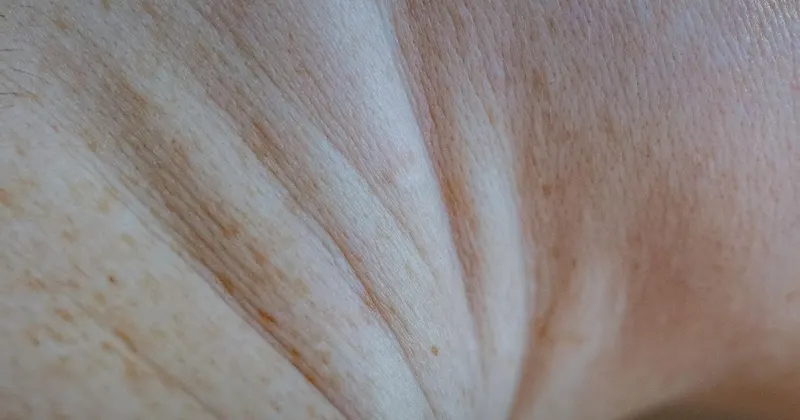
Over-exfoliation strips your skin's protective lipid barrier through too many acids, retinoids, scrubs, or a combination of all three. The result: stinging, persistent tightness, redness, and sensitivity to products that never bothered you before. Recovery follows a structured 4-week path. Week 1 is a full stop on all actives. Weeks 2-3 rebuild the barrier with ceramides and niacinamide. Week 4 tests your tolerance with gentle reintroduction 12.
Key Takeaways
Stop ALL actives immediately: retinoids, AHAs, BHAs, vitamin C, and physical scrubs 1A ceramide-rich moisturizer with a 3:1:1 lipid ratio (ceramides, cholesterol, fatty acids) is the foundation of recovery 3Niacinamide at 5% can be added in week 2 to boost your skin's own ceramide production 4Full barrier recovery takes at least 4 weeks, and rushing actives back in can set you back to square one 2
How can you tell if your skin is over-exfoliated?
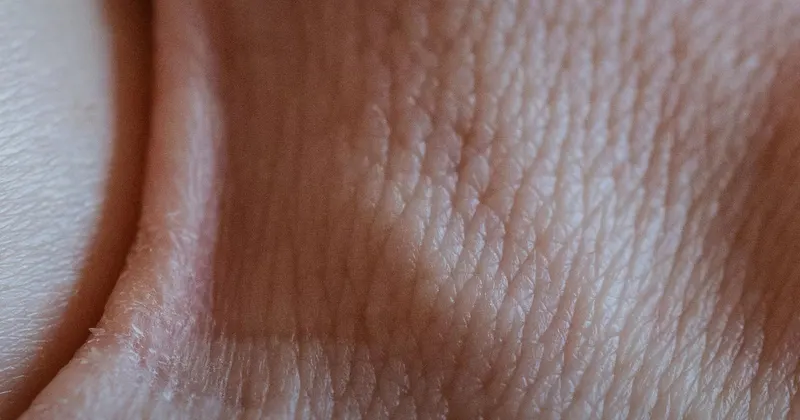
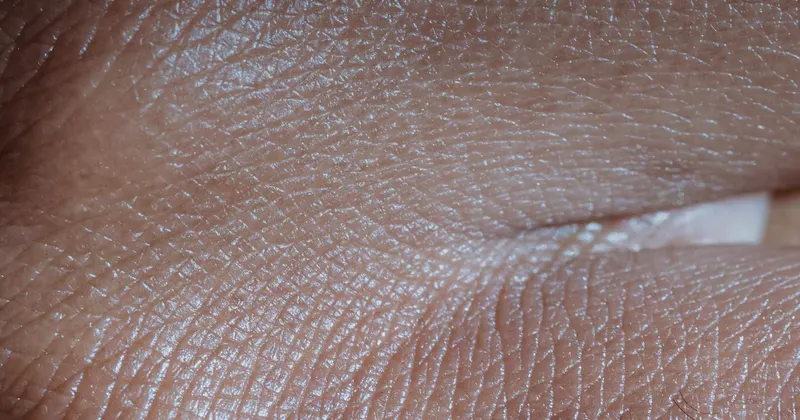
Over-exfoliation damages the stratum corneum, the outermost layer of skin that works like a "brick and mortar" wall to lock moisture in and keep irritants out. When that wall breaks down, transepidermal water loss (TEWL) spikes. Healthy skin loses about 2-15 g/m2/h of moisture. Compromised skin can exceed 50 g/m2/h 53.
The symptoms feel different from regular dryness:
- Stinging or burning when you apply products that never irritated you before
- Tightness that persists even after moisturizing
- Redness or visible irritation, especially right after cleansing
- Increased sensitivity to temperature changes or wind
- Skin that looks shiny but feels dry (a damaged barrier creates a misleading "glow")
This happens gradually. You layer an AHA toner, a retinoid serum, and a morning vitamin C for a few weeks and everything seems fine. Then the cumulative damage catches up all at once 1.
Week 1: Stop everything (Emergency Halt Phase)
The first week is about ending the damage so your barrier can stabilize 12.
What to do right now:
- Stop all active ingredients. Retinoids, AHAs, BHAs, vitamin C (L-ascorbic acid), benzoyl peroxide, physical scrubs. All of them. No exceptions 1.
- Switch to a gentle, pH-balanced cleanser (pH 5.5-6.5). Skip sulfates and harsh surfactants. Cream or milk cleansers preserve whatever lipid barrier you have left better than foaming formulas 16.
- Apply a ceramide-rich moisturizer twice a day. Look for the optimal 3:1:1 ratio of ceramides, cholesterol, and free fatty acids 3.
- Wear mineral SPF 30+ daily. Zinc oxide sunscreens protect your skin and have anti-inflammatory properties. Reapply every 2 hours during sun exposure 1.
- Use cool compresses for 10-15 minutes to bring down acute inflammation 2.
Most people feel relief from stinging and tightness within 24-48 hours 12. If your skin is still extremely reactive after 48 hours, see a dermatologist.
Weeks 2-3: Rebuild the barrier
Once the worst irritation calms down, you can carefully start adding barrier-supportive ingredients 46.
Week 2 additions:
- Niacinamide 5%, but only if your skin tolerates it without stinging. Niacinamide stimulates your skin's internal ceramide synthesis, supporting repair from the inside 4. Apply it after cleansing, before moisturizer.
- Hyaluronic acid layered before your ceramide moisturizer to pull in extra hydration 6.
Week 3 additions (only if week 2 went smoothly):
- Prebiotic or postbiotic treatments to support microbiome recovery. Barrier damage often disrupts the beneficial bacteria that help maintain skin homeostasis 6.
How to gauge progress: By the end of week 3, sensitivity should be noticeably reduced and texture visibly improved 12. Your skin should handle its simplified routine without any stinging or tightness.
Patience matters here. Adding too many products too fast, even gentle ones, can restart the irritation cycle.
Week 4: Test your barrier (Integration Phase)
Week 4 is about seeing how resilient your barrier has become, not returning to your old routine 6.
Careful reintroduction:
- Start with azelaic acid 10% every other evening. Azelaic acid provides anti-inflammatory and brightening benefits with lower irritation risk than AHAs or retinoids 6.
- Patch test on your jawline or inner arm first. Wait 24 hours. Only apply to your full face if there is no reaction.
- Keep your full barrier-supporting routine going: gentle cleanser, niacinamide, ceramide moisturizer, SPF.
How to know it worked: Your skin should tolerate previously irritating products without immediate stinging or redness 26. If azelaic acid burns, go back to your week 2-3 routine for another week. Do not reintroduce retinoids, AHAs, or strong vitamin C until weeks 5-6, and only at reduced frequency.
What to use and what to avoid during recovery
Research-backed guidelines make this straightforward 36:
| Category | Avoid | Use instead | Reason |
|---|---|---|---|
| Cleansers | Foaming cleansers with sulfates | Cream or milk cleansers, pH 5.5-6.5 | Preserves remaining lipid barrier |
| Actives | Retinoids, AHA/BHA acids, vitamin C | Niacinamide 5-10%, azelaic acid 10% (after week 2) | Supports barrier, reduces inflammation |
| Moisturizers | Fragranced products, essential oils | Ceramide-rich formulations with hyaluronic acid | Directly replenishes barrier lipids |
| Sunscreen | Chemical-only SPF, alcohol-based formulas | Mineral SPF with zinc oxide | Less irritating, calming properties |
| Treatments | Physical scrubs, clay masks, peel-off masks | Cool compresses, barrier repair masks | Reduces inflammation, supports repair |
If you need antioxidant protection during recovery, magnesium ascorbyl phosphate is a more stable, gentler alternative to L-ascorbic acid 6.
How do you track whether recovery is working?
Monitoring progress helps you avoid the most common mistake: bringing actives back too early because your skin "feels fine" 6.
Daily comfort tracking: Rate how your skin feels on a 1-10 scale each day. Sustained comfort in dry or air-conditioned environments signals real progress. If mildly acidic products still sting, your barrier is not fully recovered yet 6.
Visual assessment: Redness should fade over 2-4 weeks. Texture should smooth out. If TEWL measurement is available to you (some dermatologists offer it), healthy range is 2-15 g/m2/h 5.
Skin Bliss can help you track recovery in a structured way. The Skin Diary lets you log daily comfort levels, symptoms, and product reactions, while the AI Photo Comparison tool highlights gradual improvements in redness and texture that are hard to spot day-to-day.
How do you prevent this from happening again?
Once your barrier recovers, the goal is using actives without wrecking it again 36.
Alternate actives instead of layering them. Retinoid one night, nothing the next. AHA once or twice a week, not every day. Your barrier needs downtime between challenges.
Adjust for seasons and environment. TEWL increases sharply in dry conditions. In winter, increase ceramide use and add occlusive layers. A humidifier helps in air-conditioned or heated spaces. Barrier-related flares in conditions like psoriasis and eczema predictably spike during colder months 36.
Frequently Asked Questions
How long does full recovery from over-exfoliation take?
The 4-week protocol covers most moderate cases. Stinging relief comes within 24-48 hours. Texture and sensitivity improvements show up by weeks 2-3. Full barrier restoration, confirmed by tolerating previously irritating actives, takes the full 4 weeks 12. Severe damage may need 6-8 weeks.
Can I use retinol during recovery?
No. Retinoids stay out of your routine entirely for weeks 1-4. You can cautiously reintroduce them starting week 5-6 at reduced frequency (every third night), assuming week 4 went well 16. Always use SPF during the day when using retinoids, and patch test before going back to your prior frequency.
Is it normal for skin to feel worse before it gets better?
Some dryness and flaking during week 1 is expected as damaged surface cells shed. But increasing redness, pain, or spreading irritation is not normal and warrants a dermatologist visit. The protocol should bring relief, not more distress 2.
Should I skip moisturizer if my skin feels oily but damaged?
No. Over-exfoliated skin sometimes overproduces oil as a compensatory response to barrier damage. Your skin still needs lipid support from ceramide-rich moisturizers regardless of surface oiliness. Skipping moisturizer will slow recovery 36.

In your browser
Free Skin Quiz: Understand your skin profile in under 5 minutes
Oily or dry is only the start. Find out what your skin actually needs across six skin dimensions, with a plain note on what each one means for your routine. Results appear in your browser, and you can keep them in the app.

Maria combines her background in AI research with a passion for evidence-based skincare. She built Skin Bliss to help people make informed decisions about their skin, backed by science rather than marketing.
Sources (6)
- Draelos, Z.D. (2018). "The science behind skin care: Cleansers." *Journal of Cosmetic Dermatology*.
- Rodan, K., et al. (2016). "Skincare Bootcamp: The Evolving Role of Skincare." *Plastic and Reconstructive Surgery Global Open*.
- Elias, P.M. (2005). "Stratum corneum defensive functions." *Journal of Investigative Dermatology*.
- Bissett, D.L., et al. (2005). "Niacinamide: A B Vitamin that Improves Aging Facial Skin Appearance." *Dermatologic Surgery*.
- Elias, P.M. & Choi, E.H. (2005). "Interactions among stratum corneum defensive functions." *Experimental Dermatology*.
- Del Rosso, J.Q. & Levin, J. (2011). "The Clinical Relevance of Maintaining the Functional Integrity of the Stratum Corneum in Both Healthy and Disease-Affected Skin." *Journal of Clinical and Aesthetic Dermatology*.