Journal · Skin Barrier & Recovery
Microbiome-Friendly Cleanser: What to Look For on the Label
A microbiome-friendly cleanser is mild and slightly acidic. Look for pH 4.5 to 5.5, gentle surfactants like glutamates or glucosides, and no antibacterials.

Maria Otworowska, PhD, Co-founder of Skin Bliss
· 10 min read
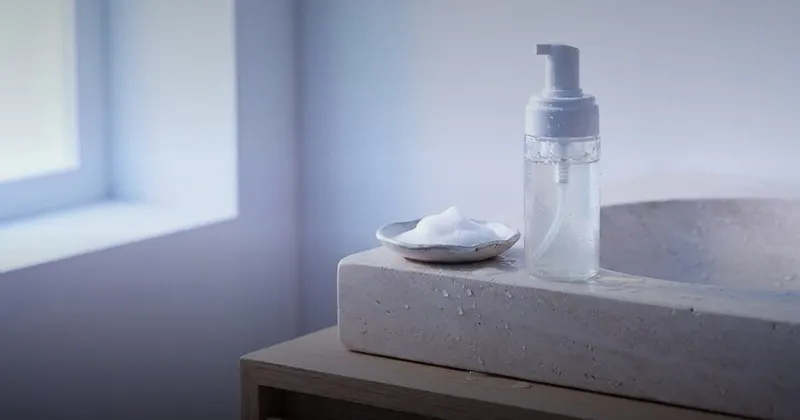
A microbiome-friendly cleanser is a gentle, slightly acidic face wash built on mild surfactants that leaves your skin's acidity and resident bacteria mostly undisturbed. On the label, look for a pH around 4.5 to 5.5, amino-acid, isethionate, glucoside or amphoteric cleansing agents near the top, and no strong antibacterial additives.
What makes a cleanser microbiome-friendly?
Key Takeaways
"Microbiome-friendly" is a claim without a rulebook. No regulator defines it, and a 2026 review of microbiome cosmetics notes the lack of standardized criteria for it 9. What counts is the ingredient list on the back: the cleansing agents, the pH if the brand states it, and anything designed to kill bacteria.
What does washing do to skin pH and the microbiome?
Every wash nudges your skin toward alkaline, and it takes hours to come back. In a study of 330 people, forearm pH fell from 5.12 to 4.93 after a day without showering or products, which put natural skin pH at about 4.7. European tap water, at around pH 8, raised skin pH for up to 6 hours 1.
Your bacteria notice. At pH 4 to 4.5, resident flora stayed attached to the skin, while at pH 8 to 9 they tended to disperse 1. A review of cleansing and pH adds that recovery can take up to several hours and suggests cleansers at pH 4.0 to 5.0 may help 2.
Cleanser pH shows up in the bacteria, too. In a randomized crossover trial, two cleansers with identical surfactants were used twice daily, one at pH 5.5 and one at pH 7.0. The neutral one left skin pH and propionibacteria counts significantly higher 3. With daily use, small pH differences can add up.
Does cleanser kill skin bacteria?
Mostly, no. When researchers washed forearms with several common cleansers, they measured a small drop in LL-37, an antimicrobial peptide your skin makes, but no significant change in the bacterial community 4. Your microbiome copes with a normal wash better than the marketing suggests.
The exception is products built to kill bacteria. In the same study, adding benzalkonium chloride or triclocarban to soap reduced the growth of bacteria applied after rinsing 4. That is the job of an antibacterial soap, and daily face washing rarely calls for it.
The researchers stressed that the effects of chronic washing need more study 4. For a primer on what lives on your skin, see our guide to the skin microbiome.
Which surfactants should you look for on the label?
Surfactants lift oil and dirt so water can rinse them away, and they decide how much a cleanser strips. Harsh ones bind to skin proteins and lipids, causing that tight, itchy feeling; milder ones interact far less 5. In a patch test comparison at 0.125% to 2%, sodium lauryl sulfate (SLS) caused a pronounced reaction, sodium laureth sulfate (SLES) a far milder one, and a glucoside barely any 6. Those patches stayed on for up to 24 hours, far longer than a face wash.
| Surfactant class | INCI names to spot | Typical harshness | When it fits |
|---|---|---|---|
| Alkyl sulfates | Sodium Lauryl Sulfate, Ammonium Lauryl Sulfate | High | Body wash, shampoo |
| Ether sulfates | Sodium Laureth Sulfate | Moderate | Buffered blends for oily skin |
| Isethionates | Sodium Cocoyl Isethionate, Sodium Lauroyl Methyl Isethionate | Low | Syndet bars, creamy washes |
| Amino-acid surfactants | Sodium Cocoyl Glutamate, Sodium Cocoyl Glycinate | Low | Dry or sensitive skin |
| Glucosides | Decyl Glucoside, Coco-Glucoside, Lauryl Glucoside | Low | Sensitive skin without a glucoside allergy |
| Amphoterics | Cocamidopropyl Betaine, Disodium Cocoamphodiacetate | Low | Co-surfactants that soften a harsher one |
| True soap | Sodium Palmate, Sodium Cocoate | High (alkaline) | Body use |
Treat these ratings as typical formulation guidance [5, 6]; they shift with concentration and the rest of the blend.
How do you read the surfactant line?
Start with the first five ingredients after water. The main cleansing agent usually sits there, and its class sets the tone for the formula. A sulfate in position two with nothing softening it reads very differently from a glutamate backed by a betaine and glycerin.
Mild still leaves room for individual reactions. In a patch test study of 105 patients, sodium cocoyl glutamate and disodium cocoamphodiacetate were among the best tolerated, yet cocamidopropyl betaine from the standard allergen series produced positive reactions in 5 patients, about 4.8% 7. Among 24,097 people referred for patch testing, 2.0% reacted to decyl or lauryl glucoside, and those who reacted were more likely to have atopic dermatitis (39.0% vs 28.6%) 8.
If you have a known allergy, those names are worth scanning for. If you do not, the numbers mostly confirm these classes are gentle for most people. Our gentle cleanser guide covers picking a texture by skin type.
Do prebiotics and postbiotics in a cleanser do anything?
Possibly a little, and nobody has shown much yet. Prebiotics (sugars that feed bacteria) and postbiotics (lysates or ferments made from bacteria) now turn up on many cleanser labels, under INCI names such as inulin, alpha-glucan oligosaccharide or Lactobacillus Ferment.
A 2026 review found early studies of biotic cosmetics promising, but limited by small samples and mixed designs 9. Most of that work tested leave-on products. A cleanser sits on your face for under a minute before you rinse it away, which leaves any add-on very little contact time. We found no human trial testing these ingredients in a rinse-off face wash.
At Skin Bliss, we read a biotic ingredient in a cleanser as a nice extra at best. A leave-on serum or moisturizer gives them more time on skin, and the surfactant base and pH still decide whether the cleanser is gentle. Our microbiome-friendly routine guide shows where they fit.
What about fragrance, preservatives and antibacterials?
Fragrance is a personal call. It adds nothing to cleansing, and some people react to it, so fragrance-free is the simpler pick if your skin reacts easily.
Preservatives do a necessary job. Any cleanser that contains water needs them to stop bacteria and mold growing in the bottle, and a contaminated cleanser is worse for your skin than a preserved one. Phenoxyethanol, sodium benzoate or potassium sorbate on the label is normal.
Deliberate antibacterials deserve a second look. Benzalkonium chloride and triclocarban exist to reduce bacteria, and they did so after washing in the study above 4. For other habits that may stress your skin flora, see products that can damage the microbiome.
How often should you cleanse?
Once or twice a day works for most people. In a randomized trial of young men with mild to moderate acne, twice-daily washing improved comedones, once-daily washing brought more redness and inflamed spots, and by the end none of the three groups (once, twice or four times daily) differed significantly 10. The authors called the support for twice daily "slight", so treat it as a sensible default.
If your skin is dry or sensitive, a water rinse in the morning and a proper cleanse at night may be enough. If you wear sunscreen or makeup, cleanse in the evening.
If your cleanser contains salicylic or glycolic acid, patch test it on your inner arm, introduce one new product at a time, and wear SPF by day; some people see a short breakout phase at first. If your skin stays red, stings or flares despite a gentle routine, a dermatologist can check for eczema, rosacea or an allergy.
Use This in Your Routine
Skin Bliss is a skincare scanner that checks whether products actually fit your skin, before you buy. Upload or paste any cleanser's ingredient list into the Ingredient List Analyzer to break down its cleansing agents and the rest of the formula, even for a product outside the catalog or on a label in another language. In a shop, the Barcode Scanner pulls up the match score and ingredients while you stand in the aisle. Start at getskinbliss.com.
Save this label checklist for your next cleanser run, and check the one on your sink tonight.
FAQ
Is a pH-balanced cleanser better for the skin microbiome?
It may help. Healthy skin sits around pH 4.7, and in a crossover trial a pH 5.5 cleanser kept skin pH lower than an identical pH 7.0 version, with lower propionibacteria counts. Water alone can raise skin pH for up to 6 hours, so a slightly acidic cleanser gives your skin less ground to recover after each wash.
Are "microbiome-friendly" labels trustworthy?
Treat them as a starting point. No regulator defines the term, and a 2026 review points to the lack of standardized criteria for these claims. Some brands back the label with microbiome testing, others use it as a mood word. The ingredient list is more reliable: check the main surfactant, look for a stated pH and skip deliberate antibacterials unless you need them.
Is sodium laureth sulfate as harsh as sodium lauryl sulfate?
Usually not. In a patch test comparison at matching concentrations, sodium laureth sulfate caused a far milder reaction than sodium lauryl sulfate, though it still caused measurable irritation. In a buffered formula with amphoteric co-surfactants and glycerin, it can suit oily skin. If your skin is dry, sensitive or already irritated, an amino-acid, isethionate or glucoside base is a gentler starting point.
Do I need a probiotic cleanser?
Probably not. A cleanser stays on your face for less than a minute before you rinse it off, so probiotic, prebiotic or postbiotic ingredients have very little time to act, and we found no human trial testing them in a face wash. If you want to try biotic ingredients, a leave-on serum or moisturizer gives them more contact time.
Can a gentle cleanser still cause a reaction?
Yes, occasionally. Mild surfactants suit most people, but patch test data show a minority react to specific ones: 2.0% of patients referred for patch testing reacted to decyl or lauryl glucoside, and cocamidopropyl betaine produced positive tests in one study. If a new cleanser stings or itches, stop using it, and see a dermatologist if the reaction persists.

In your browser
Free Skin Quiz: Understand your skin profile in under 5 minutes
Oily or dry is only the start. Find out what your skin actually needs across six skin dimensions, with a plain note on what each one means for your routine. Results appear in your browser, and you can keep them in the app.

Maria combines her background in AI research with a passion for evidence-based skincare. She built Skin Bliss to help people make informed decisions about their skin, backed by science rather than marketing.
Sources (10)
- Lambers H et al. (2006). "Natural skin surface pH is on average below 5, which is beneficial for its resident flora." *International Journal of Cosmetic Science*.
- Blaak J, Staib P (2018). "The Relation of pH and Skin Cleansing." *Current Problems in Dermatology*.
- Korting HC et al. (1990). "Differences in the skin surface pH and bacterial microflora due to the long-term application of synthetic detergent preparations of pH 5.5 and pH 7.0. Results of a crossover trial in healthy volunteers." *Acta Dermato-Venereologica*.
- Two AM et al. (2016). "The Cutaneous Microbiome and Aspects of Skin Antimicrobial Defense System Resist Acute Treatment with Topical Skin Cleansers." *Journal of Investigative Dermatology*.
- Ananthapadmanabhan KP et al. (2004). "Cleansing without compromise: the impact of cleansers on the skin barrier and the technology of mild cleansing." *Dermatologic Therapy*.
- Löffler H, Happle R (2003). "Profile of irritant patch testing with detergents: sodium lauryl sulfate, sodium laureth sulfate and alkyl polyglucoside." *Contact Dermatitis*.
- Corazza M et al. (2010). "Irritant and sensitizing potential of eight surfactants commonly used in skin cleansers: an evaluation of 105 patients." *Dermatitis*.
- Warshaw EM et al. (2022). "Patch testing with glucosides: The North American Contact Dermatitis Group experience, 2009-2018." *Journal of the American Academy of Dermatology*.
- Taléns-Visconti R et al. (2026). "Cosmetic Interventions for Skin Microbiome Modulation: Current Strategies and Future Directions." *Skin Research and Technology*.
- Choi JM et al. (2006). "A single-blinded, randomized, controlled clinical trial evaluating the effect of face washing on acne vulgaris." *Pediatric Dermatology*.