Journal · Skin Barrier & Recovery
How to Fix a Damaged Skin Barrier: A 4-Phase Recovery Plan
A 4-phase skin barrier recovery plan with ceramides, niacinamide, and clear benchmarks. Learn the timeline and when to safely bring actives back in

Maria Otworowska, PhD, Co-founder of Skin Bliss
· 8 min read
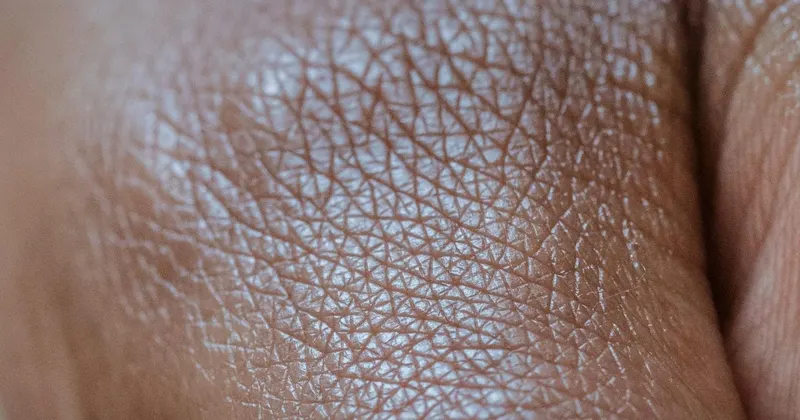
Fixing a damaged skin barrier is a structured process of restoring the stratum corneum's lipid matrix by replenishing ceramides, cholesterol, and fatty acids in the correct ratios, while eliminating products and habits that continue to strip those protective lipids from your skin.
Most barrier repair advice boils down to "use a gentle cleanser and moisturize." That is true, but it is about as useful as telling someone with a broken arm to "take it easy." You need an actual plan with specific phases, clear benchmarks, and a timeline. This is that plan.
Key Takeaways
What causes skin barrier damage in the first place?
The stratum corneum is held together by a lipid mortar made of roughly equal parts ceramides, cholesterol, and free fatty acids arranged in lamellar sheets 1. Anything that strips or disrupts those lipids weakens the barrier. Over-exfoliation is the most common cause in skincare-conscious people. But harsh cleansers, extreme weather, stress, and even hot water contribute.
When your barrier is compromised, your skin loses moisture at an accelerated rate. Healthy skin loses about 2 to 15 grams of water per square meter per hour through the surface. A damaged barrier can lose three to five times that amount, which is why compromised skin feels tight and dry even right after moisturizing 2.
Your skin does try to fix itself. Research shows that when the barrier is disrupted, the epidermis ramps up production of cholesterol, fatty acids, and ceramides 3. But if you keep applying irritating products, you are tearing down the wall faster than your skin can rebuild it.
How does phase 1 work? (Days 0 to 2: stop the damage)
The goal of phase 1 is simple: stop making things worse. That means stripping your routine down to three products. A gentle cream cleanser with a pH between 5.5 and 6.5. A moisturizer with ceramides. And a mineral sunscreen with SPF 30 or higher.
Drop every active ingredient. Retinoids, AHAs, BHAs, vitamin C serums, exfoliating toners. All of them. Even products marketed as "gentle" exfoliants need to go. Your skin cannot repair while it is still under attack.
Cleanse only at night during this phase. In the morning, rinse with lukewarm water and go straight to moisturizer and sunscreen. Apply 5% niacinamide if you have it. Research shows niacinamide increases ceramide biosynthesis by 4 to 5 times and also boosts fatty acid and cholesterol production, which means it actively helps rebuild the lipid mortar 4. Physical sunscreens with zinc oxide or titanium dioxide are less likely to irritate compromised skin than chemical filters.
What should you do in phase 2? (Days 2 to 7: early recovery)
Phase 2 is about establishing consistent repair. You can resume twice-daily cleansing if your skin tolerates it, but stick with the same gentle formula from phase 1. The priority product here is a ceramide-dominant moisturizer, ideally one that delivers ceramides, cholesterol, and fatty acids together.
Research on barrier repair is clear on this point. Complete mixtures of all three lipids allow normal barrier recovery. Individual lipids or two-component combinations actually delay recovery. And the optimal ratio for accelerated repair is 3:1:1, ceramides to cholesterol to fatty acids 5.
Apply this moisturizer generously, twice per day. If your skin still feels tight between applications, add a hyaluronic acid serum underneath. Hyaluronic acid pulls moisture into the upper skin layers without disrupting the barrier, and research shows it can increase skin hydration by up to 59% within one hour of application 6. Layer it onto damp skin, then seal with your ceramide moisturizer.
What changes in phase 3? (Weeks 1 to 3: mid recovery)
By week two, you should notice meaningful improvement. Less stinging. Less tightness. Your skin starts to feel like it can hold moisture for more than a couple of hours. This is the phase where most people make the mistake of reintroducing actives too early.
Do not do that yet. Instead, you can cautiously introduce one additional product: azelaic acid at 10%, every other evening. Azelaic acid is unusual among actives because it provides anti-inflammatory and gentle exfoliating benefits without the irritation that other acids cause 7. If it stings at all, stop and wait another week.
Track your progress during this phase. Notice how long your skin stays comfortable after moisturizing. A healthy barrier holds hydration for 6 or more hours. If you need to reapply within 2 to 3 hours, your barrier is still recovering. The Skin Bliss Skin Diary can help you log these daily observations and spot patterns in your recovery.
When is it safe to reintroduce actives? (Phase 4: week 3 and beyond)
Phase 4 begins only when you pass this test: apply your regular moisturizer to clean, bare skin. Wait 5 minutes. If there is zero stinging, tightness, or discomfort, your barrier is likely stable enough to handle actives again.
Start with a retinoid at the lowest available concentration. If you were using 0.05% tretinoin before, drop to 0.025% or switch to retinol. Apply it twice per week for the first two weeks. Increase to three times per week after that. Only move to every-other-night use after a full month without irritation 8.
| Phase | Timeline | Goal | Products |
|---|---|---|---|
| 1 | Days 0-2 | Stop damage | Gentle cleanser, ceramide moisturizer, mineral SPF |
| 2 | Days 2-7 | Consistent repair | Add hyaluronic acid, ceramide-heavy moisturizer twice daily |
| 3 | Weeks 1-3 | Support renewal | Optional azelaic acid 10% every other night |
| 4 | Week 3+ | Reintroduce actives | Lowest-strength retinoid, twice weekly, increase gradually |
Maintain your ceramide moisturizer permanently. Think of it as maintenance for the wall. The actives do their targeted work, and the ceramides keep the structure sound.
How can you prevent barrier damage from happening again?
Prevention is genuinely easier than repair. A few habits make a big difference. Use a pH-balanced cleanser (pH 4.5 to 5.5) to support your skin's acid mantle. Research confirms that skin with a surface pH below 5.0 has better barrier function, moisture retention, and microbial balance than skin with a higher pH 9.
Do not stack multiple exfoliating actives on the same night. A retinoid plus an AHA plus a vitamin C serum is a recipe for barrier disruption, even if each product is fine on its own. Alternate them across different evenings.
Use an occlusive layer at night in dry or cold climates. Petrolatum reduces transepidermal water loss more effectively than any other topical ingredient, and research shows it actually accelerates barrier repair rather than just sitting on the surface 10.
Patch test new actives before applying them to your full face, and introduce one new product at a time with at least two weeks between additions.
Frequently asked questions
How long does skin barrier repair actually take?
It depends on severity. Mild damage from a few days of over-exfoliation can resolve in 1 to 2 weeks. Severe barrier disruption from months of aggressive product use may take 4 to 8 weeks. Older skin tends to recover more slowly, so add 1 to 2 extra weeks per phase if you are over 40 2.
Can you speed up barrier repair with more products?
No. More products often slow recovery because each additional product is a potential source of irritation. The fastest repair comes from the simplest routine: cleanser, ceramide moisturizer with the right lipid ratio, and sunscreen 5.
Is it normal for skin to feel worse before it gets better during repair?
Some fluctuation is normal in the first 48 hours as your skin adjusts to a simplified routine. But if symptoms are getting progressively worse after day 3, something in your stripped-down routine is still irritating your skin. Check your cleanser's pH and ingredients list.
Should you use a humidifier during barrier recovery?
Yes, especially in dry or air-conditioned environments. Low humidity increases transepidermal water loss, which directly works against barrier repair. A bedside humidifier set to 40-60% relative humidity can make a meaningful difference in recovery speed.

In your browser
Free Skin Quiz: Understand your skin profile in under 5 minutes
Oily or dry is only the start. Find out what your skin actually needs across six skin dimensions, with a plain note on what each one means for your routine. Results appear in your browser, and you can keep them in the app.

Maria combines her background in AI research with a passion for evidence-based skincare. She built Skin Bliss to help people make informed decisions about their skin, backed by science rather than marketing.
Sources (10)
- Bouwstra JA et al. (2003). "Role of ceramides in barrier function of healthy and diseased skin." *Acta Dermato-Venereologica*.
- Proksch E et al. (2008). "The skin: an indispensable barrier." *Experimental Dermatology*.
- Harris IR et al. (1997). "Permeability barrier disruption coordinately regulates mRNA levels for key enzymes of cholesterol, fatty acid, and ceramide synthesis in the epidermis." *Journal of Investigative Dermatology*.
- Tanno O et al. (2000). "Nicotinamide increases biosynthesis of ceramides as well as other stratum corneum lipids to improve the epidermal permeability barrier." *British Journal of Dermatology*.
- Man MQ et al. (1996). "Optimization of physiological lipid mixtures for barrier repair." *Journal of Investigative Dermatology*.
- Pavicic T et al. (2011). "Efficacy of cream-based novel formulations of hyaluronic acid." *Journal of Drugs in Dermatology*.
- Mastrofrancesco A et al. (2010). "Azelaic acid modulates the inflammatory response in normal human keratinocytes through PPARgamma activation." *Experimental Dermatology*.
- Mukherjee S et al. (2006). "Retinoids in the treatment of skin aging." *Clinical Interventions in Aging*.
- Lambers H et al. (2006). "Natural skin surface pH is on average below 5, which is beneficial for its resident flora." *International Journal of Cosmetic Science*.
- Ghadially R et al. (1992). "Effects of petrolatum on stratum corneum structure and function." *Journal of the American Academy of Dermatology*.