Journal · Skin Barrier & Recovery
Signs You're Over-Exfoliating: How It Wrecks Your Skin Microbiome
Signs you may be over-exfoliating, from tightness and redness to microbiome disruption, plus how PHAs and fewer acids can help your skin recover

Maria Otworowska, PhD, Co-founder of Skin Bliss
· 8 min read
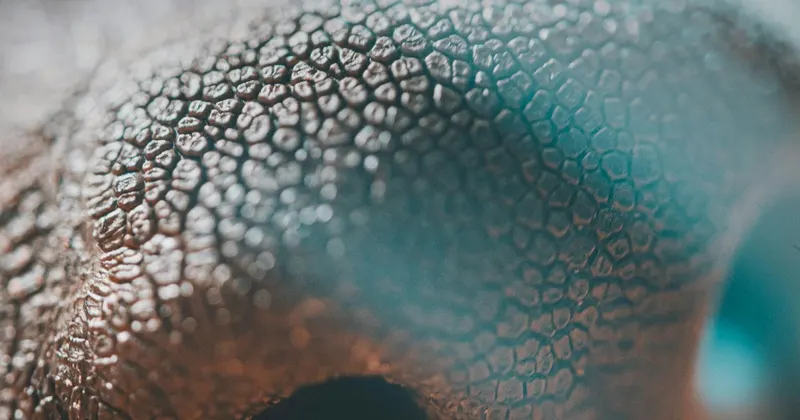
Over-exfoliation is the gradual breakdown of your skin's protective outer layer, the stratum corneum, caused by too-frequent or too-aggressive removal of surface cells, leading to increased water loss, chronic redness, and measurable disruption of the bacterial communities that keep your skin healthy and balanced.
Your skin has roughly a trillion bacteria living on it. Most of them are doing useful work: fighting off pathogens, regulating inflammation, keeping the peace. When you exfoliate too often, you strip away the environment those bacteria depend on. The damage goes deeper than a tight, shiny face.
Key Takeaways
What does over-exfoliation actually look like?
The tricky part is that early signs of over-exfoliation mimic the problems you were trying to fix. Your skin gets oilier because the barrier is damaged and compensating. You break out more because bacteria that thrive in disrupted environments are multiplying. You assume you need more exfoliation. It is a vicious cycle.
The clearest physical signs are persistent tightness after cleansing (not the brief kind, but the kind that lasts hours), a shiny or "waxy" texture that is different from normal oiliness, stinging when you apply products that never bothered you before, and visible flaking that does not improve with moisturizer. If your skin burns when you put on a basic hyaluronic acid serum, that is your barrier waving a white flag.
Researchers measure barrier damage through something called trans-epidermal water loss (TEWL), which is the rate at which water escapes through the skin surface. Healthy skin loses about 5-15 grams of water per square meter per hour. Compromised barriers can lose over 30 1. You cannot measure TEWL at home, but the symptoms above are its visible proxies.
How does exfoliation damage the skin microbiome?
Your skin microbiome is a community of bacteria, fungi, and viruses that live on the skin surface and in hair follicles. A healthy microbiome has high diversity, meaning lots of different species coexisting. The Shannon diversity index is how researchers quantify this. Healthy skin typically scores above 3.0 on that index. When the barrier is damaged, that number drops 2.
What happens is straightforward: exfoliation removes the top layer of dead skin cells (corneocytes) along with the lipid "mortar" holding them together. Those dead cells and lipids are the habitat your beneficial bacteria live in. Remove too much, too often, and you are essentially bulldozing their homes.
The pH shift matters too. Healthy skin sits at a pH of about 4.5-5.5, which is mildly acidic. That acidity is what keeps harmful bacteria in check. Over-exfoliation pushes pH higher, above 6.0, and S. aureus grows significantly faster in that environment 4. Meanwhile, beneficial species like Staphylococcus epidermidis prefer acidic conditions and start to lose ground 5.
What is the connection between your barrier and your bacteria?
Your skin barrier and your microbiome are not separate systems. They are interdependent. Ceramides, cholesterol, and fatty acids form the "mortar" between skin cells. Beneficial bacteria produce metabolites, including tryptophan derivatives, that activate pathways involved in barrier repair 6. When the barrier is intact, it supports the right bacterial mix. When bacteria are balanced, they help maintain the barrier.
Over-exfoliation breaks this feedback loop from both directions. You lose barrier lipids, which means bacteria lose their habitat. Bacterial diversity drops, which means the metabolites that support barrier repair are no longer being produced in adequate amounts. This is why over-exfoliated skin can feel stuck: it is simultaneously too damaged to support healthy bacteria and too bacteria-depleted to repair itself efficiently.
The practical implication is that barrier repair and microbiome recovery are the same project. You cannot fix one without the other. A ceramide-rich moisturizer addresses the lipid side. Avoiding further disruption addresses the microbial side. Time does the rest.
How long does microbiome recovery take after over-exfoliation?
If you catch it early, a couple of weeks of gentle care is usually enough. Stop all actives: no AHAs, no BHAs, no retinoids, no vitamin C. Use a gentle, pH-balanced cleanser (pH 4.5-5.5) and a barrier-repair moisturizer with ceramides. That is the entire routine.
For more significant damage, where you have been over-exfoliating for months, research suggests the timeline stretches to 4-8 weeks. Barrier repair happens faster than microbial recovery. TEWL can normalize within 2-3 weeks with proper care 7, but the full microbial community takes longer to reestablish diversity and stability.
You will know recovery is underway when products stop stinging, when your skin holds moisture through the day without reapplying, and when breakouts slow down. The Skin Bliss app can help track these changes over time through its Skin Diary and AI Photo Comparison features, so you are not relying on memory alone.
When is it safe to exfoliate again?
The goal is not to stop exfoliating forever. It is to do it at the right frequency with the right ingredients. Once your barrier has recovered, meaning no tightness, no stinging, consistent hydration, limit exfoliation to once or twice a week.
Polyhydroxy acids (PHAs) like gluconolactone are worth considering if your skin is reactive. PHAs have a larger molecular size than AHAs, so they do not penetrate as deeply or cause as much irritation. Clinical studies show they provide comparable anti-aging benefits to AHAs while being compatible with sensitive skin, including rosacea 3. They also have built-in hydrating and antioxidant properties, which is a genuine advantage over glycolic acid.
If you prefer AHAs, mandelic acid is the gentlest option because of its larger molecular weight. Start at low concentrations (5-8%) and use it no more than twice a week. Always follow exfoliation with a barrier-supportive moisturizer. And if you are using a retinoid on other nights, do not exfoliate on the same night. Your skin only has so much capacity for active ingredients.
| Factor | AHAs (glycolic, lactic) | BHA (salicylic acid) | PHAs (gluconolactone) |
|---|---|---|---|
| Penetration depth | Deepest (small molecules) | Medium (oil-soluble) | Shallowest (large molecules) |
| Irritation risk | Higher | Moderate | Lowest |
| Best for | Sun damage, fine lines | Oily skin, blackheads | Sensitive skin, rosacea |
| Hydrating? | Lactic acid only | No | Yes |
| Safe frequency | 1-2x/week | 1-2x/week | Up to daily for most skin |
Patch test any new exfoliant on your inner arm before applying to your face, especially if your barrier has been recently compromised.
Frequently asked questions
How can I tell the difference between purging and over-exfoliation?
Purging happens in areas where you normally break out and resolves within 4-6 weeks of starting a new active. Over-exfoliation causes irritation everywhere, including areas where you do not normally have issues. If your entire face is red, tight, and stinging, that is barrier damage, not purging.
Can you over-exfoliate with just a washcloth?
Yes. Physical friction counts as exfoliation. If you scrub aggressively with a washcloth, konjac sponge, or cleansing brush every day, you can absolutely compromise your barrier. This is especially true if you are also using chemical exfoliants.
Does over-exfoliation cause permanent damage?
In most cases, no. The skin barrier is designed to repair itself. With proper care, stopping actives, using ceramide-rich moisturizers, and protecting from further disruption, most people see significant recovery within 4-8 weeks. Chronic over-exfoliation over years may thin the skin, but that is reversible with time and patience.
Should I use a probiotic skincare product to restore my microbiome?
Topical probiotics and prebiotics may support microbiome recovery, but the evidence is still emerging 8. What matters most is removing the factors that disrupted your microbiome in the first place. Stop over-exfoliating, keep pH balanced, and give your skin time. A prebiotic moisturizer can be a helpful addition, but it is not a substitute for barrier repair.
Is it possible to exfoliate too little?
Technically, yes. Dead skin cell buildup can lead to clogged pores and dull texture. But most skin types naturally shed cells on their own cycle. If you are worried about under-exfoliating, once a week with a gentle PHA or low-concentration AHA is plenty for maintenance.

In your browser
Free Skin Quiz: Understand your skin profile in under 5 minutes
Oily or dry is only the start. Find out what your skin actually needs across six skin dimensions, with a plain note on what each one means for your routine. Results appear in your browser, and you can keep them in the app.

Maria combines her background in AI research with a passion for evidence-based skincare. She built Skin Bliss to help people make informed decisions about their skin, backed by science rather than marketing.
Sources (8)
- Alexander H et al. (2018). "Research Techniques Made Simple: Transepidermal Water Loss Measurement as a Research Tool." *J Invest Dermatol*.
- Lee HJ et al. (2022). "Epidermal Barrier Integrity is Associated with Both Skin Microbiome Diversity and Composition in Patients with Acne Vulgaris." *Microorganisms*.
- Edison BL et al. (2004). "A polyhydroxy acid skin care regimen provides antiaging effects comparable to an alpha-hydroxyacid regimen." *Cutis*.
- Lambers H et al. (2006). "Natural skin surface pH is on average below 5, which is beneficial for its resident flora." *Int J Cosmet Sci*.
- Proksch E (2018). "pH in nature, humans and skin." *J Dermatol*.
- Grice EA, Segre JA (2011). "The skin microbiome." *Nat Rev Microbiol*.
- Rawlings AV, Matts PJ (2005). "Stratum corneum moisturization at the molecular level." *J Invest Dermatol*.
- Puebla-Barragan S, Reid G (2019). "Forty-five-year evolution of probiotic therapy." *Microb Cell*.