Journal · Skin Barrier & Recovery
Skin Barrier Repair: How to Fix a Damaged Skin Barrier
A damaged skin barrier stings, flakes, and breaks out. Learn how to rebuild it with ceramides, gentle cleansing, and the actives to pause while healing

Maria Otworowska, PhD, Co-founder of Skin Bliss
· 8 min read
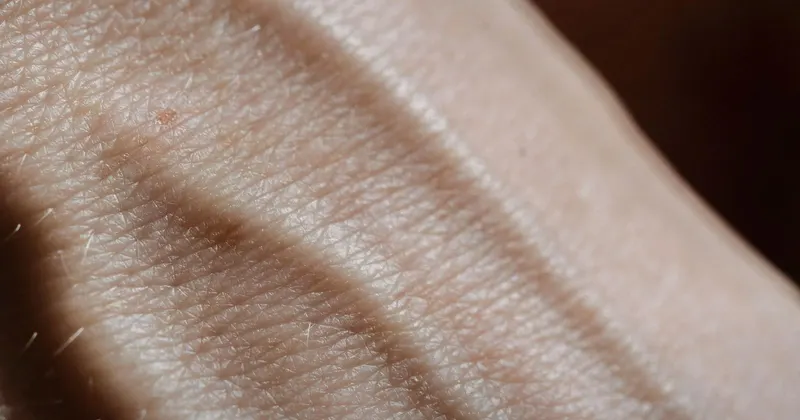
Skin barrier repair is the process of restoring the stratum corneum, the outermost skin layer, by replenishing ceramides, cholesterol, and fatty acids so it can hold water in and keep irritants out. When that lipid "mortar" cracks from over-exfoliation or harsh cleansers, skin stings, flakes, and breaks out until the barrier rebuilds.
If your moisturizer suddenly burns and a splash of water feels like acid, that is a physical problem with a physical fix, and it almost always traces back to doing too much, too fast, for too long.
Key Takeaways
What Are the Signs of a Damaged Skin Barrier?
A damaged skin barrier announces itself loudly. Products you tolerated for months suddenly sting on contact. Your face feels tight the moment you step out of the shower. Redness that used to fade now lingers for hours. You might notice flaking and oiliness in the same patches, which points to dehydration rather than dryness.
Breakouts are another giveaway. When the stratum corneum loses its structural integrity, bacteria reach deeper layers more easily, and inflammation climbs 1. The same dysfunction raises transepidermal water loss, which is the scientific term for water escaping through the surface 2. A healthy barrier holds that water in. A damaged one lets it evaporate, so skin feels parched no matter how much moisturizer you pile on.
If two or more of these signs apply to you, treat it as a barrier problem first and a product problem second. The Skin Bliss Face Scanner can help you flag early signs of sensitivity before they turn into full inflammation.
How Do I Repair My Skin Barrier?
Repair starts with subtraction, not addition. Stop every active in your routine the same day you notice irritation: retinoids, AHAs, BHAs, vitamin C, enzyme peels, physical scrubs. Continuing actives on compromised skin keeps the damage going and delays recovery, which research on retinoid-induced barrier disruption has shown clearly 3.
Then strip your routine to three products. A gentle, low-pH cleanser (pH around 5.5 is kinder to the acid mantle than alkaline bar soaps) 4. A moisturizer built around ceramides, cholesterol, and fatty acids in roughly equimolar ratios, which is the combination that supports permeability barrier homeostasis 1. And a broad-spectrum SPF 50, ideally mineral or hybrid, because UV exposure slows barrier recovery.
Keep the routine identical morning and night for at least two weeks. Resist sampling. Resist layering. Boring is the point. The Skin Bliss Ingredient Compatibility Checker can tell you if anything in your current lineup is working against recovery.
How Long Does It Take to Heal a Damaged Barrier?
Most barriers recover in two to six weeks with a simplified routine, though the timeline depends on how damaged you started and how consistent you stay. Studies using tape-stripping models (a standard way to measure barrier recovery) show TEWL normalizes within 72 to 96 hours after mild disruption, with deeper recovery of lipid organization taking longer 5.
In the first week, stinging usually fades as inflammation calms and panthenol, allantoin, and squalane soothe the surface. Weeks two and three bring back hydration, with niacinamide beginning to upregulate ceramide synthesis inside the skin 6. By weeks four through six, the lipid matrix has largely rebuilt itself and tolerance to mild actives returns.
Severe damage from months of over-exfoliation or strong retinoid misuse can take up to eight weeks, sometimes longer. If you are past the six-week mark with no improvement, the issue may be a contact allergy, rosacea, or another condition that needs a dermatologist, not more moisturizer.
What Ingredients Help Skin Barrier Repair?
Barrier repair ingredients fall into two camps: lipids that physically rebuild the wall, and humectants or anti-inflammatories that calm the surface while rebuilding happens underneath. The strongest evidence sits with the lipid trio of ceramides, cholesterol, and fatty acids, which together form the lamellar structure that keeps water in and irritants out 1.
Niacinamide supports the same process from a different angle. Topical niacinamide stimulates de novo synthesis of ceramides and free fatty acids in the stratum corneum, so it works with your skin's own repair machinery rather than just sitting on top 6. Panthenol (also called dexpanthenol or provitamin B5) speeds up barrier repair after sodium lauryl sulphate irritation and reduces inflammation in clinical trials 7.
| Ingredient | What it does | Best for | Timeline |
|---|---|---|---|
| Ceramides + cholesterol + fatty acids | Physically rebuild the lipid matrix | Any damaged barrier | 2-4 weeks |
| Niacinamide (2-5%) | Boosts ceramide synthesis, reduces TEWL | Sensitive, compromised skin | 2-4 weeks |
| Panthenol (D-panthenol, B5) | Soothes irritation, speeds repair | Active flare-ups, stinging | 1-2 weeks |
| Squalane | Lightweight occlusive, calms surface | Quick comfort relief | Days |
| Hyaluronic acid | Humectant, pulls water into skin | Hydration while healing | Immediate |
What Should You Avoid While Your Barrier Is Healing?
Skip every active ingredient until stinging has fully stopped and redness has faded. That means no AHAs, no BHAs, no retinoids, no vitamin C, no enzyme masks, no physical scrubs, and no chemical peels. Your skin is rebuilding its foundation. You would not sand a wall while the mortar is still wet.
Also avoid hot water, which strips lipids faster than lukewarm water. Skip fragranced products, essential oils, and denatured alcohol high in the ingredient list, since all three are common irritants on sensitive skin. Cut back on double cleansing unless you are actively wearing heavy makeup or sunscreen that needs removing, because repeated surfactant exposure disrupts the acid mantle and slows recovery 4.
One more: do not keep buying new products hoping the next one fixes it. Barrier repair is a subtraction game. If you have sensitive skin or a reactive history, patch-test anything new on your inner arm for 48 hours before it touches your face.
Frequently Asked Questions
Can I use vitamin C if my barrier is damaged?
No. Low-pH vitamin C formulations can sting on compromised skin and slow recovery by adding more acid stress to an already inflamed surface. Pause vitamin C, finish barrier repair, and reintroduce it at the lowest concentration your routine can tolerate, usually 2-3 times per week to start.
Is a damaged barrier the same as purging?
No. Purging is a temporary spike in breakouts when an active like a retinoid or an AHA speeds up cell turnover, and it usually appears in areas where you already break out. A damaged barrier causes stinging, redness, tightness, and flaking alongside new breakouts in unusual spots. Purging resolves as you continue the active. Barrier damage only resolves if you stop.
Will a damaged skin barrier heal on its own?
Yes, in most cases. The stratum corneum is designed to self-repair, and once you remove the damaging triggers, your skin starts rebuilding ceramides within days 6. A simplified routine with a barrier moisturizer and SPF just speeds the process along and protects you from re-damage during recovery.
When should I see a dermatologist?
If you have severe pain, crusting, oozing, or spreading redness, book an appointment now, not in six weeks. If a simplified routine has not improved symptoms after six weeks, see a dermatologist to rule out rosacea, perioral dermatitis, or contact allergy. Persistent inflammation has causes beyond over-exfoliation, and a prescription can make a real difference.
A Few Reminders Before You Start
If you have sensitive skin, patch-test any new product on your inner forearm for 48 hours before using it on your face. When you eventually reintroduce actives, start with one at a time at the lowest strength, twice a week, and give each one at least two weeks before adding the next. And keep wearing sunscreen daily. No SPF is 100%, so reapply every two hours when you are outside.
Save this post for your next flare, because barrier damage has a way of coming back when life gets busy and routines get sloppy. Skin Bliss can track your recovery day by day, flag products that might be working against you, and tell you when your skin is ready for actives again.

In your browser
Free Skin Quiz: Understand your skin profile in under 5 minutes
Oily or dry is only the start. Find out what your skin actually needs across six skin dimensions, with a plain note on what each one means for your routine. Results appear in your browser, and you can keep them in the app.

Maria combines her background in AI research with a passion for evidence-based skincare. She built Skin Bliss to help people make informed decisions about their skin, backed by science rather than marketing.
Sources (7)
- Man, M.Q. et al. (1996). "Optimization of physiological lipid mixtures for barrier repair." *Journal of Investigative Dermatology*.
- Elias, P.M. (2012). "Structure and function of the stratum corneum extracellular matrix." *Journal of Investigative Dermatology*.
- Draelos, Z.D. (2006). "Facilitating facial retinization through barrier improvement." *Cutis*.
- Schmid-Wendtner, M.H., Korting, H.C. (2006). "The pH of the skin surface and its impact on the barrier function." *Skin Pharmacology and Physiology*.
- Fluhr, J.W. et al. (2001). "Physical and physiological effects of stratum corneum tape stripping." *Skin Research and Technology*.
- Tanno, O. et al. (2000). "Nicotinamide increases biosynthesis of ceramides as well as other stratum corneum lipids to improve the epidermal permeability barrier." *British Journal of Dermatology*.
- Proksch, E., Nissen, H.P. (2009). "Dexpanthenol enhances skin barrier repair and reduces inflammation after sodium lauryl sulphate-induced irritation." *Journal of Dermatological Treatment*.