Journal · Skin Barrier & Recovery
When to Stop Retinoids and Acids: 5 Damaged-Barrier Red Flags
The red flags that mean you should pause retinoids and acids, how a damaged barrier presents, and a safe timeline for reintroducing actives to your skin

Maria Otworowska, PhD, Co-founder of Skin Bliss
· 8 min read
Stopping retinoids and acids at the right time is a critical decision for preventing lasting skin barrier damage, because these actives increase cell turnover and can weaken the stratum corneum's protective lipid layer when your skin is already compromised by over-exfoliation, environmental stress, or product overload.
Your retinoid is doing its job when your skin adjusts. It is not doing its job when your skin gets progressively worse. The difference between "purging" and genuine barrier damage is one of the most common sources of confusion in skincare, and getting it wrong can set your recovery back by weeks.
Key Takeaways
What does a damaged skin barrier actually look like?
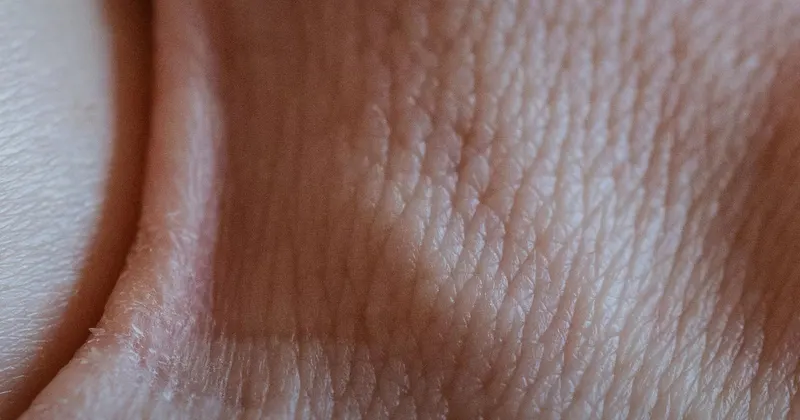
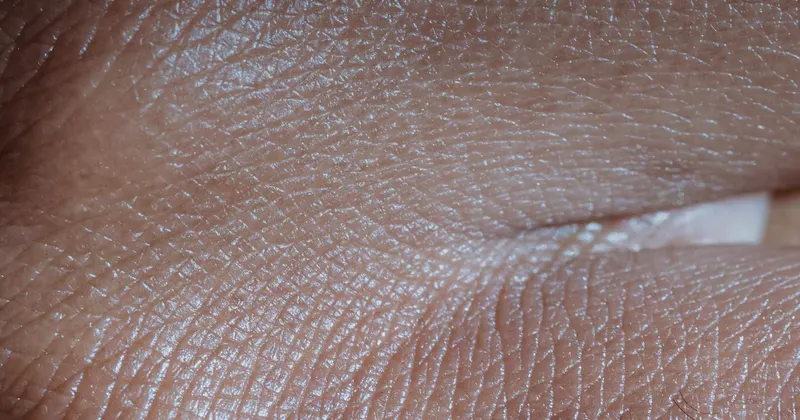
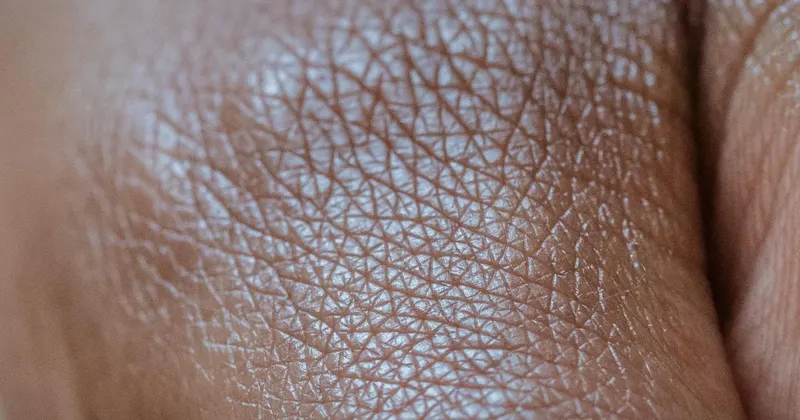
Your skin barrier is the outermost layer of skin, called the stratum corneum. Picture it as a brick wall: dead skin cells are the bricks, and a lipid mortar of ceramides, cholesterol, and fatty acids holds everything together 1. When that mortar is intact, your skin retains moisture and keeps irritants out. When it cracks, water escapes and everything from your cleanser to the weather starts causing problems.
A healthy barrier loses only about 2 to 15 grams of water per square meter per hour through the skin surface. Dermatologists call this transepidermal water loss, or TEWL. A damaged barrier can lose more than 50 g/m2/h, which is why compromised skin feels perpetually dry no matter how much moisturizer you apply 2.
The signs are consistent. Stinging or burning when you apply products that never bothered you before. Redness that sticks around long after you wash your face. Tightness that moisturizer does not resolve. Flaking that goes beyond the normal retinoid adjustment period. If you are experiencing two or more of these simultaneously, your barrier needs a break.
How do retinoids damage the skin barrier?
Retinoids work by accelerating cell turnover in the epidermis. That is their value for treating acne, hyperpigmentation, and fine lines. But that same mechanism can compromise your barrier when the turnover rate outpaces your skin's ability to rebuild its lipid layer 3.
Research shows that retinoic acid increases transepidermal water loss within the first week of application. One study found that after discontinuing treatment, TEWL in retinoic acid-treated skin stayed elevated until day 18, meaning the barrier disruption outlasted the treatment itself 4. That delayed recovery is why you cannot just skip a night and expect your skin to bounce back.
The process works like this: retinoids loosen the bonds between skin cells, including the desmosomes that hold the stratum corneum together. At the right dose on healthy skin, that produces the controlled exfoliation that makes retinoids effective. On already-compromised skin, it is like sandpapering a wall that already has cracks.
Important: If you are using any retinoid, always wear broad-spectrum SPF 30 or higher during the day. Retinoids increase photosensitivity, and UV exposure on a weakened barrier accelerates damage.
When should you stop using AHAs and BHAs?
Chemical exfoliants like glycolic acid (an alpha hydroxy acid) and salicylic acid (a beta hydroxy acid) work differently from retinoids, but the barrier damage they cause follows a similar pattern. At low concentrations (2 to 5%), glycolic acid promotes controlled exfoliation without disrupting the barrier's deeper lipid structures 5. Higher concentrations and frequent use are a different story.
Research demonstrates that glycolic acid peels cause a significant spike in TEWL immediately after application. The barrier typically recovers within 24 hours after a single professional peel, but daily use of moderate-concentration AHAs on already-irritated skin prevents that recovery window from ever opening 5.
| Active | Stop if you notice | Safe to restart when |
|---|---|---|
| Retinoid (tretinoin, retinol) | Burning with moisturizer, persistent redness, peeling beyond 6 weeks | 3 to 5 days after all symptoms resolve; start at lowest strength, once weekly |
| AHA (glycolic, lactic acid) | Stinging on application, raw-feeling skin, visible flaking | Barrier feels calm for 1 full week; start at lowest concentration |
| BHA (salicylic acid) | Increased breakouts, dry patches, sensitivity to touch | No sensitivity for 5+ days; resume at reduced frequency |
| Vitamin C (15%+) | Tingling that was not there before, redness, irritation | After barrier recovery; consider dropping to 10% or lower |
What is the difference between retinoid purging and barrier damage?
This question keeps people on damaging products far longer than they should be. Purging is a real phenomenon, but it follows predictable rules. Retinoid purging happens because faster cell turnover pushes existing clogs to the surface sooner. It shows up as small breakouts in areas where you normally get acne, and it resolves within 4 to 6 weeks.
Barrier damage is different. It shows up as widespread irritation, not targeted breakouts. Stinging from gentle products. Redness in areas that do not normally have issues. Texture changes across your entire face. If your "purge" is getting worse after 6 weeks or includes symptoms like burning and tightness, that is barrier damage, not purging.
One useful test: apply your basic moisturizer to clean skin. If it stings, your barrier is compromised regardless of what else is happening. A healthy barrier does not react to a simple moisturizer.
How do you safely reintroduce actives after barrier recovery?
Patience is the entire strategy here. Research on retinoid tolerability shows that successful reintroduction depends more on the individual's current skin state than on the specific retinoid being used 6. That means your skin, not the product label, dictates the timeline.
Wait a minimum of 3 to 5 days after your last symptom resolves before trying any active again. Start with the lowest available concentration. If you were using 0.05% tretinoin, drop to 0.025% or switch to retinol. Apply once per week for the first two weeks, then twice weekly if your skin tolerates it. Only increase to every other day after a full month without irritation.
The Skin Bliss Ingredient Compatibility Checker can help you evaluate whether your actives are likely to clash or compound irritation risk before you start layering them back in. Tracking your skin's response in a diary during reintroduction helps you catch early warning signs before they escalate.
Patch test first. Apply the active to a small area near your jawline for two consecutive applications before going full-face. If that patch stays calm, you are likely safe to expand.
Frequently asked questions
Can you use niacinamide while your barrier is damaged?
Yes. Niacinamide is one of the few actives that actually supports barrier repair. Research shows it increases ceramide biosynthesis by 4 to 5 times and boosts free fatty acid and cholesterol production in the skin 7. A 5% niacinamide serum is a good option during recovery.
How long does it take for a damaged skin barrier to heal?
Most people see initial comfort improvements within 24 to 48 hours of stopping irritating actives. Significant reduction in sensitivity typically happens within 1 to 2 weeks. Full barrier restoration for severely damaged skin can take 4 to 8 weeks 2.
Should you stop all actives at once or taper off gradually?
Stop immediately. Tapering makes sense for medications, but a damaged skin barrier needs zero additional stress. Drop everything except cleanser, moisturizer, and sunscreen until symptoms fully resolve.
Does the weather affect how quickly your barrier recovers?
It does. Low humidity increases transepidermal water loss, which slows barrier recovery. If you are repairing your barrier during winter or in a dry climate, use a humidifier and add an occlusive layer like petrolatum or squalane over your moisturizer at night 2.
Is retinol safer than tretinoin for sensitive skin?
Retinol is generally less irritating because your skin has to convert it into retinoic acid before it becomes active. That conversion process means a slower, gentler effect. But "less irritating" does not mean "safe on a damaged barrier." Even retinol should be paused until your barrier is fully repaired 6.

In your browser
Free Skin Quiz: Understand your skin profile in under 5 minutes
Oily or dry is only the start. Find out what your skin actually needs across six skin dimensions, with a plain note on what each one means for your routine. Results appear in your browser, and you can keep them in the app.

Maria combines her background in AI research with a passion for evidence-based skincare. She built Skin Bliss to help people make informed decisions about their skin, backed by science rather than marketing.
Sources (7)
- Elias PM. (2005). "Stratum corneum defensive functions: an integrated view." *Journal of Investigative Dermatology*.
- Rawlings AV, Harding CR. (2004). "Moisturization and skin barrier function." *Dermatologic Therapy*.
- Kligman AM et al. (1986). "Retinoid effects on epidermal structure, differentiation, and permeability." *Journal of Investigative Dermatology*.
- Kim NR et al. (1996). "Functional changes in human stratum corneum induced by topical glycolic acid: comparison with all-trans retinoic acid." *Acta Dermato-Venereologica*.
- Fartasch M et al. (1997). "Mode of action of glycolic acid on human stratum corneum: ultrastructural and functional evaluation of the epidermal barrier." *Archives of Dermatological Research*.
- Mukherjee S et al. (2006). "Retinoids in the treatment of skin aging: an overview of clinical efficacy and safety." *Clinical Interventions in Aging*.
- Tanno O et al. (2000). "Nicotinamide increases biosynthesis of ceramides as well as other stratum corneum lipids to improve the epidermal permeability barrier." *British Journal of Dermatology*.