Journal · Skin Barrier & Recovery
Transepidermal Water Loss (TEWL): What It Is and How to Lower It
Transepidermal water loss is water evaporating out through your stratum corneum, measured in g/m²/h. What raises TEWL in winter and what actually lowers it.

Maria Otworowska, PhD, Co-founder of Skin Bliss
· 11 min read
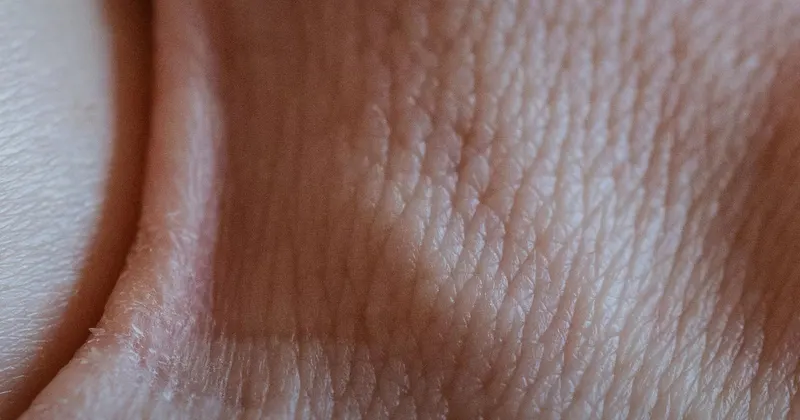
Transepidermal water loss is the water that evaporates out through your stratum corneum, the outermost layer of skin. It is measured in grams per square metre per hour. A disrupted barrier loses more, which is why skin feels tight in a heated room in January. Occlusives and ceramide-rich moisturizers bring the number down; harsh cleansing pushes it up.
What Is Transepidermal Water Loss, and What Counts as Normal?
Key Takeaways
Water is always leaving your skin. Even intact skin is slightly permeable, and that steady trickle of vapour is what the measurement captures. What slows it is the stratum corneum: flattened dead cells in a lipid matrix, under a thin hydrolipid film 7.
The number only means something in context. A 2018 meta-analysis pooled TEWL estimates across 86 skin areas from 212 studies: the lowest was breast skin at 2.3 g/m²/h, the highest the armpit at 44.0 g/m²/h 1. That is a spread of roughly 19× on one healthy body.
How Is TEWL Actually Measured?
With an evaporimeter: a small probe that estimates the water vapour gradient in an open chamber just above the skin 2. Cosmetic labs use it to support claims about mildness, hydration and barrier repair 2.
The reading is fragile. The EEMCO guidance for TEWL assessment names a long list of variables that shift the result and insists on standardised conditions 2. Room humidity, airflow, skin temperature, whether you took the stairs, how long the probe sat there.
A 2022 systematic review examined 22 devices across 38 studies. Reliability was generally good and devices correlated with each other, but measurement error was highly variable outside lab conditions 3. That is why no consumer gadget gives you a trustworthy TEWL number at home.
Why Does Transepidermal Water Loss Spike in Winter?
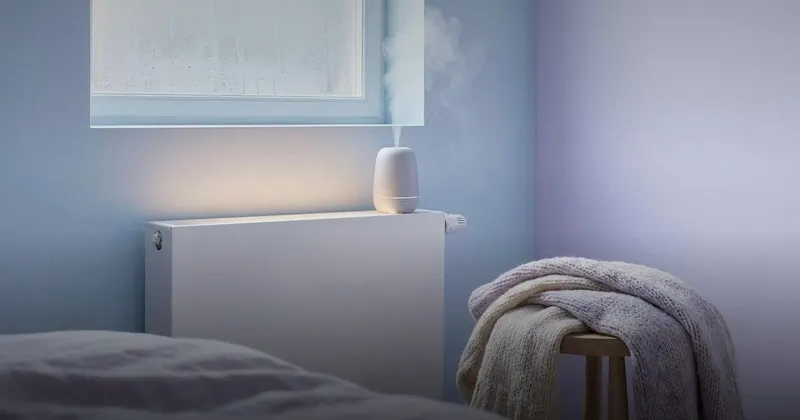
The air around you gets thirstier. Cold outdoor air holds little moisture, and indoor heating drops relative humidity further. In one winter study, healthy volunteers spent at least six hours a day in a heated indoor room; forearm TEWL had significantly increased by the end of it 5. Facial skin held up better, and the authors suggest sebum acted as a partial buffer 5.
Mice kept at 15% relative humidity for six months, against controls at 55%, showed 159 epidermal genes down-regulated and 105 up-regulated, with inflammatory signalling switched up. An emollient shifted the pattern back toward fatty acid metabolism 4. That is a mouse study, so read it as mechanism rather than a forecast for your face.
Cold weather sits alongside aging, medication use and atopic dermatitis among the things that deplete the stratum corneum's water-holding compounds 7.
Does Cleansing or Using Actives Raise It?
Cleansing can, if you overdo it. Surfactants strip surface lipids, and repeated contact does measurable damage: in one human irritation model, 24 volunteers exposed to 0.2% sodium dodecyl sulfate for four hours a day across five consecutive days showed a gradual rise in both redness and TEWL 6. That was patch-occluded detergent rather than a 30-second face wash, so read it as direction of travel.
Actives are more nuanced. Exfoliating acids and retinoids speed up turnover, and overuse is a well-known route to stinging, flaking skin. In that same study, tretinoin cream applied to detergent-irritated skin did not improve the irritation or the TEWL reading 6. A retinoid will not repair a barrier you are still damaging.
If you use actives: patch test on the inner forearm first, add one product at a time, and wear sunscreen during the day. When skin is already tight and reactive, pausing actives is usually faster, as the five signs of a damaged barrier explains.
Is High Water Loss Dehydration or Damage?
Dehydrated skin and a damaged barrier overlap without being the same problem. Skin can run low on water while the lipid matrix stays intact, roughly what a week of dry flights does. A damaged barrier means the matrix itself is compromised.
The practical test is how your skin answers a plain moisturizer. If a gentle, fragrance-free cream absorbs comfortably and tightness eases for hours, dehydration is the likelier story. If it stings, the barrier is involved, and the dry versus dehydrated breakdown covers why a heavier cream alone often fixes neither.
TEWL cannot separate the two on its own. A high reading says water is leaving faster than it should. Thin lipids, inflammation or dry air in the room all produce that, and the number does not say which.
What Actually Lowers Transepidermal Water Loss?
Occlusives work on contact. Barrier lipids work over weeks.
Petrolatum is the benchmark for speed. A minimum concentration of 5% has been reported to reduce TEWL by more than 98% 8, which is the mechanism behind slugging. Nothing in a light lotion comes close.
Barrier lipids are the slower half. In a randomised, observer-blind trial, 34 adults with dry, eczema-prone skin used a ceramide, triglyceride and cholesterol cream on one side of the body and a reference emollient on the other, for four weeks. TEWL on the ceramide-cream sites was 15.3 g/m²/h lower than on the reference sites, and sensitivity to a detergent challenge dropped 10. Proportions matter as much as the ingredient list, which the 3:1:1 ceramide ratio explainer covers.
Order helps. Emollients pair humectants like glycerol and urea with occludents like petrolatum 7, and in a study of 123 volunteers, a humectant serum followed by a cream held hydration better at eight hours than either alone 9.
Which Habits Drive TEWL Up, and Which Pull It Down?
| Driver (raises water loss) | Counter (lowers it) |
|---|---|
| Heated indoor air, low relative humidity 5 | Humidifier, plus an occlusive layer at night |
| Long hot showers, repeated detergent contact 6 | Shorter lukewarm washes, low-surfactant cleanser |
| Over-exfoliating with acids or retinoids | Pause actives until stinging stops, reintroduce one at a time |
| Depleted barrier lipids from xerosis or eczema 7 | Ceramide, cholesterol and fatty acid creams, used consistently 10 |
| Applying nothing after cleansing 9 | Humectant first, cream or ointment second |
| Wind and cold on unprotected skin 7 | Occlusive balm on exposed areas before you go out 8 |
Work down the right-hand column in order. Fix the air and the washing before you shop: a good ceramide cream cannot outrun a twenty-minute hot shower.
How Long Until Winter Skin Feels Better?
Give a change two to four weeks before judging it. That is the window controlled work uses: the ceramide-cream trial measured its TEWL difference at four weeks 10, and emollient trials for dry skin run over comparable spans 7.
The occlusive part arrives sooner. A petrolatum-class ointment over damp skin eases the tight, stretched feeling on the first night, because slowing evaporation is a physical effect rather than a repair process 8. Rebuilding the lipid matrix underneath is what takes weeks.
Keep a record. Note how long comfort lasts after moisturizing and whether your usual cream still stings. Those signals move before anything is visible in the mirror.
If skin stays cracked, painfully tight or inflamed after a few weeks of gentle care, see a dermatologist rather than buying another product. Persistent dryness can sit on top of atopic dermatitis, psoriasis or a systemic condition 7.
Use This in Your Routine
Winter barrier trouble is a pattern problem, and patterns need a record. Skin Bliss handles that side of it.
Log Skin Changes, Mood & Notes lets you write down tightness, flaking and stinging day by day, so a bad fortnight lines up against the week the heating went on rather than the last product you bought. Weather-Based Skincare Alerts reads local humidity, temperature and wind, and can prompt a routine tweak before a cold snap does the damage.
Skin Bliss is a skincare scanner that checks whether products actually fit your skin, before you buy. If you are picking a barrier cream for the winter, start at getskinbliss.com.
Save this one for the week your heating goes on. The fastest wins tend to be the dull ones: a shorter shower, and something occlusive over damp skin before bed.
FAQ
What is a normal TEWL value?
There is no single normal. Pooled estimates across 86 skin areas run from 2.3 g/m²/h on breast skin to 44.0 g/m²/h in the armpit, so a reading only means something against a matched site under matched conditions 1. Facial values sit between those extremes. A one-off number taken in an unstandardised room tells you very little 2.
Can you measure transepidermal water loss at home?
Not reliably. Evaporimeters estimate a water vapour gradient in a small chamber on the skin, and the result shifts with room humidity, airflow, skin temperature and probe contact time 2. A 2022 review of 22 devices found good reliability in principle but highly variable measurement error outside lab conditions 3. Track symptoms instead: how long comfort lasts, whether products sting.
Does drinking more water lower TEWL?
Drinking enough water supports general health, but water loss through skin is governed by the stratum corneum's lipid matrix and its water-holding compounds rather than by what you drank this morning 7. Someone well hydrated with a depleted barrier still loses water quickly. The useful lever is topical: humectants to hold water, lipids and occlusives to slow its exit.
Do humidifiers actually help winter skin?
They address the driver rather than the symptom. Heated indoor air lowers relative humidity, and six hours of it significantly raised forearm TEWL in one winter study 5. Raising room humidity reduces the gradient pulling water out of your skin. It works best paired with a moisturizer, since a humidifier does nothing for depleted barrier lipids 7.
When should you see a dermatologist about dry skin?
If skin stays cracked, painful, bleeding or inflamed after two to four weeks of gentle cleansing and consistent moisturizing, book an appointment. Persistent dryness can be a sign of atopic dermatitis, psoriasis, ichthyosis, or a systemic condition such as hypothyroidism or diabetes 7. Prescription treatment works differently from anything sold over the counter.

In your browser
Free Skin Quiz: Understand your skin profile in under 5 minutes
Oily or dry is only the start. Find out what your skin actually needs across six skin dimensions, with a plain note on what each one means for your routine. Results appear in your browser, and you can keep them in the app.

Maria combines her background in AI research with a passion for evidence-based skincare. She built Skin Bliss to help people make informed decisions about their skin, backed by science rather than marketing.
Sources (10)
- Akdeniz M et al. (2018). "Transepidermal water loss in healthy adults: a systematic review and meta-analysis update." *Br J Dermatol*.
- Rogiers V (2001). "EEMCO guidance for the assessment of transepidermal water loss in cosmetic sciences." *Skin Pharmacol Appl Skin Physiol*.
- Klotz T et al. (2022). "Devices measuring transepidermal water loss: A systematic review of measurement properties." *Skin Res Technol*.
- Wen S et al. (2026). "Low Humidity Alters Epidermal Gene Expression in vivo." *Clin Cosmet Investig Dermatol*.
- Park EH et al. (2023). "Effects of winter indoor environment on the skin: Unveiling skin condition changes in Korea." *Skin Res Technol*.
- Le TK et al. (1997). "Effect of a topical corticosteroid, a retinoid and a vitamin D3 derivative on sodium dodecyl sulphate induced skin irritation." *Contact Dermatitis*.
- Fluhr JW et al. (2025). "Restoring Skin Hydration and Barrier Function: Mechanistic Insights Into Basic Emollients for Xerosis Cutis." *Int J Dermatol*.
- Sethi A et al. (2016). "Moisturizers: The Slippery Road." *Indian J Dermatol*.
- Maldonado López AM, da Silva Souza ID (2026). "A serum and cream moisturization regimen outperforms separate use in sustaining hydration, reducing TEWL, and balancing surface lipids over an 8-h study." *Int J Cosmet Sci*.
- Danby SG et al. (2022). "Enhancement of stratum corneum lipid structure improves skin barrier function and protects against irritation in adults with dry, eczema-prone skin." *Br J Dermatol*.